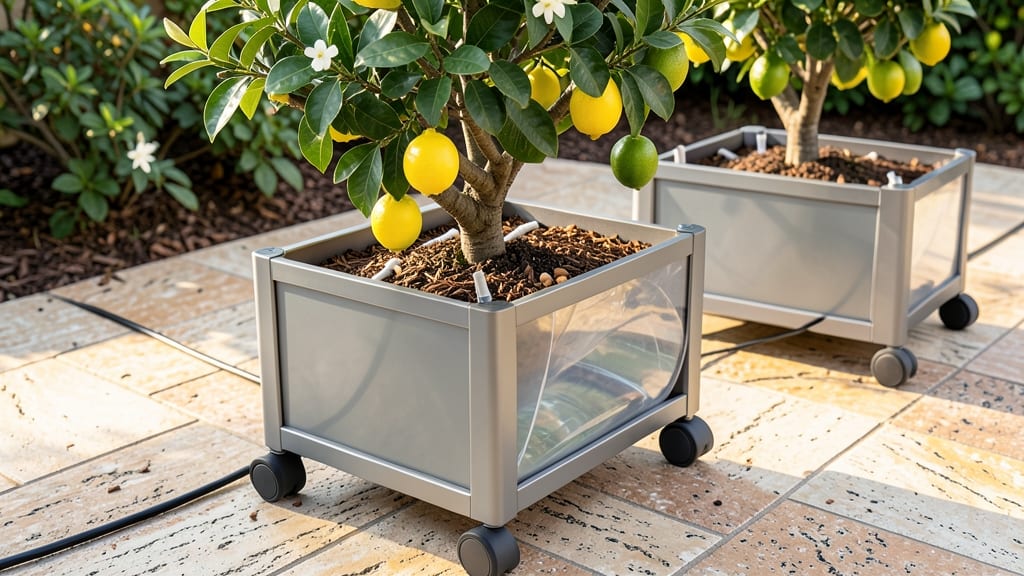
Buying guide: how to choose the right self-watering rolling citrus tree planter
1. Capacity and Root Space 💡
Choosing the right capacity is critical—it directly impacts your citrus tree’s growth potential. A 5-gallon planter is ideal for young trees or small citrus varieties like dwarf limes, while a 12-gallon or larger planter accommodates mature trees like Meyer lemons or calamondins.
Counterintuitively, larger planters often require less frequent watering because the soil retains moisture longer. If you’re growing multiple citrus trees, consider a multi-pot rolling cart to maximize space without sacrificing mobility. For urban gardeners, 7-10 gallon planters strike the best balance between root space and maneuverability.
2. Watering System Efficiency ⚡
The self-watering mechanism is the heart of these planters, and not all systems are created equal.
Look for adjustable reservoirs (1-5 gallons) to customize watering based on your tree’s needs—citrus trees hate soggy roots but thrive on consistency. Overflow protection is a must to prevent root rot, while wick-based systems distribute water more evenly than gravity-fed designs.
I recommend models with clear water level indicators so you can monitor moisture without digging. For hot climates, prioritize planters with larger reservoirs (3+ gallons) to reduce evaporation and watering frequency.
3. Mobility and Wheel Quality ✅
Mobility is what sets rolling planters apart, but not all wheels are equal. Heavy-duty castor wheels (like those with swivel locks) handle both indoor floors and outdoor surfaces, while hard plastic wheels are quieter but less durable.
For outdoor use, prioritize shock-absorbing wheels to protect your floors and handle uneven terrain. If you plan to move your planter frequently, 360-degree rotating casters make tight spaces a breeze. Pro tip: Test the wheel’s weight capacity—some budget models struggle with mature trees or full reservoirs.
A well-built rolling planter should support at least 50-75 pounds for long-term use.
4. Additional Features That Justify the Investment 🔍
While core features (capacity, watering, mobility) are non-negotiable, premium add-ons can elevate your citrus-growing game. Built-in LED grow lights are a game-changer for indoor setups, especially in low-light areas, while humidifiers or temperature regulators create ideal tropical conditions for citrus.
Aesthetic touches like ceramic finishes or vintage wood bases add charm, but they may require more maintenance. For urban growers, consider planters with integrated drip irrigation or solar-powered timers to automate care.
If you’re on a budget, focus on durability and watering efficiency—these are the features that truly reduce long-term hassle.
5. Material and Durability 🛡️
The material of your planter affects longevity, weight, and even moisture retention. Plastic planters are lightweight, affordable, and resistant to cracks, but they may not insulate as well in extreme temperatures. Ceramic or glazed containers retain moisture longer and add aesthetic appeal but can be heavier and more fragile.
For outdoor use, opt for UV-resistant plastic or fiberglass to prevent degradation. If you’re growing in cold climates, prioritize insulated planters or those with built-in heaters to protect roots. Always check for reinforced seams and sturdy handles—these details make a huge difference in daily usability.
6. Budget Considerations 💰
Your budget will dictate which features you can prioritize. Entry-level options (under $50) offer basic self-watering and mobility but may lack durability or advanced features. Mid-range planters ($70-$150) strike the best balance, delivering larger capacities, better wheels, and reliable watering systems. Premium models ($150+) justify their cost with climate control, high-end materials, and smart automation.
I recommend starting with a mid-range planter—they’re versatile enough for most citrus varieties and offer long-term value. If you’re growing multiple trees or high-value citrus, investing in premium features like automated watering or LED lighting pays off in reduced maintenance and healthier trees.
Frequently asked questions
Q: Can I use a self-watering rolling citrus tree planter indoors or outdoors?
A self-watering rolling citrus tree planter is designed for both indoor and outdoor use, but success depends on a few key factors. For indoor use, prioritize models with 360-degree rolling casters and place them near a south-facing window for 6-8 hours of sunlight daily. If natural light is limited, consider a planter with a built-in LED grow light, like our Best Value pick, which mimics sunlight for optimal growth. For outdoor use, choose planters with heavy-duty castor wheels and UV-resistant materials to handle varying weather conditions. Always ensure proper drainage and avoid placing them in freezing temperatures, as citrus trees are sensitive to cold. With the right setup, these planters thrive in patios, balconies, or sunrooms!
Q: How often do I need to refill the water reservoir in a self-watering citrus planter?
The frequency of refilling the water reservoir depends on your planter’s size, climate, and the citrus tree’s maturity. Most self-watering rolling citrus planters provide 1-2 weeks of moisture between refills, but hot or dry conditions may require more frequent checks. For example, a 5-gallon planter with a 1-gallon reservoir (like our Best Value pick) will need watering every 5-7 days, while a 12-gallon planter with a 3-gallon reservoir (our Best Overall) can last 2-3 weeks. Always monitor the water level indicator and adjust based on your tree’s needs—young trees or small citrus varieties may require more frequent top-ups than mature plants.
Q: Why isn’t my citrus tree growing well in the self-watering planter?
If your citrus tree isn’t thriving, start by checking these common issues:
1. Light exposure: Citrus trees need 6-8 hours of sunlight daily. If indoors, supplement with a grow light or relocate to a brighter spot.
2. Watering balance: Overwatering or underwatering can stunt growth. Ensure the reservoir is filled correctly and the soil is moist but not soggy. Some planters have overflow protection, but excess water can still cause root rot.
3. Soil quality: Use a well-draining citrus potting mix with perlite or sand to prevent compaction. Avoid garden soil, which retains too much moisture.
4. Nutrient deficiency: Citrus trees need balanced fertilizer (high in nitrogen, phosphorus, and potassium). Feed every 4-6 weeks during growing season.
5. Pest issues: Inspect leaves for spider mites, aphids, or scale insects. Isolate the plant and treat with neem oil if needed.
If the problem persists, consider upgrading to a planter with climate control features, like our Premium Choice, which regulates temperature and humidity for optimal growth.
Q: What’s the difference between a self-watering citrus planter and a regular rolling planter?
A self-watering citrus planter is designed to automate hydration, reducing the risk of overwatering or underwatering, while a regular rolling planter requires manual watering. The key differences include:
- Watering system: Self-watering planters feature a built-in reservoir that slowly releases moisture to the roots, mimicking natural rainfall. Regular planters lack this feature, forcing you to water by hand.
- Consistency: Self-watering systems provide steady moisture levels, which citrus trees love, while manual watering can lead to fluctuations.
- Convenience: With a self-watering planter, you can go on vacation for 1-2 weeks without worrying about your tree drying out. Regular planters demand daily attention.
- Root health: Self-watering planters prevent root rot by balancing moisture, while overwatering in regular planters is a common issue.
For hassle-free citrus growing, a self-watering rolling planter is the clear winner—especially if you have a busy schedule or travel frequently.
Q: Is a larger self-watering citrus planter always better?
Not necessarily! While larger planters (like our Premium Choice 20-gallon) offer more root space and longer watering intervals, they aren’t always the best fit. Here’s how to decide:
- Small spaces: A 5-7 gallon planter (like our Budget-Friendly or Best Value picks) is ideal for apartments, balconies, or countertop growing.
- Tree size: Young citrus trees or dwarf varieties thrive in 5-10 gallon planters, while mature trees need 12+ gallons for long-term health.
- Mobility: Larger planters can be heavier and harder to move, even with wheels. If you need to relocate your tree frequently, a mid-size planter (7-12 gallons) strikes the best balance.
- Watering needs: Bigger reservoirs reduce evaporation, but they also require more initial setup. If you’re a beginner, start with a smaller, budget-friendly planter to master citrus care before investing in a larger system.
Q: How long do self-watering rolling citrus planters typically last?
The lifespan of a self-watering rolling citrus planter depends on its materials, build quality, and maintenance. Here’s what to expect:
- Budget-friendly models (plastic or lightweight materials) last 2-4 years with regular use, especially if exposed to outdoor elements.
- Mid-range planters (like our Best Overall 12-gallon) are built to last 5-7 years thanks to durable plastic, reinforced seams, and heavy-duty wheels.
- Premium or ceramic planters (like our Classic Essential) can last 10+ years if cared for properly. Ceramic planters may require occasional re-glazing to prevent cracks, while high-end materials resist UV damage and extreme temperatures.
To extend your planter’s life, avoid freezing temperatures, clean the reservoir regularly to prevent algae buildup, and check wheels and locks for wear. With proper care, an investment-grade planter can become a lifetime citrus-growing companion!
Q: What’s a good alternative if I can’t find a self-watering rolling citrus planter?
If you’re having trouble finding a self-watering rolling citrus planter, consider these practical alternatives:
1. Self-watering planter + rolling cart: Pair a self-watering citrus planter (like a 5-10 gallon model) with a rolling garden cart for mobility. This combo gives you