
Pruning
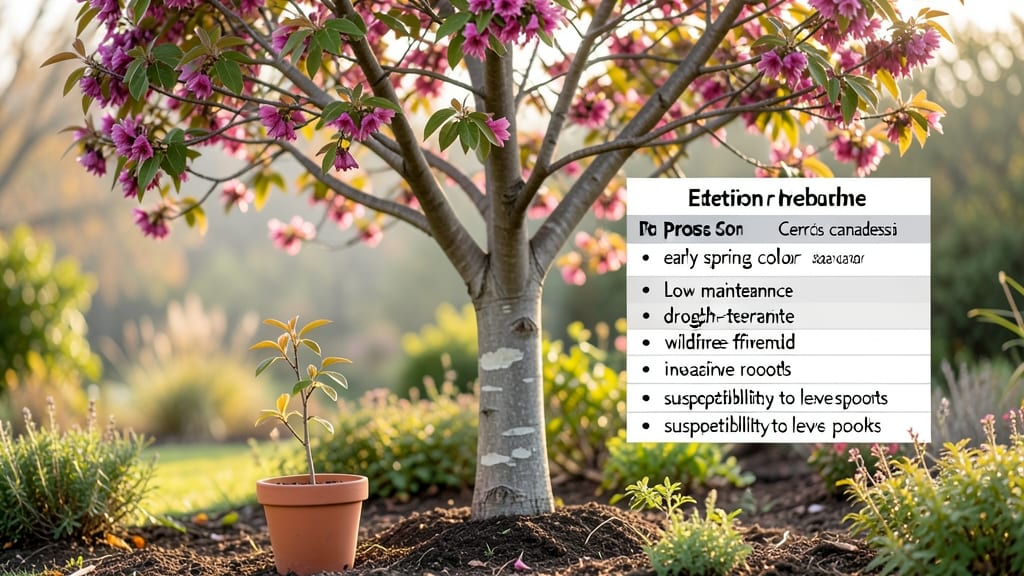
Redbud trees offer the pros of stunning spring blooms and compact growth, ideal for small spaces, but come with cons like shallow roots and pest vulnerabilities that require careful planting and maintenance.
The redbud tree pros and cons make them a standout choice for gardeners seeking early spring color and low-maintenance appeal.
These trees shine with delicate pink or purple flowers that appear before the leaves, creating a breathtaking display. 🌸 Their mature height of 20-30 feet with a 25-35 foot spread makes them ideal for urban landscapes or mixed borders, though their shallow roots can compete with nearby plants. The trade-off?
Their susceptibility to borers and powdery mildew means regular inspections and proper spacing are essential for long-term health.
What sets redbuds apart is their adaptability to various soil types, though they prefer well-drained conditions. Their fall foliage turns golden-yellow, adding seasonal interest.
For gardeners, this means fewer maintenance headaches than other flowering trees, but you'll need to monitor for pests and prune selectively to maintain their natural, graceful shape.
💡 In This Article
- Redbud Tree Growth Habits and Lifespan Explained
- Planting and Maintenance Trade-Offs for Redbud Trees
Redbud tree growth habits and lifespan explained
Redbud trees (Cercis canadensis) grow with a distinctive, multi-trunk structure that creates an elegant, almost weeping silhouette. Their mature height typically reaches 20-30 feet, while their spread can extend 25-35 feet, making them perfect for medium-sized yards or as focal points in urban landscapes.
The key to their compact growth lies in their shallow root system, which spreads horizontally rather than deeply—this allows them to thrive in tight spaces but also makes them more vulnerable to drought and competition from surrounding plants.
Their most striking feature is their early spring blooms, which appear 1-2 weeks before leaves emerge, creating a stunning pink or purple canopy that lasts 2-3 weeks.
This timing makes them one of the first trees to flower in many regions. 🌸 The heart-shaped leaves, 3-7 inches long, emerge after blooming and turn a golden-yellow in fall, adding seasonal interest.
Their lifespan averages 20-30 years, though some specimens can live up to 50 years with proper care, making them a long-term investment for gardeners.
The shallow root system isn't just a drawback—it's what allows redbuds to adapt to various soil types, including clay, loam, and sandy soils, as long as drainage is adequate. This adaptability means they can thrive in challenging urban environments where other trees might struggle.
However, their roots' proximity to the surface means they're more susceptible to damage from heavy foot traffic or construction, so planting them at least 10-15 feet away from sidewalks or driveways is crucial.
Seasonal changes in redbud trees are dramatic and intentional. The early spring flowers are a survival strategy—birds and insects pollinate them before many other plants are active, ensuring reproduction.
The fall color shift is triggered by shorter daylight and cooler temperatures, which cause chlorophyll to break down and reveal the yellow pigments underneath. This dual-season interest is one of their biggest pros for gardeners seeking year-round appeal without high maintenance.
For garden planning, consider their growth rate: redbuds grow 12-24 inches per year, making them a moderate grower. Their compact size and adaptability make them ideal for mixed borders, where they can be paired with shrubs or perennials that complement their height and seasonal changes.
However, their shallow roots mean they won't support heavy structures like large decks or patios, so placement should account for this limitation.