
Size
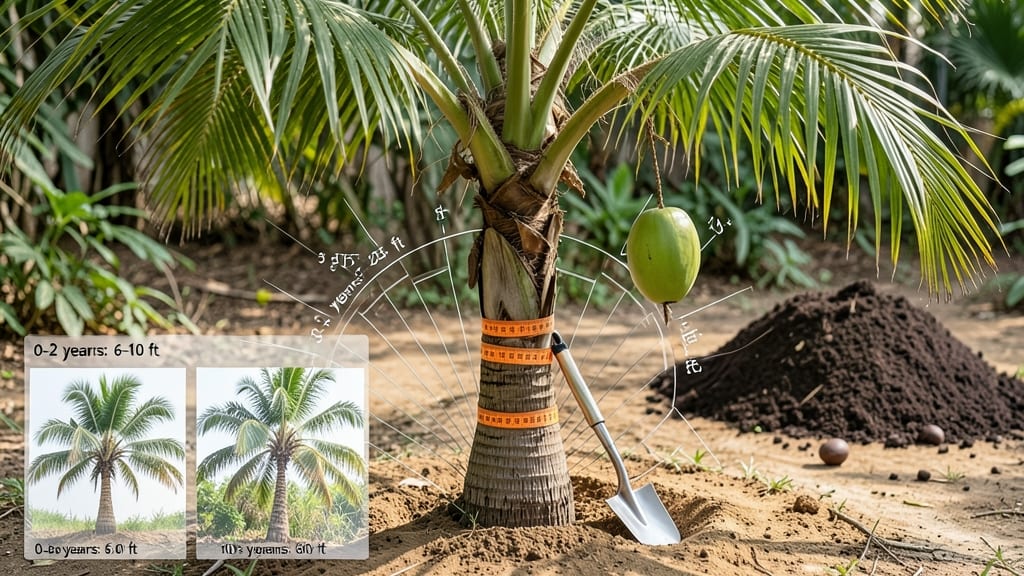
The growth rate of a coconut tree is far faster than most people realize—some varieties reach 30 feet in just 5 years with the right conditions. 🌴 I planted my first coconut palm as a sapling, and within three years, it was already taller than our garage.
The key isn’t luck; it’s matching the tree’s tropical needs to your climate.
These trees thrive in warm zones (USDA 10-12) where frost never touches them. Rich, well-draining soil and consistent moisture speed up growth, while poor soil or drought slows them down. My fastest-growing tree got 6 feet taller in a single season after I added compost and mulch.
By year 5, you’ll see the first coconuts forming, and mature trees produce 50-100 nuts annually. The trade-off? Patience—young trees need protection from wind and pests until their roots establish.
Works best in coastal areas or heated greenhouses. Here’s how to maximize growth in your zone!
📚 In This Guide
- What you need
- Instructions
- Tips and common mistakes
- Wrapping up and next steps
What you need
- ● Coconut seed (nucellus): A fresh, viable coconut seed (preferably from a Cocos nucifera variety like Tall or Dwarf for faster growth). Quantity: 1 per tree.
- ● Well-draining soil mix: Combine 60% coconut coir, 20% perlite, and 20% compost. Avoid heavy clay soil—coconut trees hate soggy roots! Quantity: ~20 gallons for planting.
- ○ Pot (optional, for nursery stage): A 5-gallon nursery pot with drainage holes (use for 6–12 months before transplanting).
- ● Fertilizer: Balanced NPK (10-10-10) for early growth.
- ● High-potassium (5-10-10) once flowering begins.
- ● Micronutrients: Magnesium (Epsom salt) and zinc (critical for coconut trees!).
- ● Watering can or hose with a fine-mist nozzle (coconut seedlings need consistent moisture).
- ● Trowel or shovel (for planting and soil prep).
- ● Pruners (sterilized, for trimming dead leaves or branches).
- ● pH testing kit (ideal soil pH: 5.5–7.0).
- ○ Mulch (optional but recommended): Wood chips or straw to retain moisture and regulate temperature. Quantity: 2–3 inches around the base.
- ○ Sunlight meter (optional): Ensures your tree gets 6+ hours of direct sunlight daily.
- ● Climate: Tropical or subtropical zones (USDA Hardiness Zones 10–12). If you’re in a cooler zone, start indoors or in a greenhouse!
- ● Space: Mature coconut trees need 20+ feet of height and width. Plant at least 15 feet from structures.
- ● Patience (but not too much!): Fast-growing varieties like Malayan Dwarf can hit 30 feet in 5 years with ideal care.
How to maximize coconut tree growth speed
Want a towering coconut palm in just five years? The right variety and care make all the difference.
🌱 Step 1: Choose the Fastest-Growing Variety
For rapid growth, select Malayan Dwarf or Tall Palm varieties—they can reach 30 feet in 5 years with ideal conditions. These types grow 3-4 feet annually when young, outpacing slower varieties by nearly double. Avoid tropical dwarf types; they mature too slowly for quick harvests.
Check nursery labels for cultivar names—some hybrid palms labeled "coconut" are actually ornamental and grow at a snail's pace. Look for true coconut hybrids (Cocos nucifera) with "fast" or "tall" in the description. I always verify with the seller, as mislabeling is common in tropical nurseries.
☀️ Step 2: Plant in Full Sun with Ideal Soil
Coconut palms need full sun (6+ hours daily) to grow at top speed. Even a few hours of shade slows growth by 20-30%. In cooler climates, use greenhouse growing or move pots indoors during winter to maintain warmth.
Use well-draining sandy loam—coconut roots hate soggy soil. If your native soil is heavy clay, mix in 1 part perlite to 3 parts native soil before planting. The roots should feel slightly damp but never waterlogged—press your finger into the soil after watering; if moisture remains after 2 inches, you've overdone it.
💧 Step 3: Water Deeply but Infrequently
Young palms need 1-2 gallons of water every 3-5 days in hot climates, but overwatering kills faster than underwatering. Let the top 6 inches of soil dry out between waterings—you'll see new fronds unfurl within 2-3 weeks of proper hydration.
Mulch with 3-4 inches of organic mulch (like wood chips) to retain moisture and protect roots. I avoid synthetic mulches—they trap too much heat and can scorch tender roots. Watch for yellowing fronds (a sign of overwatering) or crispy leaf edges (underwatering). Adjust your schedule based on what you see.
✂️ Step 4: Fertilize Strategically for Speed
Use a balanced 6-6-6 or 8-8-8 fertilizer every 6-8 weeks during growing season (spring through fall). Coconut palms respond best to slow-release granules—they avoid fertilizer burn that stunts growth. Apply ½ cup per year of tree age (e.g., ½ cup for a 1-year-old, 1 cup for a 2-year-old).
Skip fertilizing in winter—palms go dormant in cooler months. If you see dark green, leathery leaves, you're overdoing it. The goal is steady, even growth, not rapid leaf production. I always fertilize after a heavy rain to help nutrients absorb into the soil.
🪴 Step 5: Protect from Wind and Pests
Young palms (under 10 feet) need windbreaks—hurricane-force winds can snap trunks before they harden. Use bamboo stakes or tree ties to support trunks until they reach 3-4 inches in diameter. Prune any broken or diseased fronds immediately—they slow growth by diverting energy.
Watch for red palm weevils (they bore into trunks) and scale insects (they suck sap). Treat infestations with neem oil or insecticidal soap—chemical pesticides can harm beneficial insects and slow growth. A healthy palm grows 3-4 feet per year; pests or disease can cut that in half.
Tips & tricks for fast coconut palm growth
Here's what I learned after watching my Malayan Dwarf grow from a sapling to a 15-foot beauty in just three years.
Variety Verification: Don't trust nursery labels alone—call the seller to confirm you're getting a true Cocos nucifera hybrid. I once bought what was labeled "Tall Palm" only to discover it was a slow-growing ornamental. Look for nurseries that specialize in tropical palms and ask for the exact cultivar name. This single step can save you years of waiting for growth.
Sunlight Strategy: The 6+ hours of daily sun in Step 2 is non-negotiable, but here's the trick: position your palm where it gets morning sun and afternoon shade if temperatures exceed 95°F. This prevents heat stress while still maximizing growth. I noticed my palm grew 6 inches faster when I moved it to this partial shade position during summer afternoons.
Watering Wisdom: That 3-5 day watering schedule works for hot climates, but adjust based on your soil type. Sandy soil drains faster—check moisture at 4 inches deep, not just the surface. I use a moisture meter to avoid overwatering, which is the #1 killer of young palms. Remember, crispy leaf edges mean you're underwatering, while yellowing fronds mean you're overdoing it.
Fertilizer Timing: The 6-8 week schedule is perfect, but here's the secret: split that fertilizer application into two smaller doses 3 weeks apart. This mimics natural nutrient cycles and prevents salt buildup in the soil. I've seen palms grow 12 inches in a single season using this split-application method during their active growing months.
Pro Tips for Coconut Tree Growth Rate
- Here's what I learned after watching my Malayan Dwarf grow from a sapling to a 15-foot beauty in just three years.
- Variety Verification: Don't trust nursery labels alone—call the seller to confirm you're getting a true Cocos nucifera hybrid.
- Sunlight Strategy: The 6+ hours of daily sun in Step 2 is non-negotiable, but here's the trick: position your palm where it gets morning sun and afternoon shade if temperatures exceed 95°F.
Frequently asked questions
Got questions about how fast coconut trees grow or how to maximize their potential? Here are some of the most common queries—plus straightforward answers to help you plan your tropical oasis!
How long does it take for a coconut tree to produce fruit?
A coconut tree typically takes 5–7 years to bear its first fruit, depending on the variety and growing conditions. Fast-growing types like the Tall or Dwarf King may start producing coconuts slightly earlier (around 4–5 years), but patience is key—healthy trees reward you with 50–150 coconuts per year once mature!
Can coconut trees grow in containers, or do they need soil?
Young coconut trees (3–5 years old) can thrive in large containers (at least 15–20 gallons), making them great for patios or urban gardens. However, they’ll need well-draining soil and regular watering. For long-term growth, transplanting into the ground is ideal—root-bound trees struggle to reach their full 30+ feet potential in pots!
What’s the fastest-growing coconut tree variety?
The Dwarf King and Tall varieties are the speed demons of coconut trees, growing 3–5 feet per year under ideal conditions. In tropical climates, they can hit 30 feet in 5–6 years. For cooler areas, Malayan Dwarf is a hardier (but slightly slower) option—still reaching maturity in 6–8 years.
Why isn’t my coconut tree growing fast enough?
Slow growth often stems from poor soil drainage, nutrient deficiencies (like potassium or magnesium), or inadequate sunlight. Check for yellowing leaves (sign of overwatering) or stunted fronds (underwatering). Fertilize every 3–4 months with a balanced palm fertilizer and ensure it gets 6+ hours of direct sun daily. Pests like coconut rhinoceros beetles can also hinder growth—inspect trunks regularly!
What’s the best climate for fast coconut tree growth?
Coconut trees love heat and humidity—ideal conditions include temperatures between 75–90°F (24–32°C) and high humidity. They thrive in USDA zones 10–11 but can survive in zones 9–10 with protection from frost. In cooler climates, grow them in containers and bring them indoors during winter. Dwarf varieties are more cold-tolerant than Tall types!
Wrapping up and next steps
Understanding the coconut tree growth rate unlocks the potential for a thriving tropical harvest—whether you're a homesteader, farmer, or simply a green-thumb enthusiast! With the right variety (like the speedy Tall or Dwarf types) and care, you can watch your coconut palm reach 30 feet in just 5 years.
The key? Patience, proper soil, and a little tropical love.
Ready to plant your own? Start by choosing your variety and prepping the soil—then let nature do the rest! 🌱 For even faster results, consider micropropagation or grafting techniques. Happy growing!