
Watering
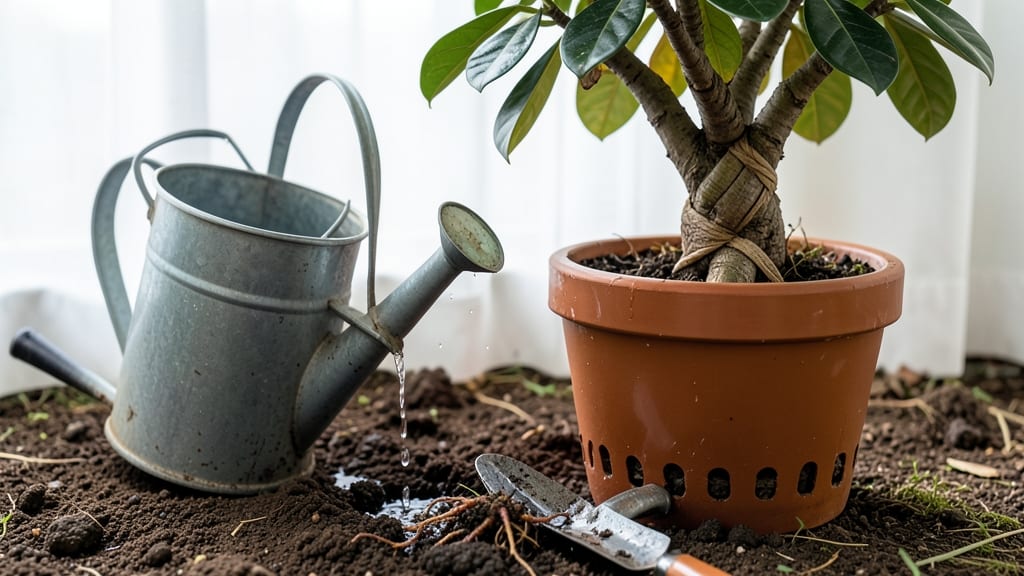
Your money tree’s drooping leaves and mushy stems scream one thing: it’s drowning. 🌱 I’ve nursed back more overwatered money trees than I can count, and the good news is these plants are tougher than they look.
The key is catching it early, draining the soggy soil, and giving those roots a chance to breathe again.
Most people water on a schedule, but money trees (pachira aquatica) need their soil to dry out between drinks. Yellowing leaves and a limp trunk mean the roots have suffocated, and the stems may even start rotting.
The fix isn’t complicated—just stop watering, repot if needed, and let the plant recover in bright, indirect light. Within weeks, you’ll see fresh growth pushing through.
Once you’ve rescued your plant, adjust your routine: water only when the top 1-2 inches of soil feel dry, and always use a pot with drainage holes. These trees love humidity too, so misting or a pebble tray helps prevent future stress.
With the right care, your money tree will bounce back stronger than ever—promise.
Here’s the thing—this happens more often than you’d think. Between you and me, I’ve been there too, and now I check soil moisture like it’s my job.
A little patience and the right approach turns a sad, soggy plant into a thriving symbol of good luck. Let’s get those roots healthy again!
The Hidden Triggers Behind Soggy Roots
Your money tree (Pachira aquatica) thrives on balance—too little water, and it wilts; too much, and its roots suffocate. But why does overwatering sneak up so easily? Let’s break down the real culprits behind this common issue, so you can spot the warning signs before they turn critical.
Humans are visual creatures, and a drooping money tree often triggers an immediate reflex: water it now! But here’s the catch—this plant’s thick, tropical roots store moisture like a natural reservoir.
When you water on a rigid schedule (e.g., every 3 days regardless of conditions), you’re essentially drowning its storage system.
- Science behind it: Money trees have aerenchyma—air pockets in roots that help oxygenate submerged tissues. But when soil stays soggy for days, these pockets fill with water, cutting off oxygen and triggering anaerobic conditions (a fancy term for "rot").
- Actionable fix: Stick your finger 2 inches into the soil. If it’s damp, wait. If it’s bone-dry, water deeply—but only until excess drains from the bottom.
A pot without drainage holes is like a bathtub with no plug—water has nowhere to go. Even if you water "lightly," moisture pools at the roots, creating a perfect storm for fungal infections like Pythium or Phytophthora, which feast on weakened roots.
| Problem | Why It Matters | Fix It Now |
|---|---|---|
| No drainage holes | Water sits stagnant; roots suffocate in hypoxia (oxygen deprivation). | Repot immediately into a container with holes. Add a layer of perlite or orchid bark (20%) to the soil mix. |
| Compacted or clay-heavy soil | Blocks water flow; roots can’t "breathe" even with drainage holes. | Amend soil with coarse sand or coconut coir to improve aeration. |
| Overpotting | Excess soil holds moisture longer than roots can absorb it. | Choose a pot 2–3 inches larger in diameter than the root ball. |
Money trees are tropical escapees—they hate sudden temperature drops or high humidity without airflow. When nights get chilly (below 60°F/15°C) or humidity spikes (e.g., after a shower), the plant’s transpiration rate slows. That means it can’t release excess moisture through its leaves, so water lingers in the soil.
- Science alert: Cool temps + high humidity = slowed evaporation from soil. Roots stay waterlogged longer, accelerating rot.
- Pro tip: Move your plant away from AC vents or drafty windows. Aim for 65–80°F (18–27°C) days and 55–65°F (13–18°C) nights.
Not all potting mixes are created equal. Heavy, peat-based soils or garden dirt clump together, trapping water like a sponge. Money trees need well-draining, chunky soil to mimic their native swampy-but-aerated habitats.
Red flags your soil is too dense:
- Water pools on top instead of sinking in.
- Soil smells musty or sour (sign of anaerobic bacteria).
- Roots look black and mushy when you check.
Solution: Swap for a 50/50 blend of:
- Cactus/succulent mix (for drainage)
- Orchid bark or perlite (for aeration)
💡 Quick test: Grab a handful of soil. If it stays compact when squeezed, it’s too dense. If it crumbles easily, you’re golden.
Fixing Your Overwatered Money Tree
Reviving an overwatered money tree (Pachira aquatica) starts with quick action—but don’t panic! 🌱 With the right steps, you can nurse it back to health and prevent future soggy soil disasters.
Below, we’ll map out cause-specific fixes, from adjusting watering habits to saving the roots. Let’s turn that droopy plant into a thriving green friend again.
Cause: Frequent watering, poor drainage, or soggy soil for weeks. Fix:
- 🔥 Emergency Drainage (Do This Now!)
- Remove the plant from its pot and gently loosen the roots to check for black, mushy roots (these are dead and must be trimmed). Healthy roots are firm and light brown.
- If the soil is waterlogged, wrap the root ball in a dry towel and let it air-dry for 1–2 hours before repotting.
- 🍳 Repot with Fresh, Fast-Draining Mix
- Use a well-draining potting mix (add perlite, orchid bark, or coconut coir to regular soil). Avoid heavy garden soil—it traps moisture.
- Choose a pot with drainage holes (if repotting). Terracotta pots help wick away excess water.
- ⏰ Let It Dry Out Completely
- Water only when the top 2–3 inches of soil are bone-dry (stick your finger in to test!). For the first week, skip watering entirely to let the roots recover.
💡 Pro Tip: If your plant is severely stressed, trim yellow/brown leaves to redirect energy to root recovery. Snip with clean scissors at the base.
Cause: Prolonged soggy conditions led to fungal/bacterial root rot. Fix:
- 🔪 Prune the Damaged Roots
- Sterilize pruning shears with rubbing alcohol.
- Cut away black, slimy, or hollow roots (they won’t recover). Keep only firm, white/tan roots.
- If >50% of roots are rotten, root pruning may be needed—don’t worry, new roots will grow!
- 👨🍳 Treat with Fungicide (Optional but Helpful)
- Dip trimmed roots in a fungicide solution (like neem oil or hydrogen peroxide—3% strength) for 10 minutes to prevent reinfection.
- Let roots air-dry for 30–60 minutes before repotting.
- 🌱 Repot in Sterile Soil
- Use fresh potting mix (never reuse old soil—it may harbor pathogens).
- Water lightly only after 3–5 days to avoid shocking the roots.
✨ Prevention Tip: After recovery, water every 7–10 days (less in winter) and never let the plant sit in saucers of water.
Cause: No drainage holes, compacted soil, or a pot that holds too much water. Fix:
- 🔧 Add Drainage Solutions
- Drill holes in the bottom of plastic pots (use a heated nail or drill bit).
- Place a layer of gravel or broken pottery at the bottom of the pot before adding soil (creates an air gap).
- 🌿 Choose the Right Pot
- Terracotta pots dry out faster than plastic—ideal for money trees.
- Avoid glazed pots (they trap moisture).
- 💡 Soil Upgrade Hack
- Mix regular potting soil (50%) + perlite (30%) + orchid bark (20%) for a fluffy, breathable medium.
🎯 Long-Term Fix: Elevate the pot on feet or a saucer with pebbles to improve airflow underneath.
Now that your money tree is on the mend, lock in these habits to keep it happy:
- 📊 Watering Schedule: Every 7–14 days (adjust for humidity/climate).
- 👀 Check Soil Moisture: Stick your finger in—if it’s damp past 1 inch, wait.
- 💦 Watering Technique: Pour slowly until water drains from the bottom. Empty the saucer after 10 minutes.
- 🌡️ Humidity & Light: Money trees love bright, indirect light and moderate humidity (mist leaves occasionally or use a pebble tray).
🚀 Final Thought: Recovery takes 2–4 weeks, but with these steps, your money tree will bounce back—stronger and more resilient than before! Track progress by checking new leaf growth (a sign roots are healing). 🌿✨
Frequently asked questions
How do I tell if my money tree is overwatered vs. underwatered?
Check the soil first—stick your finger 2 inches deep. If it’s damp, you’re overwatering. Overwatered money trees show yellowing leaves, mushy stems, and drooping even when soil is wet. Underwatered plants have crispy brown edges and dry, pulling soil. Pro tip: Lift the pot—overwatered soil feels heavy, while dry soil feels light.
Can I save my money tree if the stem is soft and black?
Yes, but act fast! Cut away any black, mushy stem sections with clean scissors, leaving only firm green tissue. Repot in fresh, well-draining soil with perlite, and let it dry out completely before watering again. New growth may sprout from healthy stem nodes below the rot. Recovery takes 2-4 weeks with proper care.
Why does my money tree keep getting overwatered even when I stop?
Three likely culprits: no drainage holes (water pools at roots), compacted soil (holds moisture like a sponge), or humidity without airflow (slows evaporation). Fix it by repotting with a chunky soil mix (50% potting soil + 30% perlite + 20% bark) and choosing a pot 2-3 inches larger than the root ball. Elevate the pot to improve airflow too!
How often should I water my money tree after recovery?
Wait until the top 1-2 inches of soil feel completely dry—test with your finger! In summer, this might be every 7-10 days, while winter care drops to every 2-3 weeks. Always water deeply until it drains from the bottom, then empty the saucer. Remember: money trees store moisture in their stems, so they prefer dry spells over consistent dampness.
Will my money tree grow back if I cut it back severely?
Money trees are resilient—cut back to healthy green stems (avoid black/mushy sections). New leaves will sprout from the stem nodes within 4-6 weeks. For extra luck, trim just above a leaf node (where leaves meet the stem) to encourage bushier growth. Just keep the soil dry during recovery to prevent rot from setting in again.