
Blooming
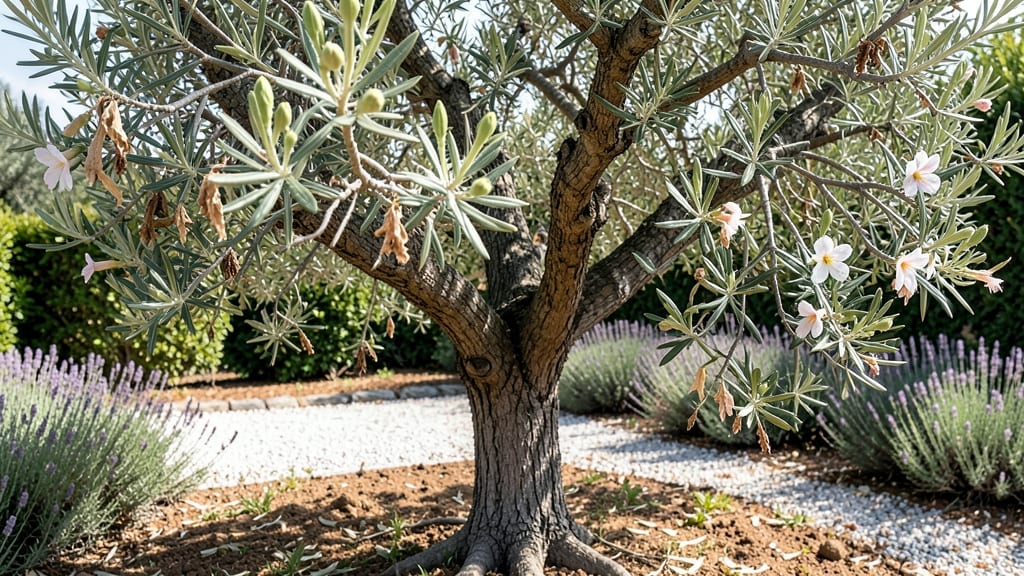
Understanding the olive tree bloom stages 🫒 is the key to unlocking a bountiful harvest—each phase reveals what your tree needs to thrive, from tiny buds to fragrant white flowers.
Watching an olive tree bloom is like witnessing nature’s slow-motion masterpiece—each stage reveals the secrets behind those future golden olives, but most gardeners miss the subtle cues.
If your tree isn’t flowering, it could be due to pruning mistakes, climate mismatches, or even overwatering. I’ll walk you through what to look for each month, how to spot trouble early, and the simple adjustments that make all the difference.
By the end, you’ll know exactly when to expect buds, how to encourage pollination, and what to do if your tree skips a stage entirely—no guesswork, just clear, month-by-month guidance.
Month-by-month olive tree bloom stages explained with key visual cues
Olive trees transform from winter dormancy into spring bloomers with a delicate 3-month progression that gardeners often overlook. The first visual cues appear in late winter when tiny flower buds form along last year's growth, signaling the tree's readiness to produce fruit.
Understanding these stages helps you time care—like pruning or fertilizing—to maximize olive production.
In Mediterranean climates, blooming typically begins in February-March when daytime temperatures climb to 60°F+, while temperate zones (8-10) may see delays until April-May due to cooler springs.
Each stage reveals critical clues about your tree's health and future yield. Let’s break down the monthly visual cues and what they mean for your care routine.
🌱 Visual Tip: Use a magnifying glass to inspect flower clusters—healthy blooms have tiny white or pale green flowers with 4 petals, while stressed trees may produce yellowish or sparse blooms. This distinction matters for fruit set.
| Month | Stage | Visual Cues | Temperature Trigger | Care Action |
|---|---|---|---|---|
| Late Winter (Jan-Feb) | Bud Formation | Small greenish buds appear on last year's wood. Buds are peanut-sized and clustered. | 50-60°F (10-15°C) | Prune dead wood but avoid heavy cuts. |
| Early Spring (Feb-Mar) | Flower Emergence | White/pale green flowers with 4 petals open. Clusters are 1-inch wide. | 60-70°F (15-21°C) | Apply balanced fertilizer (10-10-10). |
| Mid-Spring (Mar-Apr) | Pollination Peak | Flowers darken slightly as pollen spreads. Bees are active near clusters. | 70-80°F (21-27°C) | Water deeply weekly to support fruit development. |
| Late Spring (Apr-May) | Fruit Set | Tiny olives (pea-sized) form. 50% of flowers drop naturally. | 75-85°F (24-29°C) | Reduce nitrogen fertilizer to avoid leafy growth. |
| Early Summer (May-Jun) | Olive Growth | Olives grow to walnut size. Leaves may yellow if stressed. | 80-90°F (27-32°C) | Mulch to retain moisture in heat. |
In Mediterranean climates, the bloom cycle accelerates due to warmer winters, while temperate zones may experience 2-4 week delays if spring arrives late. For example, a tree in California’s coastal regions might bloom in February, whereas one in Texas Hill Country could wait until April.
Pay attention to your local last frost date—blooms exposed to 32°F or below can suffer irreversible damage.
One critical visual cue often missed is the color shift in flowers. Healthy blooms start bright white or pale green but may turn slightly yellowish as they age—this is normal. However, deep yellow or brown flowers signal stress, often from overwatering or nutrient deficiencies.
If you spot this, reduce watering and test your soil’s pH (ideal: 6.0-8.0) and phosphorus levels.
During the pollination peak (March-April), olive trees rely on bees and wind to fertilize flowers. If your tree is isolated or blooms during cool, rainy weather, consider hand-pollinating with a soft brush to transfer pollen between clusters.
This simple step can double your fruit yield in years with poor natural pollination.
By late spring (May), you’ll notice 50% of flowers dropping—this is normal as the tree conserves energy for the remaining 20-30% that develop into olives.
Prune any suckers or dead wood now to redirect energy to fruit production. Avoid heavy pruning, as it stresses the tree during this critical growth phase.
For container-grown olive trees, bloom stages may shift slightly due to limited root space. These trees often bloom 1-2 weeks later than in-ground varieties and produce smaller fruit clusters. If your potted olive isn’t blooming, check for root-bound conditions—repot if roots circle the
How to identify healthy olive tree flowers vs. potential problems
Olive tree flowers are delicate and often overlooked, but their health directly impacts your future olive harvest. Healthy blooms appear in clusters, with small white or pale green flowers that smell faintly sweet.
These flowers should feel firm and slightly sticky to the touch—a sign of natural nectar production. Stress-induced flowers, on the other hand, may appear sparse, yellowed, or even drop prematurely, signaling underlying issues like nutrient deficiencies or improper watering.
Pay close attention to these visual cues to catch problems early.
One of the first signs of a healthy olive tree flower is its color and structure. Viable blooms are typically white or pale green with a slight yellow tint at the base, while unhealthy flowers may turn brown or black.
Additionally, healthy flowers have visible stamens and pistils, which are essential for pollination. If you notice flowers without these parts, your tree might be struggling with pest infestations or disease pressure, both of which can hinder fruit production.
Common pests like scale insects or aphids often target olive tree flowers, causing them to wilt or drop early.
Look for sticky residue (honeydew) on leaves or flowers, which is a telltale sign of sap-sucking insects. Fungal diseases, such as peacock spot or verticillium wilt, can also affect flowers, leading to discolored or mushy blooms.
Regularly inspect your tree, especially after rainy seasons, to catch these issues before they spread.
Healthy Olive Tree Flowers vs. Problematic Blooms
- Color: White/pale green
- Texture: Firm, slightly sticky
- Structure: Full stamens/pistils
- Growth: Clustered, abundant
- Color: Yellow/brown/black
- Texture: Wilted, mushy
- Structure: Missing parts, sparse
- Growth: Dropping early, sparse
Pruning plays a critical role in maximizing olive tree fruit production. After the flowering season, remove dead or diseased flowers to prevent energy loss and reduce the risk of pest spread. Focus on open-center pruning, which encourages airflow and sunlight penetration to the inner branches.
This method helps reduce humidity and minimize fungal risks, ensuring healthier blooms in the following season. Always use sterilized pruning shears to avoid introducing pathogens.
To encourage robust blooming, ensure your olive tree receives balanced fertilization in early spring. Use a low-nitrogen fertilizer, such as a 10-10-10 blend, to promote flowering rather than leafy growth. Over-fertilizing with nitrogen can lead to excessive foliage at the expense of flowers.
Additionally, deep watering once a week during dry periods helps maintain root health, which is essential for supporting the tree’s energy demands during blooming.
If you notice your olive tree’s flowers are sparse or weak, consider adjusting your watering schedule or soil conditions. Olive trees thrive in well-draining soil with a pH between 6.0 and 8.0.
If your soil is too compacted or waterlogged, roots may struggle to absorb nutrients, leading to poor blooming. Amend the soil with compost or sand to improve drainage, and avoid overwatering, which can suffocate roots and stress the tree.
Finally, monitor your olive tree for seasonal stress signs, such as leaf drop or stunted growth, which can indicate underlying problems. By addressing these issues promptly—whether through adjusted care practices, pest control, or pruning—you’ll set your tree up for a bountiful harvest next season. 🌿