
Pruning
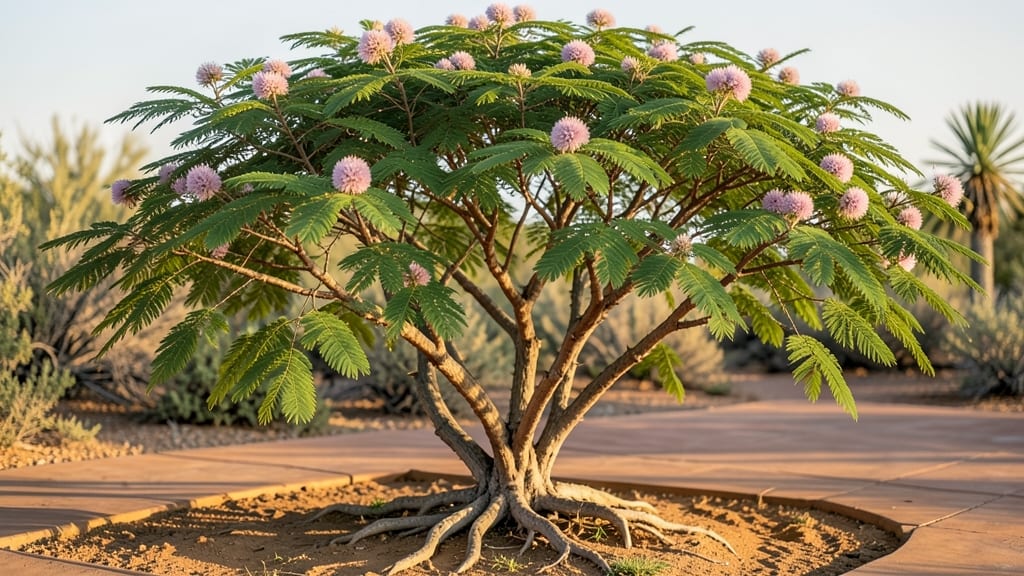
For mimosa trees in Utah, planting cold-hardy varieties like the Albizia julibrissin ‘Summer Chocolate’ ensures survival through Utah's harsh winters and dry spells. These trees need minimal winter care and should be pruned in late winter to maintain shape and remove dead branches, avoiding heavy cuts that can weaken the tree.
Utah's extreme temperature swings and dry conditions demand specific tree varieties that can withstand these challenges. The 'Summer Chocolate' mimosa, for instance, thrives in USDA zones 7-10, making it ideal for Utah's climate. 🌳 Its deep root system also helps it survive droughts, while its small leaves reduce water loss.
Pruning in late winter promotes healthy growth for the upcoming season, but it's crucial to avoid cutting into old wood, which can harm the tree's structure.
These trees also adapt well to Utah's alkaline soils, which many other species struggle with. The key is selecting the right variety and maintaining proper pruning practices to ensure your mimosa tree remains vibrant and healthy year-round.
💡 In This Article
- Cold-Hardy Mimosa Tree Varieties for Utah Climates
- Step-by-Step Mimosa Tree Pruning Guide for Utah Gardens
Cold-hardy mimosa tree varieties for Utah climates
Utah's climate—with winter lows dipping below 0°F in some regions and summer temperatures climbing to 90°F+—creates a unique challenge for mimosa trees. The Albizia julibrissin ‘Summer Chocolate’ variety stands out because its genetic makeup includes a natural cold tolerance mechanism.
This species produces a thick, waxy coating on its leaves and bark that acts like a protective shield against freezing temperatures, similar to how evergreens survive winter. The tree's deep taproot system (reaching 10-15 feet deep) also helps it access groundwater during Utah's dry summers, reducing water stress.
The key to its resilience lies in its USDA hardiness zone 7-10 rating, which aligns perfectly with Utah's zones 5-8. While northern Utah may push zone boundaries, microclimates near urban areas or protected valleys can create suitable growing conditions.
Another advantage is its alkaline soil tolerance—Utah's soils often have a pH of 7.5-8.5, and mimosa trees thrive in these conditions, unlike many ornamentals that struggle with soil pH above 7.0.
The ‘Summer Chocolate’ variety also exhibits slower growth in cooler climates, which helps it conserve energy during Utah's harsh winters.
For gardeners in Utah, selecting bare-root varieties offers additional benefits. These trees establish more quickly because their roots aren't constrained by nursery pots, allowing them to spread aggressively in search of water—a critical adaptation for Utah's 12-16 inches of annual rainfall.
The trade-off is that they require immediate planting after purchase to prevent root desiccation. When choosing a location, prioritize spots with 6+ hours of sunlight daily and well-draining soil, as mimosa trees cannot tolerate waterlogged conditions that lead to root rot.
What most people don't realize is how mimosa trees' compound leaf structure reduces water loss. Each leaf has multiple leaflets (typically 10-20 per leaf), creating a larger surface area for photosynthesis while minimizing individual leaflet exposure to wind and sun.
This design is particularly advantageous in Utah's arid climate, where water conservation is crucial for plant survival. The tree's ability to drop leaves during drought periods (a process called abscission) further demonstrates its adaptive strategies for Utah's fluctuating conditions.
Consider these key factors when selecting a mimosa variety for Utah:
- Cold tolerance: Look for varieties rated for zone 6 or lower if you're in northern Utah, though ‘Summer Chocolate’ remains the safest bet for most areas.
- Drought resistance: All mimosa trees have moderate drought tolerance, but ‘Summer Chocolate’ handles Utah's dry spells best due to its deep root system.
- Soil adaptability: Mimosa trees tolerate a wide pH range (5.5-8.5), making them versatile for Utah's alkaline soils.
- Growth rate: Slower-growing varieties require less maintenance and are better suited for Utah's shorter growing seasons.
The science behind mimosa trees' resilience involves their ability to enter dormancy quickly when temperatures drop, similar to how deciduous trees prepare for winter. During dormancy, the tree's metabolic processes slow dramatically, conserving energy until spring.
This adaptive mechanism, combined with their drought-resistant root systems, makes mimosa trees one of the most reliable ornamental choices for Utah's challenging climate. 🌿