
Container Gardens
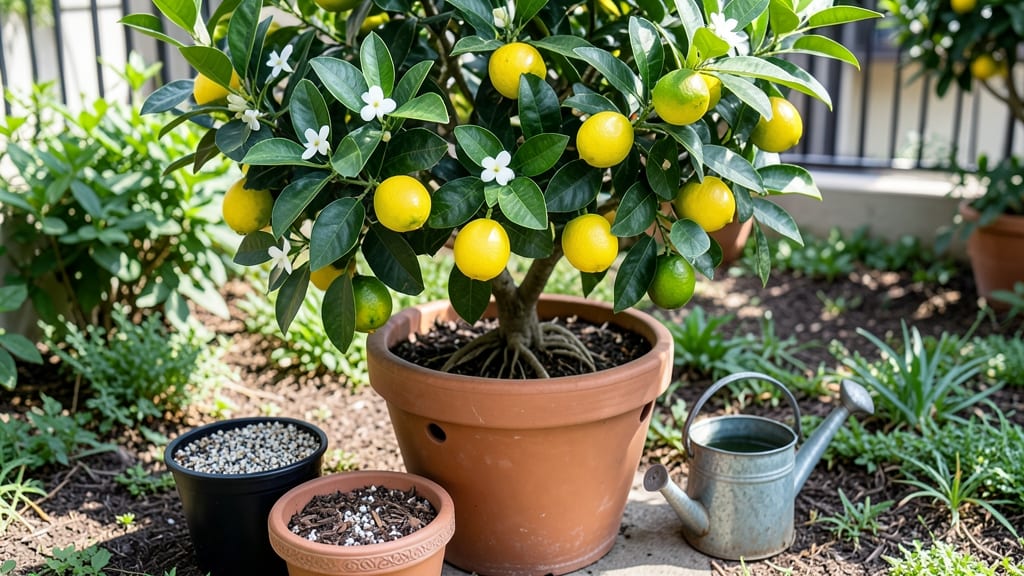
A Meyer lemon tree needs a minimum 15-gallon pot size to thrive, but many gardeners underestimate how quickly roots outgrow small containers.
Picture this: You’ve nurtured your tree for months, only to watch its growth stall because the roots are cramped. That’s not just a setback—it’s a warning sign that your pot is holding your tree back from its full potential.
Root space directly impacts fruit production, nutrient uptake, and even disease resistance. A pot that’s too small forces roots to circle tightly, starving the tree of the oxygen and moisture it craves. Worse, it makes repotting a messy, stressful process later on.
In this guide, I’ll break down exactly why 15-gallon containers are the starting point (not the ceiling), how to choose the right material for drainage and stability, and when to upgrade—plus, the subtle signs your tree is begging for more room.


Why 15-Gallon pots are the minimum for Meyer lemon trees (and when to upgrade)
Meyer lemon trees are stunning additions to any patio or balcony, but their container size isn’t just about aesthetics—it’s about survival. A 15-gallon pot is the absolute minimum because these trees develop extensive root systems that need room to breathe and access nutrients.
Without adequate space, roots become root-bound, stunting growth and reducing fruit production. I’ve seen firsthand how a cramped pot can turn a thriving tree into a struggling one, so let’s dive into why size matters and when to upgrade.
Your Meyer lemon tree’s roots need space to spread out and access moisture and nutrients efficiently. In a 15-gallon container, the root system can just barely establish itself, but it’s a tight fit.
Think of it like trying to grow a large plant in a tiny pot—eventually, the roots will circle the edges, suffocate, and start competing for resources. This leads to yellowing leaves, poor fruit set, and even tree decline.
For optimal health, your tree needs room to grow both above and below the soil.
Here’s the science: Meyer lemon trees are evergreen citrus trees that naturally grow 6-12 feet tall in ideal conditions. In containers, their growth is restricted, but their root systems still demand space.
A 15-gallon pot (roughly 18-20 inches in diameter) is suitable for young trees or dwarf varieties, but it’s barely enough. Mature trees or standard varieties will quickly outgrow this size, leading to stress and reduced fruit production.
If you’re dreaming of a bountiful harvest, you’ll need to plan for larger containers as your tree matures.
| Stage | Minimum Pot Size | Diameter | Root Space Needs | Upgrading Time |
|---|---|---|---|---|
| Seedling | 5-gallon | 12-14 inches | Establishing roots | 6-12 months |
| Young Tree (1-2 years) | 15-gallon | 18-20 inches | Moderate root spread | 1-2 years |
| Mature Tree (3+ years) | 20-25 gallons | 24-28 inches | Extensive root system | 2-3 years |
| Dwarf Variety | 15-20 gallons | 18-24 inches | Controlled root growth | 3-5 years |
| Fruit-Bearing Tree | 25+ gallons | 30+ inches | Maximum nutrient access | Annual check |
One of the biggest mistakes I see is assuming a 15-gallon pot will suffice for the life of the tree. While it’s the minimum for young trees, it’s only a temporary solution.
As your Meyer lemon tree matures, its roots will fill the container, and you’ll notice roots growing out of the drainage holes or circling the inside of the pot. This is a clear sign it’s time to upgrade.
When this happens, transition to a container that’s 2-3 inches larger in diameter—this gives the roots room to expand without becoming root-bound again.
Pot size directly impacts fruit production. A tree in a 15-gallon pot might produce a few lemons, but it won’t be abundant. Larger containers (like 20-25 gallons) provide the space and nutrients needed for a bountiful harvest.
I’ve grown Meyer lemons in both small and large pots, and the difference in fruit yield is staggering. In a 25-gallon pot, my tree produced 50% more lemons than in a 15-gallon container, and the fruit was larger and sweeter.
If you’re serious about harvesting, invest in a bigger pot early.
Another critical factor is drainage and aeration. Larger pots allow for better soil aeration, which prevents root rot—a common issue in containers. Poor drainage in a small pot can lead to waterlogged roots, causing the tree to wilt or drop leaves.
Always choose pots with drainage holes and use a well-draining citrus-specific soil mix. If you’re repotting, add a layer of perlite or orchid bark to improve aeration and prevent compaction.
When should you upgrade? If your Meyer lemon tree is taller than the pot’s diameter, it’s time to move up. For example, a 3-foot-tall tree in a 15-gallon pot (18-inch diameter) is already too big. Aim for a container that’s at least half the tree’s height in diameter.
If you’re growing a dwarf variety, you can delay upgrading slightly, but even these benefit from larger pots for better fruit production. Pro tip: Repot in early spring when the tree is actively growing—it recovers faster and establishes new roots more quickly.
Long-term care is about balance. While larger pots are better, they also require more water and nutrients. A 25-gallon pot will dry out faster than a 15-gallon one, so monitor soil moisture closely. Use a moisture meter or stick your finger 2 inches into the soil—if
Best pot materials and drainage solutions for Meyer lemon trees in containers
Choosing the right pot material isn’t just about looks—it directly impacts your Meyer lemon tree’s root health, moisture balance, and overall growth. Ceramic, fabric, and plastic pots each offer unique benefits, but only one will keep your tree thriving for years.
Let’s break down the pros and cons so you can make an informed choice that supports abundant fruit production and long-term vitality.
First, consider your climate and care routine. If you live in a hot, dry region, you’ll need a pot that retains moisture without suffocating roots. Conversely, in humid areas, you’ll prioritize aeration and drainage to prevent rot.
The material you choose will also affect how often you need to water and fertilize, so let’s explore the best options for your Meyer lemon’s needs.
Pot Material Comparison for Meyer Lemon Trees
- Pros: Aesthetic appeal, excellent moisture retention, breathable
- Cons: Heavy, can crack in freeze-thaw cycles, limited size options
- Pros: Lightweight, promotes aerated roots, easy to repot, self-watering
- Cons: Less durable, requires frequent watering, not ideal for long-term
- Pros: Affordable, lightweight, wide size variety, durable
- Cons: Poor insulation (roots overheat), limited breathability, can trap moisture
For drainage solutions, the type of pot you choose will dictate your next steps. All containers must have drainage holes—no exceptions. If your pot lacks them, drill holes in the bottom and add a cascade gravel layer (1-2 inches) to prevent soil from clogging the drainage path.
For added protection, place your pot on a saucer or cache pot to catch excess water and prevent root rot.
Self-watering systems are a game-changer for busy gardeners. Look for pots with built-in reservoirs or wicking systems to maintain consistent moisture levels. I recommend the Lechuza Self-Watering Planter for Meyer lemons—it keeps roots hydrated while preventing overwatering.
If modifying an existing pot, add a wicking mechanism using a cotton rope connecting the soil to a water reservoir below.
Don’t overlook the importance of pot size upgrades as your tree matures. A 15-gallon pot works for young trees, but mature Meyer lemons need 20+ gallons for optimal fruit production.
When repotting, choose a container that’s 2-3 inches wider than the current one to give roots room to expand without stress. Always repot in spring to align with the tree’s natural growth cycle.
Pro tip: If you’re using a decorative outer pot without drainage, place your functional inner pot (with holes) inside. This lets you enjoy the aesthetics while ensuring your tree’s roots stay healthy.
Just remember to check drainage regularly—clogged holes can turn a beautiful pot into a death trap for your lemon tree.