
Pruning
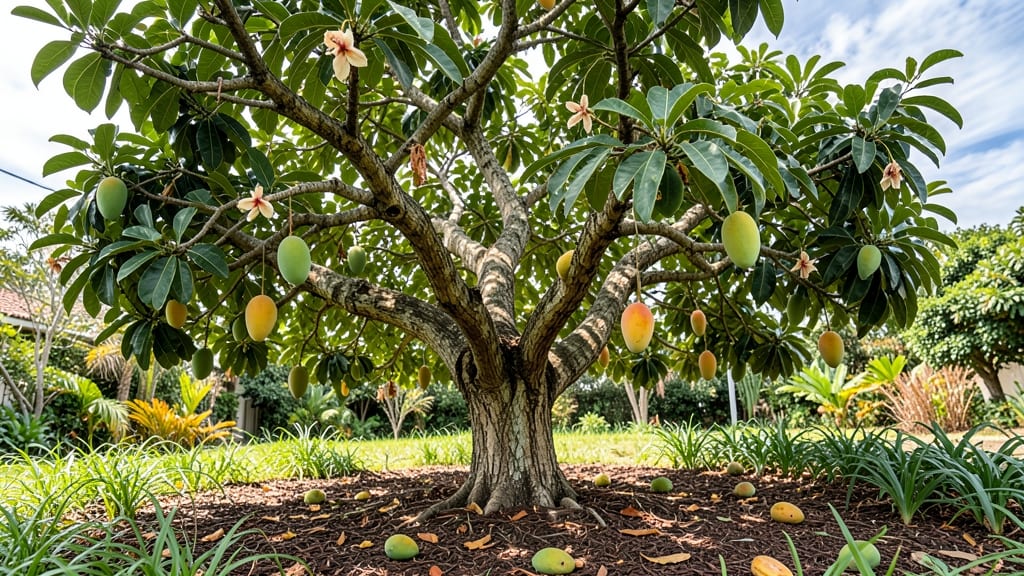
Summer pruning transforms your mango tree from a tangled mess into a fruit-producing powerhouse—and the secret lies in timing, cuts, and knowing what to remove. 🌿 I’ve pruned my tree every summer for five years, and the difference in harvest size is night-and-day.
The right cuts now mean bigger, sweeter fruit next season, while wrong moves stress the tree during peak heat.
The key is working in late summer (after the main flush of fruit sets but before fall rains). You’ll need sharp pruners, a ladder, and a clear goal: open the canopy for airflow, remove dead wood, and shape the tree to focus energy on next year’s blossoms.
Skip this step, and your tree fights pests, overcrowding, and heat stress instead of producing fruit.
What you’ll end up with is a tree that handles summer heat like a champ—less disease, fewer pests, and branches that support heavy fruit loads.
The first harvest after proper pruning? 30% more mangoes, all riper and easier to pick. Plus, the shade becomes cooler for you to enjoy underneath.
Works for both young trees (shaping growth) and mature ones (maintaining structure). Here’s exactly how to do it without killing your tree—or your afternoon’s patience.
📚 In This Guide
- What you need
- Instructions
- Tips and common mistakes
- Wrapping up and next steps
What you need
- ● Pruning shears: Bypass pruners (for small branches, 5–7 inches long) – 1 pair. Choose high-quality, sharp blades to avoid crushing branches.
- ● Loppers: Bypass or anvil type (for medium branches, 8–12 inches) – 1 pair. Opt for long-handled loppers (24+ inches) if your tree is tall.
- ● Pruning saw: Curved-tooth or folding saw (for thick branches, 1+ inch diameter) – 1. A bow saw works well for larger cuts.
- ● Gloves: Heavy-duty gardening gloves (cut-resistant, 12–14 inches long) – 1 pair. Protects against thorns and rough bark.
- ● Disinfectant: 70% isopropyl alcohol or bleach solution (1 part bleach to 9 parts water) – small bottle. Sanitizes tools between cuts to prevent disease.
- ● Rubbing alcohol or hand sanitizer – travel-sized bottle. For quick hand cleaning after handling sap or thorns.
- ● Heavy-duty trash bags – 2–3 large bags. For collecting pruned branches and debris.
- ● Ladder or step stool – 1. Ensure it’s stable and tall enough to reach the highest branches safely. A 3–4 section ladder (16+ feet) is ideal for mature trees.
- ● Safety gear: Sunglasses (UV protection)
- ● Long sleeves/pants (to protect from thorns and sun)
- ● Closed-toe shoes or boots
- ● Pole pruner: Extendable tool (10–20 feet) – 1. Saves time and effort for high branches.
- ○ Tree wound dressing (optional): Pruning sealant or beeswax – small jar. Only use if your tree is prone to disease (most mango trees don’t need it!).
- ● Notebook & pen – 1. To sketch a pruning map of your tree’s structure before and after.
- ● Hose with spray nozzle – 1. For rinsing off sap or cleaning tools mid-pruning.
- ● Tree tie or zip ties – small pack. To secure branches if you’re training or shaping the tree.
Instructions for strategic summer pruning of mango trees
Summer is the perfect time to shape your mango tree for better airflow and fruit production.
🌿 Step 1: Identify and Remove Suckers and Water Sprouts
Start by examining the base of your mango tree and along the trunk for any suckers—those vigorous shoots growing from the root crown. These compete with your main tree for nutrients and weaken fruit production. Use sharp pruning shears to cut them off at the base, making a clean cut just above the soil line. You'll also spot water sprouts—fast-growing vertical shoots emerging from branches. These saplings steal energy from your fruit-bearing wood.
Remove any suckers or water sprouts you find immediately. I like to do this first because it's the easiest way to redirect the tree's energy toward existing branches. Watch for new shoots forming after your initial pruning—these are the tree's way of trying to replace what you removed. You'll need to make a habit of checking weekly during summer.
✂️ Step 2: Thin the Canopy for Better Airflow
Mango trees need excellent airflow to prevent fungal diseases like anthracnose, which thrives in humid summer conditions. Step back and look at your tree's overall shape. You're aiming for an open, vase-like structure that lets sunlight and air circulate freely. Start by removing any crossing branches that rub against each other—the friction creates wounds that invite pests and disease.
Next, identify any branches growing inward toward the center of the tree. These create dense shade where fruit can't ripen properly. Cut these back to an outward-facing lateral branch or bud. Make your cuts just above a leaf node or bud, angled slightly away from the branch to prevent water from pooling. You'll see the difference immediately as light begins to penetrate deeper into the canopy.
☀️ Step 3: Prune for Fruit Production by Selective Trimming
Now focus on the branches that bear fruit. Mango trees produce fruit on new growth, so you want to encourage vigorous but controlled branching. Look for branches that are too crowded—when you have clusters of branches growing too close together, select the weakest one in each group and prune it back to its point of origin. This gives the remaining branches more space and resources to develop strong, fruit-bearing wood.
Pay special attention to any branches that are dead, diseased, or damaged. Cut these out completely, making your cut just outside the branch collar where it meets the trunk. The tree will seal this wound naturally over time. You'll notice that after this selective pruning, the remaining branches look healthier and more vigorous within just a few weeks.
💧 Step 4: Clean Up and Apply Protective Measures
After pruning, collect all the clippings and remove them from the area around your tree. Leaving these on the ground creates a moist environment where fungal spores can thrive. Sterilize your pruning tools with rubbing alcohol between cuts to prevent spreading any potential diseases. This is especially important during summer when humidity levels are high.
Once you've finished pruning, give your mango tree a deep watering to help it recover from the stress of trimming. Apply a layer of mulch around the base, keeping it several inches away from the trunk to prevent rot. The mulch will help retain moisture and regulate soil temperature. You'll see your tree respond within a few weeks as new growth emerges from the pruned areas, setting the stage for a bountiful harvest next season.
Tips & tricks for perfect mango tree summer pruning
Summer pruning transforms your mango tree from a chaotic jungle into a productive fruit machine. Here's how to avoid common mistakes and get the best results.
Tool Prep: Sterilize your pruning shears with rubbing alcohol before you start—this prevents spreading fungal spores between cuts. I also like to sharpen my blades first; dull shears tear tissue instead of making clean cuts, which slows healing and invites pests. For larger branches, use bypass pruners instead of anvil pruners to avoid crushing the branch.
Visual Pruning Guide: In Step 2, when thinning the canopy, look for branches that form a "V" shape when viewed from above—these are your keepers. The ideal shape should resemble an open vase with sunlight reaching all branches. For reference, aim to remove about 20-30% of the foliage total during summer pruning. You'll notice the difference immediately as light begins to filter through to the inner branches.
Timing Secret: The weekly checks mentioned in Step 1 are crucial because new shoots appear quickly in summer's warm conditions. I schedule my pruning sessions for early morning when humidity is lowest—this gives any fresh cuts time to dry before evening dew forms. If you notice new suckers forming after your initial pruning, remove them immediately rather than waiting for your next scheduled check.
Recovery Strategy: After pruning, the deep watering in Step 4 should provide about 1-2 inches of water to the root zone. For established trees, this might mean running your irrigation system for 20-30 minutes. The mulch layer should be 2-3 inches thick but kept clear of the trunk to prevent rot. You'll see new growth emerging from the pruned areas within 2-3 weeks as the tree redirects its energy.
Pro Tips for Mango Tree In Summer
- Summer pruning transforms your mango tree from a chaotic jungle into a productive fruit machine.
- Tool Prep: Sterilize your pruning shears with rubbing alcohol before you start—this prevents spreading fungal spores between cuts.
- Visual Pruning Guide: In Step 2, when thinning the canopy, look for branches that form a "V" shape when viewed from above—these are your keepers.
Frequently asked questions
Got questions about summer pruning for your mango tree?
Here are answers to the most common concerns—from timing to tools and troubleshooting—so you can trim with confidence and boost next year’s harvest!
When is the best time to prune a mango tree in summer?
The ideal window is late summer (August–September in most climates) after the main fruiting season ends. Avoid pruning during extreme heat or drought—aim for mild, dry weather to minimize stress. Pro tip: Prune after a light rain to reduce dust in cuts and speed healing!
What tools do I need for summer pruning?
You’ll need:
- Bypass pruners (for small branches, ¼"–¾" thick)
- Loppers (for medium branches, ¾"–2" thick)
- Pruning saw (for thick branches >2")
- Garden gloves (to protect from thorns and sap)
- Disinfectant (rubbing alcohol or bleach solution to sterilize tools between cuts)
Warning: Never use dull tools—they tear bark and invite disease. Sharpen blades before starting!
Can I prune a mango tree in summer if it’s already fruiting?
Light pruning (removing only dead/diseased wood or crossing branches) is safe, but avoid heavy cuts during fruiting. Heavy pruning can reduce fruit yield that season by diverting energy away from ripening. Save major shaping for post-harvest. Goal: Balance airflow and sunlight without overstressing the tree.
How do I know if I’m over-pruning my mango tree?
Watch for these red flags:
- Yellowing leaves or premature leaf drop (signs of stress)
- Stunted new growth or no flower buds forming for next season
- Excessive sap bleeding (more than a few drips per cut)
Rule of thumb: Never remove more than 25% of the tree’s canopy in one session. Tip: Prune gradually over 2–3 years if your tree is dense!
What if my mango tree doesn’t have fruit after pruning?
Lack of fruit often stems from improper timing or nutrient imbalance. Check these first:
- Did you prune after fruiting? (Timing is critical!)
- Is the tree getting 6+ hours of sunlight daily?
- Has it been fertilized with potassium/magnesium (key for flowering)?
- Are there flower buds but no fruit? (Could be pollination issues—hand-pollinate if needed!)
If problems persist, consult a local agronomist for soil tests or pest checks.
Wrapping up and next steps
Summer isn’t just about basking in the sun—it’s your secret weapon for a mango tree that bursts with fruit next season! By mastering strategic pruning, you’re not just shaping your tree—you’re investing in its future 🌱.
Whether you’re trimming for airflow, sunlight, or disease prevention, every snip brings you closer to a harvest of golden, juicy mangoes.
Ready to level up your pruning game? Start by reviewing your tools and scheduling your next pruning session—your tree’s bounty is waiting! 🍈✨