
Pruning
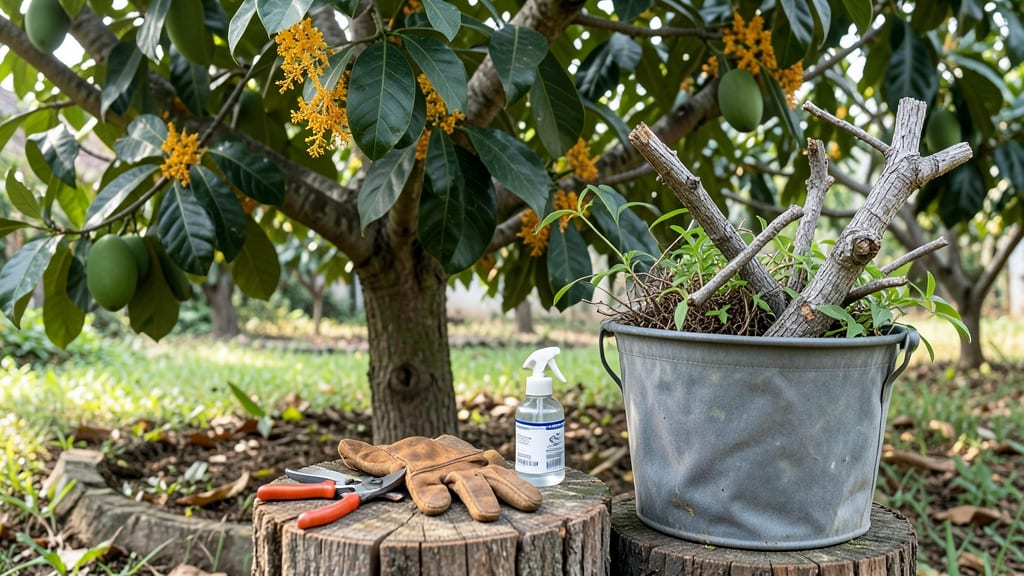
Pruning a mango tree for fruit isn't about hacking branches—it's about opening up sunlight and air to where it matters most. 🌱 I learned this the hard way after my first attempt left the tree looking like a windblown mess with no fruit in sight.
The right cuts at the right time turn a dense jungle of branches into a productive fruit factory.
You only need three things: sharp pruning shears, a clean cloth for sanitizing cuts, and a sunny morning to work. Focus on removing dead wood first, then thin out crowded branches to let light reach the center.
Most home gardeners over-prune—stick to removing no more than 25% of the tree's canopy in one session, and always cut just above a leaf node or outward-facing branch.
After pruning, your tree will reward you with bigger, sweeter fruit and fewer pests hiding in thick foliage. Within weeks, you'll see fresh green shoots pushing through, and by next season, those branches will be heavy with mangoes.
The key is patience—don't expect instant results, but the long-term payoff is worth every cut.
This works for container-grown trees too, just scale down the tools and cuts. For tropical climates, prune during the dry season when the tree isn't actively growing—this prevents stress and gives you the best fruit set. Let's get those branches shaped right!
📚 In This Guide
- What you need
- Instructions
- Tips and common mistakes
- Wrapping up and next steps
What you need
- ● Pruning shears (bypass or anvil type) – Choose sharp, high-quality shears (4-6" blade length) for clean cuts on smaller branches.
- ● Loppers (long-handled) – For branches ½" to 2" in diameter (8-10" blade length, bypass type preferred).
- ● Pruning saw (folding or bow saw) – For thick branches (2"+ diameter). Opt for a curved blade (10-14") for precision.
- ● Disinfectant (70% isopropyl alcohol or bleach solution) – Clean tools between cuts to prevent disease spread (1 part bleach to 9 parts water).
- ● Gloves (cut-resistant, gardening-grade) – Protect hands from thorns and rough bark (nitrile-coated gloves work well).
- ○ Pruning sealant (optional but recommended) – A wound dressing (like Tanglefoot Tree Wound Pruning Sealer) to coat cuts larger than ½" and prevent infection.
- ● Ladder or sturdy step stool – For reaching higher branches safely (ensure it’s stable and rated for your weight).
- ● Heavy-duty trash bags or bucket – For collecting pruned branches and debris (5+ gallon capacity).
- ● Sharpie or permanent marker – To mark branches for removal (if planning ahead).
- ● Safety glasses – Protect your eyes from debris (especially when using a saw).
- ● Pole pruner (extension pruner) – For high branches without a ladder (10-15' reach).
- ● Tree climbing spikes (if experienced) – Only for very tall trees (use with extreme caution!).
- ● Hose or water spray bottle – To rinse tools and clean sap off cuts.
- ● Work apron or tool belt – Keeps essentials handy while you work.
- ● Notebook & pen – To jot down notes on pruning decisions for future reference.
Step-by-step guide to pruning a mango tree for maximum fruit production
Here’s the method I use to keep my mango tree healthy and loaded with fruit year after year.
🌿 Step 1: Understand the Right Time to Prune
Timing is everything with mango trees. Prune during late winter or early spring, just as new growth begins but before buds swell. This gives the tree time to heal before the heat of summer. Avoid pruning in fall—it stresses the tree and can prevent flowering.
Watch for new leaf buds along the branches as your signal. These tiny, swollen areas indicate the tree is waking up from dormancy. If you see them, it’s time to grab your pruners. Pruning at the wrong time can reduce fruit yield by up to 30%, so don’t rush it.
✂️ Step 2: Remove Dead, Diseased, or Crossing Branches
Start by cutting out any dead, broken, or diseased branches—they drain energy from the tree. Use clean, sharp pruners to make cuts just outside the branch collar (the swollen area where the branch meets the trunk). This prevents infection and promotes faster healing.
Next, remove branches that rub against each other or grow inward. These compete for sunlight and space, weakening the tree’s structure. Look for branches growing at narrow angles—they’re more likely to break under fruit weight. Cut these back to a strong outward-facing branch.
☀️ Step 3: Thin Out Overcrowded Branches for Better Airflow
Mango trees produce fruit on new growth, so you want an open canopy that lets sunlight reach the center. Remove 20-30% of the smallest, innermost branches to improve airflow. This reduces humidity inside the tree, cutting down on fungal diseases like anthracnose.
Focus on branches that are too close together—keep only the healthiest ones. You’ll know you’re doing it right when you can see light filtering through the canopy after pruning. Avoid over-thinning, though; a mango tree needs enough foliage to photosynthesize and fuel fruit production.
🌱 Step 4: Shape the Tree for Strong Growth and Fruit Bearing
Step back and assess the tree’s shape. Mangoes thrive with a balanced, vase-like form—this lets sunlight reach all branches evenly. Prune to encourage outward-facing branches rather than upward-growing ones, which can become weak and break under fruit weight.
Cut back suckers (shoots growing from the base or trunk) to 1-2 inches above the ground. These compete with the main tree for nutrients. For larger branches, make cuts at a 45-degree angle just above a leaf node or bud. This encourages new growth in the right direction.
🪴 Step 5: Clean Up and Monitor for Recovery
After pruning, sterilize your tools with rubbing alcohol to prevent spreading disease. Collect and dispose of debris—don’t leave it under the tree, as it can harbor pests. Water the tree deeply to help it recover, but avoid overwatering, which can stress fresh cuts.
Watch for new leaf growth in 2-4 weeks—this is your sign the tree is healing. If you see yellowing leaves or oozing sap at pruning cuts, the cuts may have been too severe. Next time, aim for cleaner, more precise cuts. With proper pruning, your mango tree will reward you with bigger, sweeter fruit in the coming seasons.
Tips & tricks for pruning a mango tree for maximum fruit
These simple adjustments will help you avoid common mistakes and get the most out of your pruning efforts.
Timing is Everything: I can't stress this enough—pruning during late winter or early spring, right when you spot those tiny swollen leaf buds, makes all the difference. Those buds signal the tree's awakening from dormancy, and cutting too early or too late can reduce fruit production by up to 30%. If you're in a warmer climate where winter isn't as pronounced, look for the first signs of new growth rather than relying strictly on the calendar.
Tool Prep Makes the Difference: Before you even touch a branch, sterilize your pruners with rubbing alcohol. I learned this the hard way after seeing my carefully pruned tree develop infections. Make clean cuts just outside the branch collar—this is where the tree's natural healing begins. Using dull tools can crush the bark and leave jagged edges that invite disease, so invest in a good pair of bypass pruners if yours aren't sharp enough to slice a piece of paper.
Visual Cues for Better Pruning: When thinning branches in Step 3, imagine sunlight filtering through your tree's canopy—that's your goal. Focus on removing branches that are growing inward or at narrow angles, as these are more likely to break under fruit weight. A good rule of thumb is to remove about 20-30% of the smallest, innermost branches. This might sound drastic, but it's what creates that open, vase-like shape mango trees love.
Recovery Check: After pruning, watch for new leaf growth in 2-4 weeks as your tree's healing sign. If you notice yellowing leaves or oozing sap at the pruning cuts, you might have cut too deeply. Next time, aim for cleaner cuts just outside the branch collar. Remember, the goal is to encourage new growth, not create wounds that take forever to heal.
Pro Tips for Prune A Mango Tree For Fruit
- These simple adjustments will help you avoid common mistakes and get the most out of your pruning efforts.
- Timing is Everything: I can't stress this enough—pruning during late winter or early spring, right when you spot those tiny swollen leaf buds, makes all the difference.
- Tool Prep Makes the Difference: Before you even touch a branch, sterilize your pruners with rubbing alcohol.
Frequently asked questions
Got questions about pruning your mango tree for a bountiful harvest?
You’re not alone! Here are answers to the most common concerns—so you can prune with confidence and watch those sweet fruits grow.
When is the best time to prune a mango tree for fruit?
The ideal window is late winter or early spring, just before new growth starts (usually 2–3 weeks before blooming). Avoid pruning during heavy fruit production—this stresses the tree. For tropical climates, prune after the dry season to minimize disease risks.
How much should I cut back when pruning for fruit?
Remove 20–30% of the tree’s canopy in young trees (3–5 years old) to encourage airflow and fruit development. For mature trees, focus on selective pruning: trim dead branches, water sprouts, and overcrowded limbs. Never cut more than 1/3 of the tree at once—this can shock it!
Can I prune a mango tree during fruiting season?
It’s not recommended to prune heavily while the tree is bearing fruit, as it diverts energy away from ripening. Light maintenance (like removing dead branches) is fine, but save major pruning for off-season. Over-pruning now can reduce next year’s yield.
What if my mango tree doesn’t produce fruit after pruning?
Several factors could be at play:
- Age: Young trees (under 3 years) may need more time to mature.
- Climate: Mangoes thrive in warm, tropical conditions—check your tree’s sunlight and temperature needs.
- Pollination: Some varieties need cross-pollination; plant a second tree if yours is self-pollinating but still struggling.
- Nutrients: Fertilize with potassium-rich soil amendments (like banana peels or wood ash) to support flowering.
Should I seal pruning cuts on a mango tree?
No need for sealants! Mango trees heal naturally and sealing cuts can trap moisture, inviting fungal infections. Just use clean, sharp tools and make cuts at a 45-degree angle (about 1/4 inch above a bud). Let the tree’s natural defenses do the rest.
Pro tip: Keep a pruning journal! Note when you prune, how the tree responds, and any fruit production changes—this helps refine your technique over time.
Wrapping up and next steps
Pruning your mango tree isn’t just about trimming—it’s about unlocking its full fruiting potential! 🌱 By mastering the right techniques, timing, and tools, you’ll encourage healthier growth, better airflow, and a bountiful harvest. Remember, consistency is key, so keep an eye on your tree’s progress and adjust as needed.
Now that you’re armed with these year-round growth secrets, why not take the next step? Share your pruning wins with fellow gardeners or dive deeper into mango tree care—like fertilizing or pest control—to keep your tree thriving for seasons to come! 🍈✨