
Trees
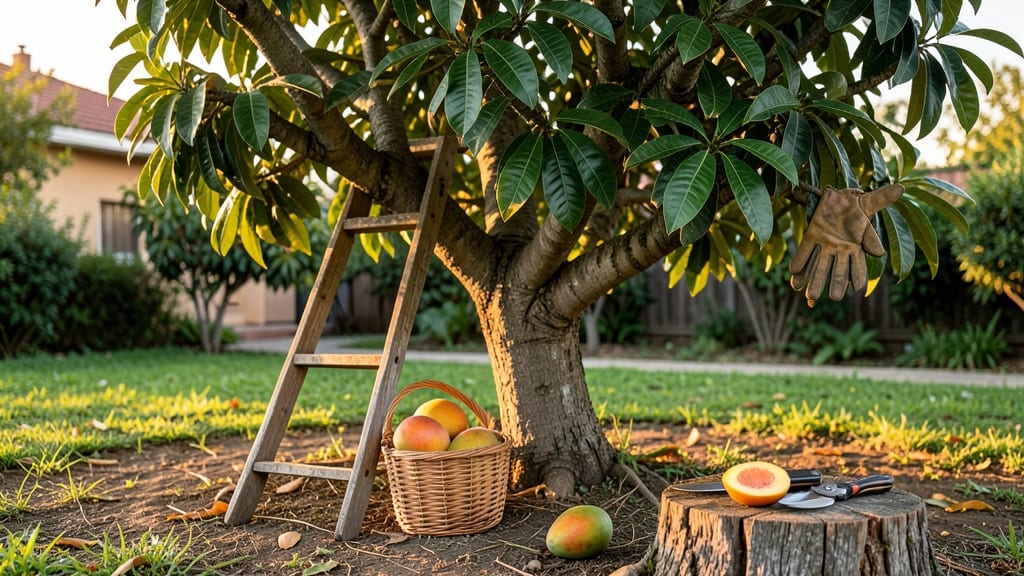
Harvesting your mango tree at just the right moment transforms a sweet, juicy reward into a delicious feast—or a disappointing bite if you miss the window.
Picture this: you’ve waited years for your 🥭 mango tree to bear fruit, only to pick them too soon and end up with tart, underripe mangoes that never reach their full potential. Or worse, you leave them hanging too long and risk dropping them to the ground.
The difference between a perfect harvest and a wasted one often comes down to knowing exactly when to pluck those golden oranges from the branch.
In tropical and subtropical regions like USDA Zones 10-11, mangoes typically ripen between late spring and summer, but the exact timing depends on your variety and climate. Some mangoes ripen on the tree, while others need a few days off the branch to develop their signature sweetness.
Below, I’ll walk you through the key signs—color, scent, texture, and even the seed’s readiness—to ensure you never miss peak ripeness again.
Once you’ve mastered the art of harvesting, I’ll share my go-to storage secrets to keep your mangoes fresh for weeks, whether you’re enjoying them fresh, freezing them for smoothies, or gifting them to neighbors. Let’s turn your mango tree’s bounty into something truly unforgettable.


How to determine the perfect time to harvest mangoes for optimal ripeness
Harvesting mangoes at the right moment transforms a good fruit into an exceptional one. Unlike many fruits, mangoes don’t ripen well after picking, so timing is everything.
I’ve learned the hard way—overripe mangoes turn mealy, while underripe ones stay tart and fibrous. The key lies in mastering five key indicators that signal peak ripeness.
First, observe the skin color shift. Most varieties transition from bright green to yellow, orange, or red hues, depending on the cultivar. For example, 'Haden' mangoes develop a deep red blush, while 'Kent' turns golden-yellow. This change isn’t instant—it can take weeks depending on climate and variety.
| Indicator | Tropical Climates | Subtropical Climates | Notes |
|---|---|---|---|
| Skin Color | Yellow/Red (April–June) | Orange/Red (June–August) | Varieties like 'Alphonso' stay green longer. |
| Fruit Give | Yields slightly to thumb pressure | Firm but not hard (avoid mushy) | Test 3–5 fruits daily in final week. |
| Scent | Sweet, floral aroma at stem | Fruity, tropical perfume | Sniff near the blossom end—no scent = underripe. |
| Seed Firmness | td style="padding: 8px; border-bottom: 1px solid #ccc;">Brown seed coat insideSame as tropical varieties | Cut one open—white seed = not ready. | |
| Harvest Window | Year-round (peaks spring) | June–September (avoid frost) | Subtropical trees need warmer microclimates. |
Next, check for the 'fruit give'—a gentle squeeze should yield slightly, like a ripe avocado. Press near the stem; if the fruit doesn’t give at all, it’s underripe.
Overripe mangoes feel mushy or leak juice when pressed. I test 3–5 fruits daily in the final week to track progress.
The scent test is my favorite trick. Hold a mango near your nose and sniff the area where the stem meets the fruit. A ripe mango emits a sweet, floral aroma—almost like a mix of citrus and tropical blossoms.
No scent? It’s not ready yet. This cue is especially reliable for 'Alphonso' or 'Keitt' varieties, which stay green longer.
For a foolproof method, cut open one mango to check the seed coat. A ripe mango’s seed will have a brown, papery interior. If it’s still white or translucent, wait 3–7 more days.
This trick works for all varieties, including those that ripen on the tree (like 'Haden') or off the tree (like 'Tommy Atkins').
Regional timing matters too. In tropical climates (USDA Zones 10–11), mangoes ripen year-round, with peaks in April–June. Subtropical growers (Zones 9b–10) should harvest June–August, avoiding late-season rains that split fruit. My Florida-grown 'Julie' mangoes, for example, always ripen 2 weeks earlier than my California 'Cogshall' tree.
Watch for monsoon season if you’re in Southeast Asia or South Florida. Heavy rains can cause fruit splitting or disease pressure, forcing an early harvest. In these cases, pick mangoes when they’re 70–80% ripe and ripen indoors.
I use a paper bag trick: place the mango in a bag with a banana or apple to speed up ethylene gas production.
Finally, avoid these common mistakes: harvesting based on color alone (some varieties stay green), waiting until the fruit falls (it’s usually overripe), or ignoring the variety’s ripening habit.
For example, 'Kent' mangoes ripen on the tree, while 'Tommy Atkins' need off-tree ripening. Keep a harvest journal to track your tree’s patterns—note the year, variety, and exact ripening date.
With these indicators, you’ll never miss the perfect harvest window again. The reward? Mangoes so sweet and juicy they taste like summer in every bite. Now, grab your pruners and get ready to pick—just don’t forget to share a few with your neighbors! 🌱🍈
Step-by-step mango harvesting techniques to avoid damage and maximize yield
Harvesting mangoes at the right time and with the right technique ensures you get the sweetest flavor and best texture. Once your fruit shows ripe color changes and releases easily from the branch, it’s time to act carefully.
Using the wrong method can bruise the fruit or damage the tree. Below, I’ll walk you through the proven techniques I’ve used to maximize yield while keeping my mangoes intact and delicious.
Before you begin, gather your tools: a sharp harvesting knife, a ladder or pruning shears for higher branches, and a bucket or basket lined with a soft cloth to cushion the fruit. Always work on a dry, sunny day to minimize the risk of disease.
The goal is to harvest gently—mangoes bruise easily, and damage shortens their shelf life. Let’s dive into the step-by-step process to ensure you bring home only the best fruit.
How to Harvest Mangoes Without Damage
- 1 Identify ripe fruit: Look for mangoes that yield slightly when gently squeezed near the stem. The skin should have deepened in color (yellow, orange, or red, depending on the variety) and emit a sweet aroma at the stem.
- 2 Use the right tool: Hold the mango firmly with one hand and use a sharp harvesting knife to cut the stem at a 45-degree angle, leaving a small nub (about ½ inch) attached to the branch. Avoid twisting or pulling the fruit.
- 3 Handle with care: Place harvested mangoes in a soft-lined basket or bucket to prevent bruising. Never stack them more than 2-3 layers deep to avoid crushing. Handle the fruit by the stem end, not the blossom end, to reduce damage.
- 4 Prune strategically: After harvesting, inspect the tree for dead or crossing branches. Use sterilized pruning shears to trim back any branches that look diseased or overcrowded. Prune just above a leaf node to encourage new growth.
- 5 Post-harvest care: Rinse the fruit with cool water only if it’s visibly dirty, then dry gently with a clean towel. Store mangoes at room temperature until fully ripe (about 2–5 days), then refrigerate to extend freshness for up to 2 weeks.
One common mistake I see is harvesting mangoes that are still firm or green. These won’t ripen properly off the tree and will end up tasteless or mealy. Always wait until the fruit is ready to pick—patience pays off with sweeter, juicier mangoes.
If you’re unsure, do the twist test: gently twist the mango back and forth at the stem. If it separates easily, it’s ripe and ready.
For large trees, safety is key. Use a stable ladder or hire a professional if branches are too high. Never stand on wobbly surfaces or reach too far—mango trees can be heavy, and falls are a real risk.
If you’re harvesting in a hot climate, work during the early morning to avoid heat exhaustion. Always keep a water bottle and take breaks in the shade.
After the harvest, your mango tree will need some post-harvest care to prepare for the next season. Apply a light layer of compost around the base to replenish nutrients, and water deeply but not excessively to avoid root rot.
This is also a great time to fertilize lightly with a balanced citrus fertilizer to support new growth for next year’s crop. With the right care, your tree will reward you with even more delicious mangoes in the future!