
Pruning
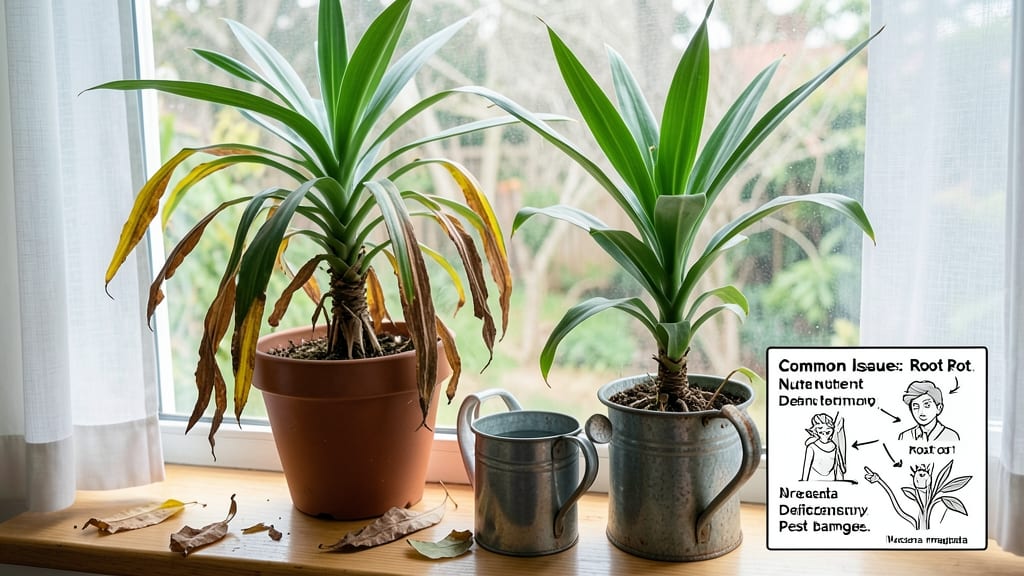
Your Madagascar dragon tree dying isn’t beyond saving—even with root rot, strategic pruning can bring it back to life. 🌱 I’ve nursed back three of these striking plants from the brink, and the key starts with identifying the damage before cutting anything.
The first sign? Yellowing leaves that won’t bounce back, or stems that feel mushy when pressed.
Start by gently removing the plant from its pot and inspecting the roots—healthy ones are firm and white, while rotten roots smell foul and turn black or brown. Trim away the damaged sections with sterilized pruners, leaving only clean cuts.
The goal isn’t to panic; it’s to give your dragon tree a fighting chance by removing the rot before it spreads.
After pruning, repot in fresh, well-draining soil and a container with drainage holes. Water lightly only when the top inch of soil feels dry, and place it in bright, indirect light. Within weeks, you’ll see new growth pushing from the base—proof that your dragon tree is on the mend.
Prevention is easier than rescue: water only when needed, avoid soggy soil, and check the roots every few months. With the right care, your dragon tree will bounce back stronger than ever, its iconic red-edged leaves reaching for the light again.
📚 In This Guide
- What you need
- Instructions
- Tips and common mistakes
- Wrapping up and next steps
What you need
- ● Pruning shears or sharp bypass pruners – Sterilized (70% isopropyl alcohol or bleach solution) to prevent bacterial spread. Size: 5–7 inches (12–18 cm) for precision.
- ● Clean, sharp knife or saw – For larger cuts (if needed), sterilized the same way.
- ● Disposable gloves – Nitrile or latex-free (for hygiene and sensitivity protection).
- ● Root rot treatment – Hydrogen peroxide (3%) or copper fungicide (follow label instructions).
- ● Well-draining potting mix – Cactus/succulent blend (or DIY: 60% perlite, 30% coconut coir, 10% orchid bark). Quantity: Enough to repot (1–2 gallons, depending on pot size).
- ● New, breathable pot – Terracotta or fabric with drainage holes. Size: 1–2 inches (2.5–5 cm) larger in diameter than the current pot.
- ○ Spray bottle – For misting rooting hormone (optional but helpful for cuttings).
- ● Aluminum foil or plastic wrap – To cover cuttings (if propagating).
- ● Root stimulator gel – Like Rootone or mycorrhizal fungi to boost recovery.
- ● Moisture meter – To monitor soil hydration post-pruning.
- ● Activated charcoal granules – 1 tbsp per gallon of mix to prevent future rot.
- ● Slow-release fertilizer – Balanced (10-10-10) for post-recovery growth (apply 2–3 months after repotting).
How to revive a dying Madagascar dragon tree from root rot
Here’s my go-to method for diagnosing and fixing root rot in these striking plants.
🌱 Step 1: Remove the Plant and Assess Root Damage
Gently slide the Madagascar dragon tree out of its pot—tap the sides if needed, but avoid yanking. Look for healthy roots: they’re firm, white, and slightly woody. Dark, mushy, or foul-smelling roots are rotten and must be trimmed away. I use sterilized pruning shears to cut back only the damaged sections, leaving at least ½ inch of healthy root attached to each cut.
Real talk: if more than 30% of the roots are rotten, the plant may not recover. But don’t give up yet—even heavily damaged specimens can bounce back with the right care. Rinse the roots under lukewarm water to remove old soil and check for hidden rot spots.
✂️ Step 2: Prune the Stems to Reduce Stress
While the roots are healing, the plant’s energy will focus on recovery. Cut back 20-30% of the tallest stems just above a leaf node (where leaves attach). This encourages bushier growth later and prevents further strain on compromised roots. I like to make clean cuts with shears dipped in rubbing alcohol to avoid infection.
Watch for yellowing or crispy leaves—these are signs of stress. Remove any leaves that feel mushy or blackened at the base. The goal is to reduce the plant’s workload while it rebuilds its root system. You’ll see new growth within 4-6 weeks if the roots are salvageable.
🪴 Step 3: Repot in Fresh, Well-Draining Soil
Use a pot that’s only 1-2 inches larger in diameter than the root ball to avoid overwatering. Fill the bottom with a 1-inch layer of perlite or orchid bark for drainage. Mix 50% cactus/succulent soil with 50% perlite or pumice to create a fast-draining blend. This prevents future rot by keeping roots oxygenated.
Place the dragon tree in the pot and fill gaps with the new mix, pressing lightly to secure it. Water just enough to moisten the soil—no soggy bottoms allowed. Let the plant sit in a shaded spot for 10-14 days to recover before reintroducing bright, indirect light.
💧 Step 4: Adjust Watering and Light for Recovery
Wait 7-10 days before watering again. When you do, water deeply until it drains freely from the bottom, then empty the saucer. Madagascar dragon trees hate soggy soil—only water when the top 2 inches of soil feel completely dry. Overwatering is the #1 killer of these plants, so err on the side of underwatering during recovery.
Move the plant to a location with bright, indirect light (east or west windows work best). Avoid direct sun until new growth appears—too much light stress can stall recovery. You’ll know it’s healing when you see new leaves emerging from the stem nodes.
🌿 Step 5: Monitor and Encourage New Growth
After 6-8 weeks, check the roots again by gently lifting the plant. Healthy roots should be firm and white. If you see more rot, repeat the pruning and repotting steps. Fertilize lightly with a balanced houseplant fertilizer (half-strength) once new growth appears, but skip it for the first 2 months of recovery.
This is the moment that matters: patience pays off. A dragon tree that’s been revived often grows even stronger, with thicker stems and fuller foliage. Keep an eye out for pests like mealybugs—they’ll take advantage of a stressed plant. Wipe leaves with a damp cloth weekly to keep them clean and healthy.
Tips & tricks for saving your Madagascar dragon tree from root rot
Here's what nobody tells you about bringing these resilient plants back from the brink.
Root Inspection Tip: When you're checking for rot in Step 1, look for the color transition zone between healthy and rotten roots—it's often a brownish ring. This helps you see exactly where to cut. I've saved plants where the rot was hidden just beneath the surface by being thorough with this step. Use a bright flashlight to see better in dark pots.
Pruning Strategy: In Step 2, focus on removing the longest stems first—they're the most energy-intensive. Cut just above a leaf node where you see a small bump or scar on the stem. This ensures new growth will sprout from that spot. If you're unsure where to cut, imagine drawing a line through the leaf node—your cut should be about ¼ inch above it.
Soil Mix Secret: For Step 3, if you don't have perlite or pumice, crushed gravel or even coarse sand works in a pinch. The key is that whatever you add must drain water quickly. I've used leftover aquarium gravel successfully—just rinse it well first. The goal is to create air pockets around the roots to prevent future rot.
Recovery Timeline: The 10-14 day shaded recovery period in Step 4 is non-negotiable. During this time, place the plant in a spot where it gets only indirect light—like behind a sheer curtain. This prevents light stress while still allowing photosynthesis. You'll notice the leaves might look droopy, but this is normal as the plant conserves energy for root recovery.
Pro Tips for Madagascar Dragon Tree Dying
- Here's what nobody tells you about bringing these resilient plants back from the brink.
- Root Inspection Tip: When you're checking for rot in Step 1, look for the color transition zone between healthy and rotten roots—it's often a brownish ring.
- Pruning Strategy: In Step 2, focus on removing the longest stems first—they're the most energy-intensive.
Frequently asked questions
about your Madagascar Dragon Tree (Dracaena marginata) struggling with root rot can save time and stress. Here are the most common concerns:Why is my Madagascar Dragon Tree dying even though I water it less?
Overwatering is the #1 killer, but underwatering can also stress the plant. Root rot thrives in soggy soil, but if roots are already damaged, even reduced watering may not revive it. Check soil moisture 1-2 inches deep—if dry, water lightly; if damp, hold off. If roots are mushy or black, prune and repot immediately.
How long does it take to recover after pruning for root rot?
Recovery depends on damage severity. With healthy pruning (removing dead stems and repotting in fresh soil), you may see new growth in 4-8 weeks. Severe cases could take 2-3 months. Keep humidity high (mist leaves daily) and avoid fertilizing until new shoots appear.
Can I save my Dragon Tree if only the tips are brown and drooping?
Yes! Brown tips often signal underwatering or fluoride buildup (from tap water). Trim dead tips with clean pruners, flush soil with distilled water, and adjust care. If roots are firm and white, the plant is likely salvageable. For extra help, boost humidity with a pebble tray.
What’s a good alternative if my Dragon Tree keeps dying?
If root rot strikes repeatedly, try low-maintenance alternatives like:
- Snake Plant (Sansevieria) – Thrives on neglect, drought-tolerant.
- ZZ Plant (Zamioculcas) – Nearly indestructible, stores water in rhizomes.
- Ponytail Palm (Beaucarnea) – Stores water, forgiving of irregular watering.
Should I use hydrogen peroxide on my Dragon Tree’s roots?
Yes! 3% hydrogen peroxide (1 part peroxide to 4 parts water) can disinfect roots and promote healing. Soak roots for 10 minutes before repotting. It kills fungus/bacteria but is safe for plants. Pro tip: Repeat weekly for 2 weeks post-pruning for best results.
Wrapping up and next steps
Your Madagascar Dragon Tree (Dracaena marginata) can bounce back with the right care! Root rot rescue through strategic pruning is all about timing, tools, and tenderness—now you’ve got the know-how to tackle it. 🌱✨ Remember, patience and consistency are key; monitor your plant’s progress and adjust as needed.
Ready to take action? Start by assessing your tree’s health today, then follow the steps you’ve learned. With a little effort, your dragon tree will thrive again—and you’ll be the hero it deserves! 💪🌿