
Pruning
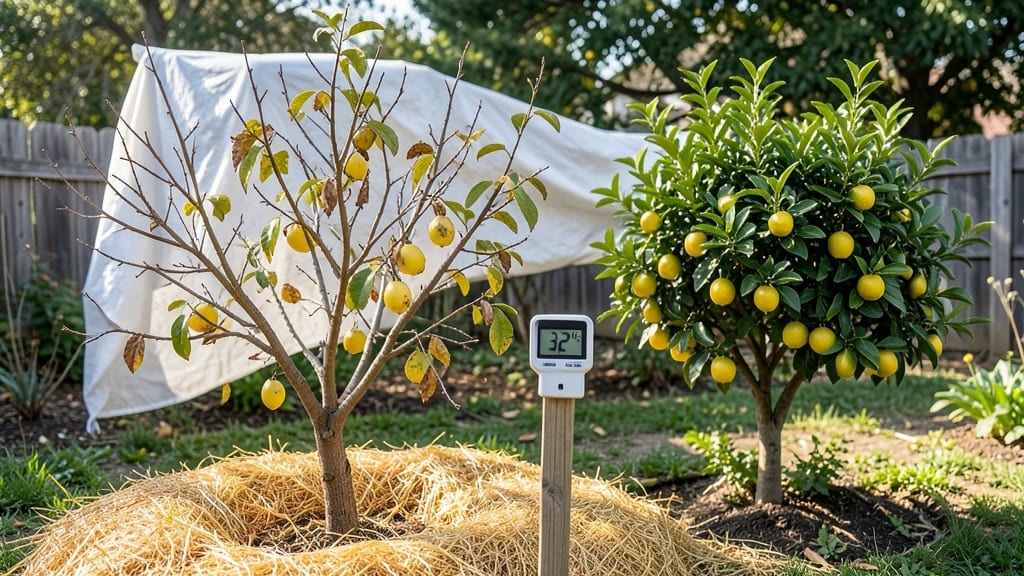
Understanding lemon tree low temperature limits reveals that most varieties handle 20–25°F (-6 to -4°C) but suffer leaf damage below 32°F (0°C) and die in freezing conditions (below 28°F/-2°C). Cold-resistant types like 'Meyer' or 'Ponkan' endure slightly cooler temps, though all benefit from winter protection.
Lemon trees aren't built for cold climates, and their survival hinges on how quickly temperatures drop. 🍋 The real danger lies in prolonged exposure to near-freezing temps, which causes cellular damage by forming ice crystals in plant tissues.
Younger trees and new growth are especially vulnerable because their cells haven't fully hardened off. What's interesting is how roots and canopies react differently—roots can tolerate slightly colder soil temps than leaves, which is why mulching becomes crucial for insulation.
For gardeners in marginal climates, the key is preparation. Start by choosing cold-hardy varieties if you're in Zone 8 or colder, then layer protection methods like frost cloths, mulch rings, and even indoor potting for extreme winters.
I've had success with a simple DIY solution: wrapping the tree trunk with bubble wrap and covering the canopy with a lightweight blanket secured with bricks. The goal is to create a microclimate that buys your tree time to recover from temperature swings.
💡 In This Article
- How Cold Affects Lemon Tree Physiology
- Protecting Lemon Trees from Frost: Step-by-Step Guide
How cold affects lemon tree physiology
When temperatures dip near or below 32°F (0°C), lemon tree cells begin a dangerous process called extracellular freezing. Ice crystals form in the spaces between cells, rupturing delicate membranes and disrupting nutrient flow.
The plant's vascular system—especially the xylem—can become blocked with ice, preventing water uptake even if roots remain unfrozen. This is why you'll often see leaf blackening or wilting after a cold snap, even if the tree's trunk appears intact. 🌱
Younger trees are far more vulnerable because their cell walls are thinner and contain more water, making them prime targets for ice formation. Mature trees, with thicker bark and hardened wood, can survive slightly colder temps, but their canopies remain the weakest link.
The roots, buried in the soil, actually tolerate colder temperatures than the above-ground parts—the ground acts as a natural insulator, often staying 5-10°F warmer than the air. This is why mulching (adding 3-4 inches of organic material) becomes so critical for root protection.
The metabolic slowdown begins at 50°F (10°C), but true danger arrives when temps fall below 40°F (4°C). At this point, photosynthesis nearly halts, and the tree's energy reserves deplete rapidly.
Cold-hardy varieties like 'Meyer' lemon have evolved slight adaptations—thicker cuticles and higher sugar content in their cells—which act like natural antifreeze, lowering the freezing point of their fluids by 1-2°F compared to standard varieties. However, even these resilient types can't withstand prolonged exposure to 28°F (-2°C) or below without protection.
What most gardeners overlook is how wind chill exacerbates the problem. A calm night at 25°F (-4°C) feels far worse with a 10 mph wind, dropping the effective temperature to 15°F (-9°C) at the tree's surface.
This is why physical barriers—like frost cloths or even cardboard boxes—create a microclimate that can make the difference between survival and death. The goal is to reduce heat loss by 30-50% during critical cold snaps.
Seasonal variations also play a role. Trees that experience gradual temperature drops in fall (like those in USDA Zone 9) often harden off better than those hit by sudden freezes.
This is why gardeners in unpredictable climates should monitor 7-day temperature forecasts and prepare protection methods 2-3 weeks before the first frost warning. The tree's ability to acclimate depends on this preparation—similar to how humans build tolerance through gradual exposure to cold.
Consider this comparison: A 10-year-old Meyer lemon tree might survive a 22°F (-6°C) night with proper protection, while a 3-year-old Eureka lemon would likely suffer severe damage.
The difference lies in the tree's cambium layer—the growth tissue just beneath the bark—which thickens with age and provides better insulation against cold. This is why pruning for cold resilience should focus on maintaining a balanced canopy rather than aggressive thinning, which exposes more vulnerable tissue.