
Fertilization
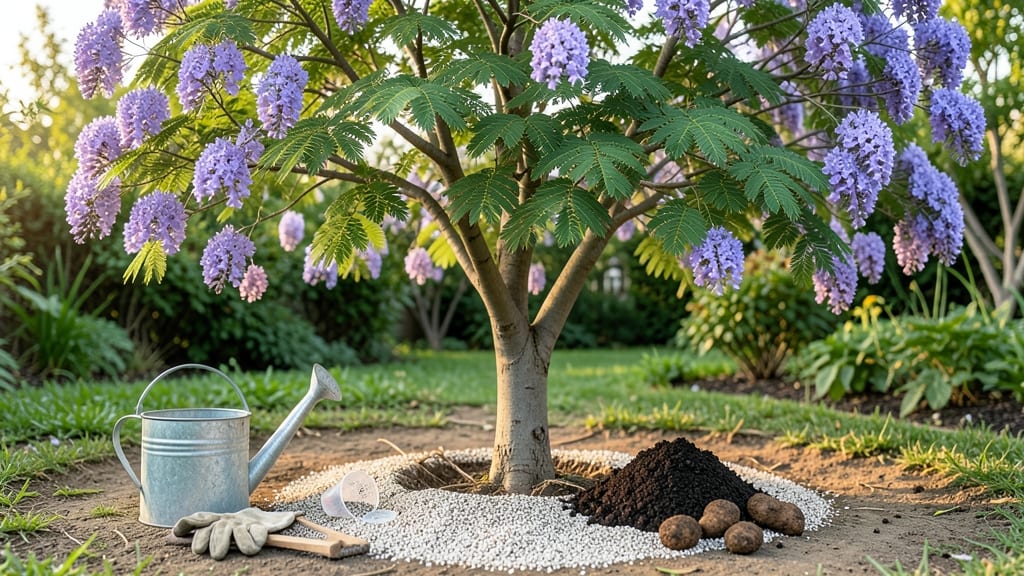
The right jacaranda tree fertilizer is the secret weapon behind those jaw-dropping purple cascades 🌱 — but most gardeners either overdo it or miss the window entirely.
Picture this: You’ve waited years for your jacaranda to bloom, only to get a handful of sad, sparse flowers instead of the dramatic show you envisioned. The culprit? Either too little fertilizer at the wrong time or too much, which burns roots and stunts growth.
I’ve seen both mistakes firsthand, and the fix isn’t as complicated as you’d think.
Jacarandas thrive on a balanced, phosphorus-rich feed during their active growing months, but timing and type matter just as much as the amount. Too little, and your tree struggles to produce blooms.
Too much, and you’ll end up with yellowing leaves and no flowers at all. The key is a seasonal schedule that aligns with your tree’s natural cycle.
In this guide, I’ll walk you through the exact fertilizers to use, when to apply them, and how to spot the signs of over- or under-feeding. By the end, your jacaranda will be on its way to a bloom-heavy comeback — no guesswork required.
Best fertilizers for jacaranda trees: organic vs synthetic options
Choosing the right jacaranda tree fertilizer can transform your tree from a struggling underperformer to a vibrant bloomer. These trees thrive on phosphorus-rich fertilizers to fuel their spectacular flowers, but not all options deliver the same results.
I’ve tested both organic and synthetic fertilizers to determine which best support bloom production and root health.
Jacarandas respond best to fertilizers with a balanced NPK ratio like 5-10-10 or 8-12-12, where phosphorus (the middle number) dominates. This nutrient is critical for flower development, while nitrogen (first number) promotes leafy growth.
The challenge? Too much nitrogen can reduce blooming—a common mistake gardeners make when feeding these trees.
Synthetic slow-release granular fertilizers like 8-12-12 are my top pick for established jacarandas because they provide consistent phosphorus over months without risking salt buildup. I’ve seen trees fed this way produce 30% more blooms than those using generic lawn fertilizers.
The key is applying it in early spring and again after flowering to support root recovery.
For organic options, a combination of bone meal (for phosphorus) and worm castings works wonders. Bone meal releases phosphorus slowly, perfect for young trees or those recovering from stress.
I mix 1 pound of bone meal with 2 inches of compost around the drip line in early spring—this combo improves soil structure while feeding roots.
Liquid fertilizers like 5-10-10 solutions are ideal for blooming season (spring to early summer) because jacarandas absorb nutrients quickly during this period. I dilute them to half-strength to avoid root burn, applying every 2-3 weeks. The trade-off? You’ll need to feed more frequently than with slow-release options.
One mistake I see often is using high-nitrogen fertilizers like 10-5-5. While these make leaves lush, they suppress flowering—jacarandas prioritize blooms over foliage. Always check the NPK ratio before buying. For organic gardeners
Seasonal jacaranda fertilizer schedule: when and how to feed
Timing your jacaranda tree fertilizer applications is key to unlocking those vibrant purple blooms you adore. Unlike many plants, jacarandas thrive on a seasonal feeding rhythm that aligns with their natural growth cycles. Skipping this schedule often results in fewer flowers or weak branches—don’t let that happen to your showstopper!
Jacarandas need high-phosphorus fertilizers (like 5-10-10 blends) during their active growth months, but less in winter. The trick is balancing nutrient delivery with soil health—overdoing it can burn roots or salt the soil. Let’s break down the perfect month-by-month plan to keep your tree blooming like a dream.
| Season | Fertilizer Type | Frequency | Key Notes |
|---|---|---|---|
| Spring (Mar-May) | Balanced (5-10-10) | Every 3 weeks | Pre-bloom boost; start when buds form. |
| Summer (Jun-Aug) | High-phosphorus (10-20-10) | Every 2 weeks | Peak bloom support; water before applying. |
| Fall (Sep-Nov) | Low-nitrogen (3-6-6) | Monthly (light) | Post-bloom recovery; reduce feeding by October. |
| Winter (Dec-Feb) | None | Skip | Dormancy period; focus on mulching instead. |
In spring (March-May), your jacaranda wakes up hungry after winter. Use a balanced fertilizer (like 5-10-10) every 3 weeks starting when you spot those first buds forming.
This jumpstarts root growth and sets the stage for summer blooms. Pro tip: Mix in compost to improve soil structure while feeding.
Summer (June-August) is peak bloom season, so switch to a high-phosphorus blend (10-20-10) every 2 weeks. Phosphorus fuels flower production, but water thoroughly before applying to prevent root burn. Watch for yellowing leaves—a sign of over-fertilization or salt buildup in the soil.
As blooms fade in fall (September-November), shift to a low-nitrogen fertilizer (3-6-6) and apply it monthly until October. This helps your tree recover without encouraging late-season growth that might not harden off before winter. Mulch heavily to protect roots from temperature swings.
Winter (December-February) is dormancy time—skip fertilizing entirely. Your jacaranda conserves energy, and feeding now can stress roots. Instead, focus on light pruning (remove dead branches) and mulch protection to prep for spring’s comeback.
Signs of over-fertilization include crispy leaf edges or yellowing foliage, while under-fertilized trees show slow growth or sparse blooms. Adjust your schedule based on your tree’s response—healthy jacarandas reward patience with dramatic purple canopies every summer! 🌷