
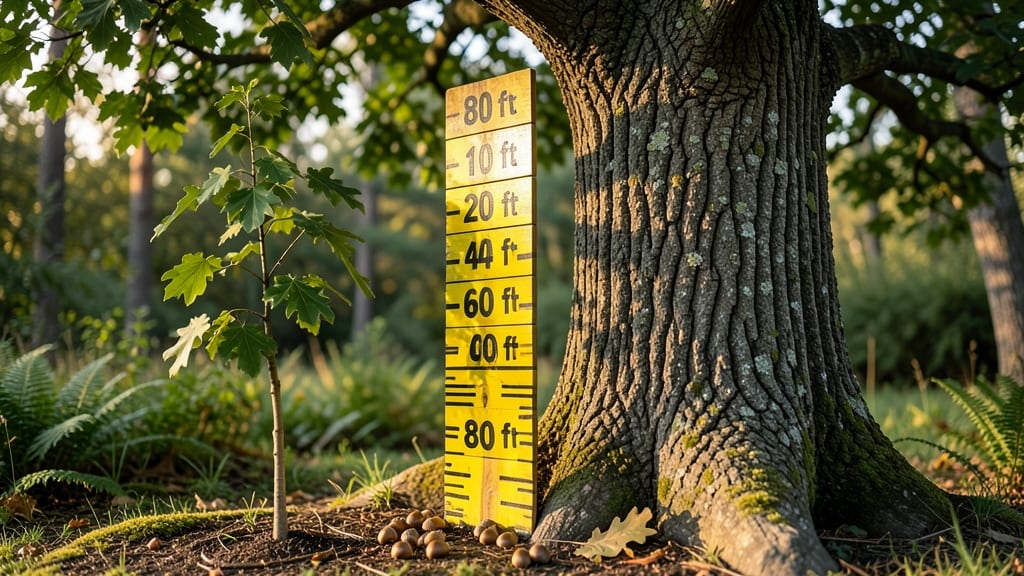
How Tall Do Oak Trees Grow: Mature Heights by Fastest-Growing Species

How To

How Tall Do Oak Trees Grow: Mature Heights by Fastest-Growing Species

Oak trees grow to how tall does an oak tree grow at maturity between 60 and 100 feet, depending on the species and growing conditions 🌳 — a fact that can make or break your backyard plans.

If you’re dreaming of a majestic oak tree in your backyard, knowing its mature height is key to planning space, sunlight, and long-term care. Some species tower over 100 feet, while others stay compact enough for urban gardens—here’s the breakdown.

Fast-growing varieties like red oak or pin oak can reach 70 feet in just a few decades, while slower-growing types may take centuries to reach their full potential. The right soil, sunlight, and spacing make all the difference.

Below, I’ll cover the fastest-growing species, how height affects planting, and even the smallest oaks perfect for tight spaces—so you can pick the perfect tree for your yard.

Dwarf
N/A (no common dwarf varieties)
Container friendly
Semi-Dwarf
N/A (no common semi-dwarf varieties)
Most popular
Standard
60-100 ft
Full orchard size

Mature heights of fastest-growing oak species compared

If you're planning to plant oak trees in your landscape, understanding their mature heights is crucial for spacing and long-term growth planning. Oak trees vary dramatically in height—from towering giants to more manageable varieties—with some of the fastest-growing species reaching impressive sizes in just a few decades.

Let’s compare the 8 fastest-growing oak varieties, their height progression, and ideal growing conditions to help you choose the perfect fit for your space.

Fast-growing oak species like pin oak and red oak can add 3-5 feet per year in their youth, making them ideal for those seeking quick shade or privacy solutions. However, even these speedy growers will eventually reach heights that require careful planning.

Below, we break down their height ranges from sapling to maturity, along with their growth rates and best climates for thriving.

Why height matters: Oak trees with mature heights over 60 feet need ample space for their root systems and canopy spread. Smaller varieties, while still impressive, are better suited for urban or suburban yards. Always consider your property’s layout and local regulations before planting.

Species Height at 10 Years Mature Height Annual Growth Rate (Young) Ideal USDA Zones Best Climate
Pin Oak 20-25 ft 50-75 ft 3-5 ft/year 4-8 Humid continental
Red Oak 18-22 ft 60-80 ft 2-4 ft/year 3-9 Temperate
White Oak 15-20 ft 70-100 ft 2-3 ft/year 4-9 Humid
Bur Oak 25-30 ft 60-80 ft 3-4 ft/year 3-8 Drought-tolerant
Swamp White Oak 20-25 ft 50-70 ft 2-3 ft/year 5-9 Wet soils

How oak tree height affects planting and maintenance

When planning to plant an oak tree, its mature height isn’t just about aesthetics—it directly impacts where you plant it, how you prune it, and even what your soil and root zone should look like.

A 100-foot white oak needs far different spacing than a 30-foot pin oak, and their root systems expand differently too. Understanding these factors helps you avoid property damage and ensures your oak thrives for centuries.

Oak trees grow both upward and outward, with their canopy width often matching their mature height. For example, a red oak reaching 75 feet tall may spread 50-60 feet wide, while a bur oak (shorter at 40-50 feet) spreads 30-40 feet.

This means spacing isn’t just about height—it’s about the entire footprint of the tree, including its roots.

āš ļø WARNING: Root Systems Can Damage Foundations and Sidewalks āš ļø

Oak tree roots can extend 1.5-3x the canopy width, often reaching 50-75 feet from the trunk. Planting too close to driveways, foundations, or septic systems risks lifting sidewalks or cracking pipes. Always maintain a minimum 20-30 feet distance from structures for large oaks. Smaller varieties like ā€˜Seven Sons’ oak (20-30 feet) need 10-15 feet of clearance.

🌳

Proper pruning techniques also depend on height. Tall oaks (like white or bur oaks) require professional climbers for high branches, while smaller oaks (like chinquapin oak) can be pruned with ladders.

Always prune in late winter or early spring to avoid stressing the tree during active growth. Remove dead or diseased branches first, then thin the canopy to improve airflow and sunlight penetration.

Soil preparation is another height-dependent factor. Deep-rooted oaks (like white oaks) need well-draining, slightly acidic soil (pH 5.0-7.0) with ample organic matter. Amend heavy clay soil with compost or sand to prevent root suffocation.

For urban planting, consider root barriers if space is limited, but ensure they don’t restrict root expansion entirely—oaks need room to breathe!

Light requirements shift as oaks mature. Young oaks need full sun (6+ hours daily), but their canopy shade can suppress understory plants. If planting near other trees, space them 30-50 feet apart to avoid competition.

Mulch around the base (but not touching the trunk) with wood chips or pine straw to retain moisture and regulate soil temperature.

Finally, don’t forget long-term maintenance. Tall oaks may need cable bracing for weak limbs, while smaller oaks benefit from regular shape pruning. Monitor for pests like oak wilt or gypsy moths, which can stress even the hardiest species.

With the right spacing, soil, and care, your oak will grow strong—and so will your garden’s legacy. 🪓

ā˜…ā˜…ā˜…ā˜…ā˜…5.0(13 reviews)
Categories How To