
Plants
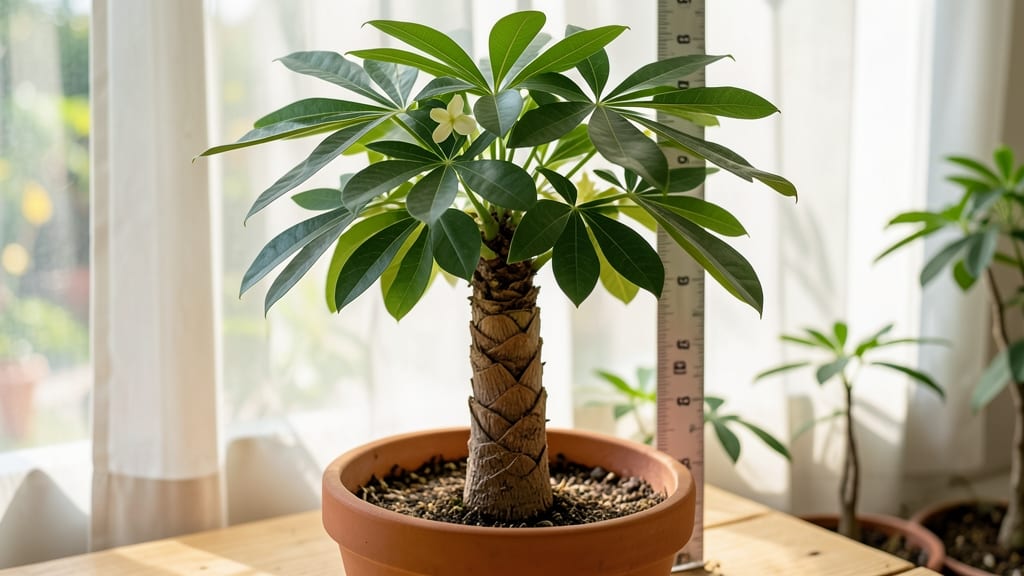
A money tree plant grows between 6 and 10 feet tall indoors when left unpruned, though many gardeners keep it smaller with regular trimming.
If you’ve ever wondered whether your money tree (Pachira aquatica) will become a towering jungle giant or stay a manageable houseplant, you’re in the right place.
The height of this beloved indoor plant depends on its variety, care routine, and growing conditions—so let’s break down the real height ranges you can expect.
From dwarf varieties that top out at 2-4 feet to standard types reaching 10 feet or more, we’ll cover how to control its growth and debunk common myths about its size.


Money tree height ranges by variety: small, medium, and large growth expectations
When you bring home a Pachira aquatica—commonly called a money tree—one of your first questions is likely, "How tall will this get?" The answer depends entirely on the variety you choose and how you care for it.
Unlike some plants that grow predictably, money trees offer a range of heights from compact desk companions to tall statement pieces. Let’s explore the real growth expectations for each type.
First, it’s important to note that braiding doesn’t affect height. The intricate braided trunks you often see are purely aesthetic and don’t influence how tall the plant grows. What truly matters is the rootstock variety and your pruning habits.
Some varieties naturally stay small, while others can reach impressive heights if left unchecked. Below, I’ll break down the three main categories: small (dwarf), medium, and large growth expectations.
🌱 Did You Know? Money trees grown outdoors in tropical climates can reach 30 feet tall, but indoor varieties are carefully bred to stay much smaller. The standard money tree you’ll find in nurseries is a dwarf cultivar designed for home growth.
The dwarf money tree is perfect if you’re working with limited space, like a home office or apartment. These varieties typically mature between 2–4 feet tall and grow at a slow to moderate pace.
They’re often sold as "baby money trees" and are great for beginners because they tolerate neglect better than larger varieties. Just place them near a bright, indirect light source, and they’ll thrive without demanding much attention.
For those who love the classic look, the standard money tree (often braided) is the most popular choice. These plants usually reach 4–6 feet tall indoors, making them a striking centerpiece in living rooms or entryways. The braiding process itself doesn’t slow growth—it’s purely decorative.
However, the three-trunk braid requires careful training when young to maintain its shape. Without pruning, some standard varieties can even surpass 6 feet, especially if given plenty of light and nutrients.
If you’re dreaming of a jungle-like indoor tree, the unpruned large money tree is the way to go—but be warned, it’s not for the faint of heart. These varieties can grow 6–10 feet tall indoors if left unchecked, which is why they’re rare in homes.
To keep one manageable, you’ll need to prune regularly and provide optimal growing conditions, including larger pots and higher humidity. They’re more common in greenhouses or tropical conservatories.
A common misconception is that money trees will grow into bonsai-sized shrubs if you prune them heavily. While you can certainly train a money tree to stay small, it won’t naturally grow like a bonsai.
Bonsai techniques require years of specialized pruning and wiring, which is overkill for most indoor growers. Instead, focus on light pruning to encourage bushier growth and control height.
For example, pinching back the top few inches of new growth will prompt the plant to branch out instead of stretching upward.
Light exposure plays a huge role in determining how tall your money tree will grow. Plants grown in low-light conditions tend to become leggy and tall as they stretch toward any available light.
To keep your money tree compact and bushy, place it within 3–5 feet of a south- or east-facing window where it can receive bright, indirect light for 4–6 hours daily.
If you notice your plant developing long, sparse stems, it’s a sign it needs more light or a smaller pot to encourage root-bound growth.
Another factor that affects height is pot size. Money trees thrive when their roots are slightly root-bound, which encourages upward growth. If you repot your plant into a much larger container too soon, it may focus its energy on filling the extra space rather than growing taller.
Aim to upgrade pot sizes gradually, moving up by only 1–2 inches in diameter every 2–3 years. This slow-and-steady approach helps maintain a manageable height while keeping the plant healthy.
Finally, let’s address the biggest myth about money tree height: that braiding makes them grow slower. This is false. The braiding process involves weaving the
How to control money tree height: pruning, light, and care tips for desired size
Your money tree (Pachira aquatica) can grow into a stunning indoor centerpiece, but its height depends entirely on how you manage it. Without proper care, it may stretch toward light sources, becoming leggy and unruly.
The good news? With the right techniques, you can keep it compact, encourage bushier growth, and maintain a shape that fits your space perfectly.
Start by understanding that pruning is your most powerful tool for controlling height. Regular trims not only cap growth but also stimulate new branches, creating a fuller, more balanced plant.
Pair this with strategic light exposure and container selection, and you’ll have complete control over your money tree’s size and shape.
💡 Pro Tip for Height Control
A money tree left unpruned indoors can reach 6-10 feet over several years, but with regular pruning, you can keep it between 3-5 feet. The key is to trim back 1/3 of new growth in spring to encourage bushiness while preventing vertical stretching.
To encourage a bushier shape, focus on pruning the topmost leaves and stems. This signals the plant to grow outward rather than upward. Use clean, sharp pruning shears to make cuts just above a leaf node, and avoid leaving stubs.
For a braided money tree, this technique is especially important to maintain the intricate patterns while controlling height.
Light plays a crucial role in height management. Place your money tree near an east or north-facing window where it receives bright indirect light for 4-6 hours daily. Avoid south-facing windows, which can cause leggy growth as the plant stretches toward the light.
If your space lacks natural light, supplement with a grow light for 12-14 hours per day to maintain compact growth.
Container size also impacts height. Choose a pot that’s only 1-2 inches larger than your plant’s root ball to restrict upward growth. Money trees thrive in well-draining soil, so opt for a mix designed for tropical plants.
Repot every 2-3 years to refresh the soil and prevent root-bound stress, which can lead to sudden height spikes.
Finally, fertilize during the growing season (spring and summer) with a balanced 10-10-10 NPK fertilizer to support healthy growth without overstimulating vertical expansion. Reduce feeding in fall and winter when growth naturally slows. With these adjustments, your money tree will stay lush, proportionate, and perfectly sized for your home.