
How To
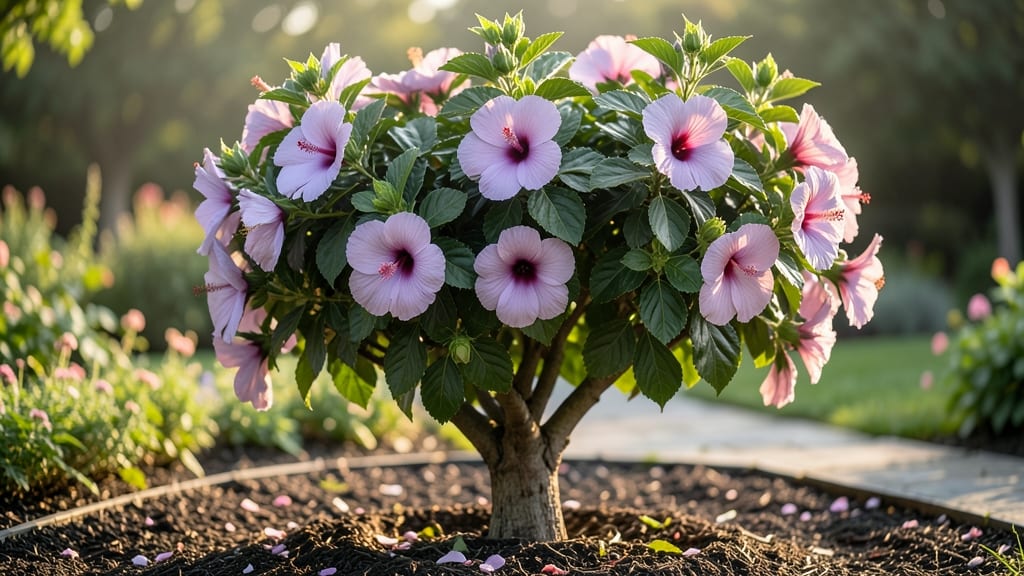
How tall does a hibiscus tree grow? It can range anywhere from 3 feet to towering 30 feet, depending on the variety and growing conditions.
If you’re dreaming of a tropical paradise in your backyard, hibiscus trees can deliver stunning blooms—but their size varies wildly from compact shrubs to towering giants. Before planting, knowing the exact height range of your chosen variety could save you from awkward trimming or space constraints later.
For example, tropical hibiscus varieties like ‘Hawaiian Sunset’ can reach 20 to 30 feet in ideal conditions, while hardy types such as ‘Dwarf Blue’ stay neatly between 3 and 5 feet.
Even within the same species, factors like pruning, sunlight, and climate play a huge role in how tall your 🌺 hibiscus tree will grow.
In this guide, you’ll discover how to choose the right variety for your space, how to control height naturally, and which zones support the biggest blooms—so you can enjoy your hibiscus without it taking over your garden.


Hibiscus tree height by variety: dwarf to giant size comparison
Choosing a hibiscus tree means selecting between compact shrubs that fit patios and towering giants that need backyard space. The height differences aren't just about aesthetics—they dictate planting locations, pruning needs, and even winter survival strategies.
For example, my ‘Pride of Barbados’ stays under 5 feet while my neighbor's ‘Hawaiian Sunset’ reaches 25 feet—both stunning, but with completely different care requirements.
Most gardeners assume all hibiscus trees grow into 10-foot giants, but the reality spans from 3-foot dwarf varieties to 30-foot tropical specimens. Understanding these ranges helps avoid overcrowded gardens or underutilized space.
Below, I’ve organized the most popular varieties by mature height, including their growth habits and ideal planting scenarios to help you visualize their final size before committing.
🌺 Pro Tip: Always check the variety name—even within the same species, heights can vary by 10+ feet. For instance, Hibiscus rosa-sinensis (tropical hibiscus) includes both 3-foot patio types and 20-foot shade trees.
| Variety | Mature Height | Growth Habit | Space Needs | Best For |
|---|---|---|---|---|
| ‘Pride of Barbados’ (Dwarf) | 3–5 ft | Compact, rounded | Patio pots, small gardens | Containers, borders |
| ‘Dwarf Red’ | 4–6 ft | Upright, bushy | Small yards, foundation plantings | Privacy screens, hedges |
| ‘Lady Stanley’ (Hardy) | 6–8 ft | Multi-stemmed shrub | Medium gardens, borders | Cold-hardy zones, cut flowers |
| ‘Hawaiian Sunset’ (Tropical) | 20–30 ft | Fast-growing, tree-like | Large yards, tropical landscapes | Shade trees, privacy screens |
| ‘Blue Chiffon’ (Rare) | 15–20 ft | Vigorous, sprawling | Spacious backyards | Specimen plants, focal points |
| ‘Woodbridge’ (Hardy) | 8–12 ft | Upright, pyramidal | Medium to large gardens | Cold climates, mixed borders |
When selecting a hibiscus variety, consider your garden layout. A 3-foot dwarf like ‘Pride of Barbados’ thrives in 15-gallon containers on patios, while a 20-foot tropical like ‘Hawaiian Sunset’ needs 15+ feet of clearance from structures.
My ‘Lady Stanley’ grows to 8 feet but stays narrow enough for tight spaces between my house and fence.
Growth habits also matter—tropical hibiscus (like ‘Hawaiian Sunset’) grow 3–5 feet per year if unpruned,
How growth Zones affect hibiscus tree height and care needs
Your USDA hardiness zone plays a crucial role in determining which hibiscus varieties will thrive—and how tall they’ll grow.
Tropical hibiscus (Hibiscus rosa-sinensis) loves Zones 9–11 and can reach 15–20 feet tall, while hardy hibiscus (Hibiscus syriacus) in Zones 7–8 typically maxes out at 8–12 feet. The colder your zone, the more dwarf or compact varieties you’ll want to avoid winter dieback.
In Zones 9–11, tropical hibiscus grows aggressively with minimal pruning, while Zones 7–8 require regular winter pruning to protect against frost damage.
Even in warm climates, wind exposure and container size can stunt growth—dwarf varieties like ‘Pride of Barbados’ stay under 5 feet when grown in pots, while giant types need full sun and shelter to reach their full height potential.
🌱
| Zone Range | Hibiscus Type | Mature Height | Cold Tolerance | Pruning Needs |
|---|---|---|---|---|
| Zones 9–11 | Tropical hibiscus | 15–20 ft | No winter care | Minimal (shape only) |
| Zones 7–8 | Hardy hibiscus | 8–12 ft | 30°F–20°F | Heavy winter pruning |
| Zones 6 & below | Dwarf varieties | 3–6 ft | Container protection | Light annual pruning |
In Zones 9–11, tropical hibiscus grows aggressively with minimal pruning, while Zones 7–8 require regular winter pruning to protect against frost damage.
Even in warm climates, wind exposure and container size can stunt growth—dwarf varieties like ‘Pride of Barbados’ stay under 5 feet when grown in pots, while giant types need full sun and shelter to reach their full height potential.
For Zones 6 and colder, opt for dwarf varieties like ‘Luna Red’ or ‘Dwarf Blue’, which thrive in containers and rarely exceed 5 feet. These varieties also handle container life better, making them ideal for patios or balconies.
In contrast, giant hibiscus in warmer zones may need staking or trellises to support their weight and prevent toppling in storms.
Always match your hibiscus variety to your zone—planting a tropical type in Zone 7 without winter protection will result in frost damage and stunted growth. Start with container-grown plants if your zone is marginal, as they’re easier to move indoors during cold snaps.
🌿