
How To
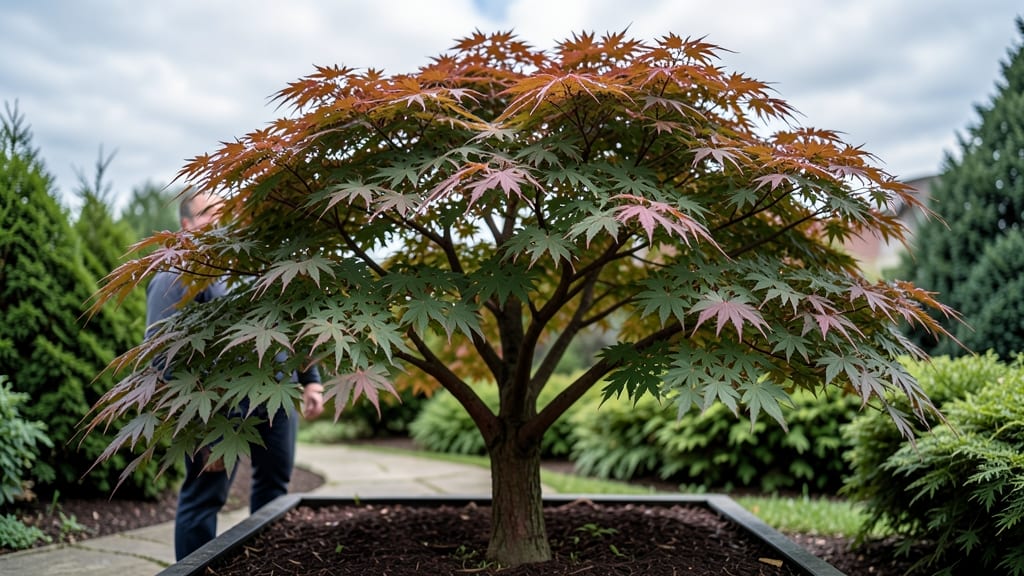
A Japanese Maple tree 🌳 can grow anywhere from 6 feet to over 30 feet tall, depending on the variety and growing conditions you provide.
Picture this: You’ve spent months planning your garden’s focal point, only to realize your stunning Bloodgood Japanese Maple will dwarf your patio in a decade. Or maybe you’re eyeing a Shishigashira for a tiny courtyard—only to watch it stretch toward the sky faster than expected.
The truth is, some varieties stay compact, while others reach towering heights. Whether you’re working with a small yard or a sprawling landscape, understanding these height ranges—and what influences them—is the key to choosing the perfect tree for your space.
Below, I’ll break down the height ranges by variety, the factors that shape growth, and how pruning (or lack of it) can turn a 6-foot beauty into a 20-foot giant—or keep it perfectly sized for years.


Japanese maple tree height ranges by variety: from dwarf to giant sizes
Choosing a Japanese maple tree often comes down to one key question: how tall will it grow? The answer depends entirely on the variety you select, as some stay compact enough for small yards while others reach towering heights.
For example, the 'Shishigashira' variety tops out at just 6-10 feet, perfect for container gardening, while the 'Bloodgood' can soar to 25-35 feet, making it a statement piece for large landscapes. Understanding these ranges helps you plan spacing and avoid future pruning headaches.
Japanese maples grow at different rates too—some varieties like 'Emperor I' grow 1-2 feet per year in ideal conditions, while slower growers like 'Crimson Queen' may only add 6 inches annually.
This growth rate variation means a 10-foot tree in 5 years isn't guaranteed—it depends on your climate zone, soil quality, and care routine. Let's break down the most popular varieties by their mature height categories so you can make an informed choice.
🌳 Visual Guide: Use this table to compare Japanese maple varieties by height, growth rate, and ideal planting scenarios.
| Variety | Mature Height (ft) | Growth Rate (ft/year) | Best For | Notes |
|---|---|---|---|---|
| 'Shishigashira' | 6-10 | 0.5-1 | Containers, small yards | Dwarf, upright form |
| 'Crimson Queen' | 10-15 | 0.3-0.6 | Borders, patio trees | Slow-growing, weeping branches |
| 'Emperor I' | 12-15 | 1-2 | Medium yards, focal points | Fast-growing, vibrant red |
| 'Bloodgood' | 25-35 | 1-1.5 | Large landscapes, shade trees | Classic upright form, deep red |
| 'Shishigashira Nishiki' | 8-12 | 0.4-0.8 | Containers, bonsai-style | Variegated, slow-growing |
| 'Green Cascade' | 6-10 | 0.5-1 | Small spaces, patios | Weeping habit, green foliage |
| 'Autumn Moon' | 15-20 | 0.8-1.2 | Medium yards, shade | Orange-red fall color |
| 'Viridis' | 20-25 | 1-1.5 | Large gardens, specimen planting |
Factors that influence Japanese maple tree height: beyond the varietyWhile variety plays the biggest role in determining how tall your Japanese maple (Acer palmatum) will grow, other factors can push a tree 5-10 feet taller or stunt it by half its expected height. Understanding these variables helps you plan for the right conditions or intentionally control growth for small spaces. Let’s explore the key influences beyond just choosing a cultivar. First, soil quality dramatically impacts height potential. Japanese maples thrive in acidic, well-draining soil with a pH between 5.0 and 6.5. Heavy clay or alkaline soils restrict root development, which directly limits upward growth. I’ve seen 'Bloodgood' trees in compacted soil reach only 15 feet when their potential is 30 feet. Amending soil with organic matter like compost or pine bark fines can unlock a tree’s full height potential. Next, sunlight exposure acts like a growth regulator. While these trees tolerate partial shade, morning sun paired with afternoon shade produces the most vigorous growth. Harsh afternoon sun can scorch leaves, reducing energy for vertical expansion. In my own garden, a 'Shishigashira' variety grew 2 feet taller in its first year when moved to a spot with filtered morning light compared to its previous location. ⚠️ callout warning ⚠️ Warning: Over-Pruning Young Trees Stunts Growth Permanently! Many gardeners make the mistake of aggressive pruning to control height in young Japanese maples. Removing more than 20% of foliage in a single session stresses the tree, reducing its ability to grow vertically. Worse, pruning new growth tips (apical buds) can trigger bushier, wider growth instead of height. For trees under 5 years old, limit pruning to removing dead wood only—save structural shaping for maturity. Over-pruned trees often recover poorly and may never reach their expected height. Climate also plays a surprising role. Japanese maples grow fastest in USDA hardiness zones 5-8, where they experience moderate winters and warm summers. In colder zones (like zone 4), growth slows significantly, often reducing mature height by 30%. Conversely, in hotter zones (like zone 9), trees may grow faster but require more shade to prevent leaf scorch, which can indirectly limit height by reducing photosynthetic efficiency. Finally, pruning techniques can either encourage or restrict height growth. Strategic pruning involves removing selective branches to redirect energy upward, while topping (cutting the main stem) forces bushier growth. I recommend using the "open-center" pruning method for height control: remove lower branches to lift the canopy while preserving the central leader. This approach maintains a tree’s natural form while guiding its vertical growth. By mastering these factors—soil, sunlight, climate, and pruning—you can influence your Japanese maple’s height by 30-50%, whether you’re aiming for a towering specimen or a compact accent tree. The key is consistency: healthy roots, balanced light, and gentle pruning will help your tree reach its full potential without sacrificing its elegant structure. 🌳 |