
Watering
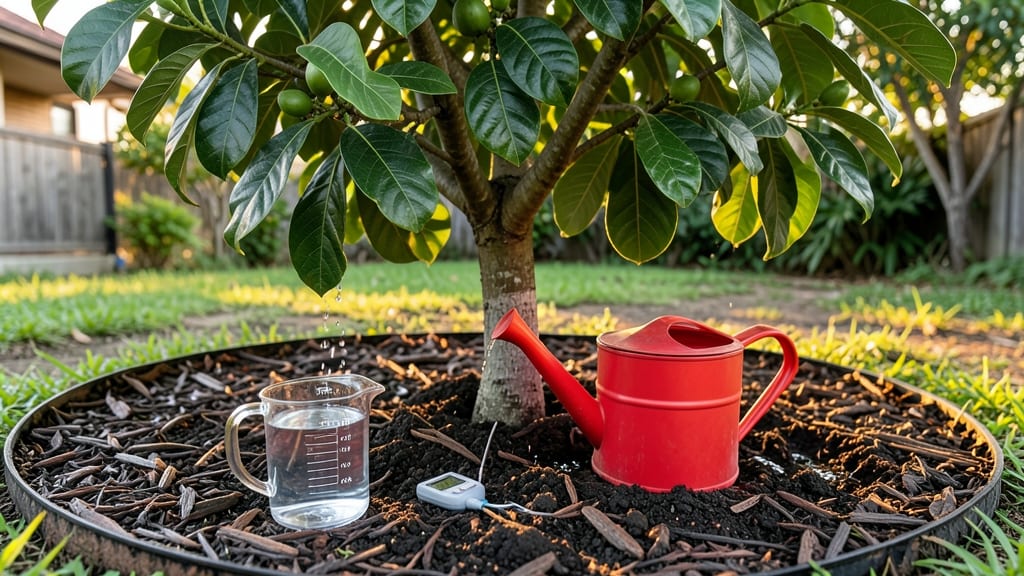
A mango tree needs deep, infrequent watering to thrive—about 10-20 gallons per session for young trees and 30+ gallons for mature ones 🥭—but getting it right can feel like guessing.
Struggling to keep your mango tree lush and productive? Overwatering or underwatering can spell disaster for this tropical beauty—discover the exact watering schedule your mango tree craves to thrive year-round.
In General (Tropical/Subtropical Regions), where mango trees love to grow in USDA zones 10-11, the key is balancing moisture without drowning the roots. Too much water rots them; too little stunts growth and fruit production.
Here’s how to adjust your watering routine by season, soil type, and tree age—plus the 5 pro tips that’ll turn your mango tree into a fruit-bearing powerhouse.
Mango tree watering requirements by growth stage: seedling to mature
Growing a mango tree from a tiny seedling to a fruit-bearing giant requires precision in watering—especially since this tropical beauty hates soggy roots but despises drought even more. The key?
Adjusting your watering routine as your tree grows, ensuring roots develop deeply while avoiding stress that stunts growth or drops fruit. Let’s break down the exact watering needs for each stage, from delicate seedlings to towering mature trees.
Seedlings are the most delicate phase, where consistent moisture is critical but overwatering can drown tender roots. Young trees (1-3 years) need more frequent watering to establish their root systems, while mature trees (4+ years) demand deep, infrequent soaks to reach their extensive root zones.
Each stage has unique signals—wilting leaves, yellowing foliage, or cracked soil—that tell you when to adjust your watering schedule.
| Growth Stage | Watering Frequency | Water Amount | Soil Moisture Check | Key Tips |
|---|---|---|---|---|
| Seedling (0-6 months) | Every 2-3 days | 1-2 gallons per watering | Top 1-2 inches dry | Use shallow trays for even moisture; avoid leaf wetness |
| Young Tree (6 months-3 years) | Every 5-7 days | 10-20 gallons per watering | Top 3-4 inches dry | Water at base only to encourage deep roots; mulch heavily |
| Mature Tree (4+ years) | Every 7-14 days | 30-50 gallons per watering | Top 6+ inches dry | Use drip irrigation for consistent deep watering; reduce in rainy seasons |
| Fruiting Stage (All Ages) | Every 3-5 days (summer) | Increase by 20-30% | Top 4-6 inches dry | Avoid stress—consistent moisture prevents fruit drop |
For seedlings, I start with a gentle approach: watering every 2-3 days using a spray bottle or small watering can to mimic tropical rainfall. The goal is to keep the soil evenly moist but never waterlogged.
A simple test is to stick your finger 1-2 inches into the soil—if it’s dry, it’s time to water. Seedlings also benefit from a humidity dome or plastic bag to retain moisture while their roots establish.
When your mango tree transitions to the young tree stage (6 months to 3 years), you’ll notice it needs more water but less frequently. At this point, I switch to deep watering—soaking the soil to a depth of 6-12 inches—every 5-7 days.
This encourages roots to grow downward rather than staying shallow. A moisture meter is invaluable here; aim for the top 3-4 inches of soil to dry out between waterings. Mulching with organic matter like wood chips helps retain moisture and regulates soil temperature.
Mature fruit-bearing trees (4+ years) are the most resilient but still require careful watering. These giants need 30-50 gallons per watering, delivered deeply to reach their extensive root systems. During the fruiting season, I increase water by 20-30% to support the tree’s energy demands.
A good rule of thumb is to water when the top 6 inches of soil are dry. For established trees, drip irrigation is ideal—it delivers water slowly at the base, reducing evaporation and fungal risks.
One of the biggest mistakes I’ve seen is overwatering mature trees, which leads to root rot and leaf yellowing. Always check for standing water or mushy soil before watering again. Conversely, underwatering causes wilting, leaf drop, and poor fruit development.
If you notice leaves curling or fruit falling prematurely, it’s a sign your tree is thirsty. Adjust your schedule based on weather—hotter days mean more frequent watering, while cooler months allow for longer intervals.
Seasonal adjustments are crucial. In summer, I water young trees every 3-5 days and mature trees every 7-10 days, often supplementing with early morning waterings to reduce evaporation. During winter, I cut back to monthly waterings for mature trees, focusing only on keeping the soil slightly moist.
Rainy seasons? I reduce watering entirely and rely on natural rainfall, ensuring the soil isn’t waterlogged. A well-draining soil mix with compost is non-negotiable for mango trees—it prevents water from pooling around roots.
Pro tip: Always water at the base of the tree in the morning. This allows foliage to dry quickly, reducing fungal diseases like powdery mildew. Avoid overhead watering, especially in the evening, as damp leaves invite pests and diseases.
If you’re unsure whether your tree needs water, perform the soil squeeze test: Grab a handful of soil—if it crumbles easily, it’s dry; if it stays clumped, hold off on watering.
With the right watering routine, your mango tree will reward you with lush growth and sweet, ju
Seasonal watering adjustments for mango trees in different climates
Mango trees thrive in tropical climates but need precise watering adjustments depending on where you live. In monsoon regions, heavy rains can drown roots, while arid climates demand frequent deep watering.
Even coastal areas with high humidity require careful monitoring to avoid fungal diseases. Let’s break down how to adapt your watering routine for each climate type.
First, understand that mango trees hate soggy roots. Overwatering in monsoon seasons or coastal humidity can lead to root rot, while underwatering in dry climates causes leaf scorch and fruit drop.
The key is balancing soil moisture—never let the top 6 inches dry out completely, but avoid waterlogged conditions. Adjust your schedule based on rainfall, temperature, and soil drainage.
- 1 Monsoon Climate: Reduce watering by 50% during heavy rains. Check soil moisture—water only if top 4 inches are dry. Use well-draining soil to prevent waterlogging.
- 2 Dry/Arid Climate: Water deeply every 3-5 days (30+ gallons for mature trees). Use drip irrigation to target roots directly and reduce evaporation. Water in early morning to avoid fungal risks.
- 3 Coastal/Humid Climate: Water every 7-10 days unless soil is bone-dry. Avoid overhead watering to prevent fungal diseases. Use mulch to retain moisture and improve soil aeration.
- 4 Signs of Overwatering: Yellowing leaves, mushy stems, and roots smelling rotten. Reduce watering immediately and improve drainage.
- 5 Signs of Underwatering: Crispy leaf edges, wilting even when watered, and fruit dropping prematurely. Increase frequency and depth of watering.
In monsoon-prone areas, I’ve seen mango trees suffer from root rot when gardeners ignore the excess moisture. Always test soil moisture with your finger—if it’s damp within 4 inches, hold off on watering.
For dry climates, I recommend installing a soaker hose to deliver water slowly and deeply, mimicking natural rainfall.
Coastal regions with high humidity (like Florida or Hawaii) require a different approach. Here, fungal diseases like anthracnose thrive in wet foliage. Water at the base of the tree and avoid wetting leaves.
A 3-inch layer of mulch helps regulate soil moisture and keeps roots cool. I’ve noticed that coastal mango trees often need less frequent watering because the air retains moisture longer.
Adjust your watering schedule monthly based on weather patterns. For example, during summer heatwaves, even coastal areas may need extra water, while winter rains in tropical zones can reduce your schedule to every 2-3 weeks. Always prioritize deep watering—this encourages robust root growth and fruit production.
Pro tip: Use a moisture meter for accuracy, especially in container-grown mango trees, which dry out faster. If you’re unsure, stick your finger 6 inches deep—if it feels dry, it’s time to water.
With these adjustments, your mango tree will stay healthy and productive year-round, no matter the climate. 🌱