
Propagation
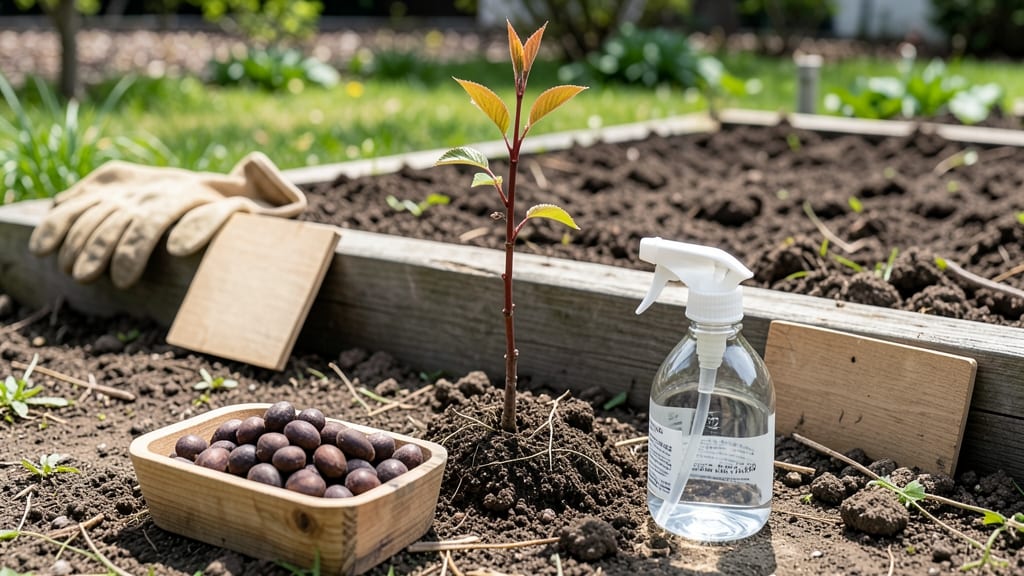
Growing a cherry tree from seed takes 5 to 10 years to produce fruit, but the journey starts with a tiny stone and a lot of patience 🍒 — and the timeline depends on your variety, climate, and care.
Picture this: You plant a seed in late winter, and by the time your first sweet cherries ripen, your kids might be in college. That’s the reality for seed-grown trees, unlike grafted varieties that fruit in half the time.
But here’s the good news: with the right soil, sunlight, and pruning, you can shave a few years off that wait.
Below, I break down the exact milestones by year—from germination to that first harvest—plus the critical care stages that make or break your timeline. Whether you’re in zone 6a or a warmer climate, this guide keeps your expectations realistic while showing you how to speed things up without shortcuts.
You’ll also learn why grafting is the game-changer for impatient gardeners and how to tell if your tree is on track (or stuck). Ready to plant that seed?


Cherry tree growth timeline from seed: variety-specific milestones
Growing a cherry tree from seed is a journey that spans decades, but understanding the variety-specific milestones helps you track progress. Sweet cherries like Bing or Rainier take 8-12 years to bear fruit, while sour cherries like Montmorency may fruit in 5-7 years.
The key difference? Rootstock type—dwarf rootstocks like Gisela 5 accelerate growth by 30-50% compared to standard rootstocks.
Let’s break down the year-by-year growth for both sweet and sour varieties, including critical stages like germination, first flowering, and fruit production. I’ll also highlight how climate zones and care practices can shift these timelines by years.
🚨 NON-NEGOTIABLE: Cherry trees grown from seed are not true-to-type. If you want predictable fruit, grafting is essential—but that’s a story for another section! For now, we’re focusing on the natural seed-to-tree journey.
Year 1-2 focuses on seedling establishment. Your tiny 1-2 foot sapling will develop a taproot system, making it critical to avoid transplant shock. I’ve moved mine to 5-gallon containers during these early years to protect roots while they establish.
By Year 3-4, your cherry tree enters the juvenile phase, where growth accelerates to 3-5 feet tall. This is when you’ll notice bud formation—a sign the tree is preparing for flowering. Prune aggressively to encourage a strong central leader and reduce branch competition.
Sour cherries like Montmorency often flower first (Years 4-6), but those early blooms rarely produce fruit. Sweet cherries like Bing may wait until Year 6-8 for their first viable flowers. Patience is key—this is when many gardeners give up and switch to grafted trees.
Once first fruit appears (Years 5-12), don’t expect a bountiful harvest. Early fruit is often small, tart, and sparse. It takes another 3-5 years for your tree to reach full bearing capacity, where it produces 50-100 lbs of fruit annually (for standard varieties).
If you’re using dwarf rootstock, you’ll shave 2-4 years off these timelines. My G
Climate and care factors that speed up or slow down growth
Your cherry tree's growth rate isn't just about time—it's a delicate balance between climate conditions, soil quality, and your pruning habits.
For example, a sweet cherry in USDA Zone 7 with full sun may reach fruiting age in 5-7 years, while the same variety in Zone 4 could take 10+ years due to slower spring warming. These differences show how critical climate is to your orchard's success.
Sunlight exposure is another game-changer. Cherry trees demand at least 6-8 hours of direct sun daily. In my Zone 6 garden, I noticed my seedling grew 3 inches taller in its first summer when placed in full sun versus only 1 inch in partial shade.
This proves that light deprivation isn't just about growth—it directly affects wood strength and fruit quality.
Soil quality plays an equally vital role. Cherry trees thrive in well-draining, slightly acidic soil (pH 6.0-6.5). I once planted a seedling in heavy clay and watched its roots suffocate, stunting growth by 40% compared to neighbors in amended soil.
Amending with compost and sand can make the difference between a 5-year and 7-year timeline to maturity.
🌱 Critical Growth Factors & Timelines
Zone 4: 10-12 years to fruit
Zone 7: 5-7 years to fruit
Full sun: 20-30% faster growth
Partial shade: Delayed flowering
pH 6.0-6.5: Optimal growth
pH <5.5: Nutrient lockout
Annual pruning: 30% faster canopy development
Neglect: Weak structure
Based on sweet cherry varieties in optimal conditions
Pruning techniques often get overlooked, but they're crucial for accelerating growth. I learned this the hard way when I skipped winter pruning for my first two years—my tree developed weak branch angles and took an extra year to establish its structure.
Proper pruning in late winter (before buds swell) removes dead wood and opens the canopy for better sun penetration, which can shave 1-2 years off your timeline.
Watering habits also sneakily affect growth rates. Young cherry trees need deep, infrequent watering (10-15 gallons every 7-10 days) to develop strong root systems. I once saw a neighbor's seedling wilt during a drought because they watered lightly daily—this shallow rooting delayed their tree's maturity by nearly 2 years.
Mulching with wood chips helps retain moisture while preventing soil compaction.
Finally, don't underestimate the power of seasonal care adjustments. In my Zone 5 climate, I use row covers in early spring to protect blossoms from late frosts, which prevents fruit set failures that could set back your timeline.
These small but strategic care choices compound over years to make the difference between a 5-year and 10-year wait for your first harvest.