
Pruning
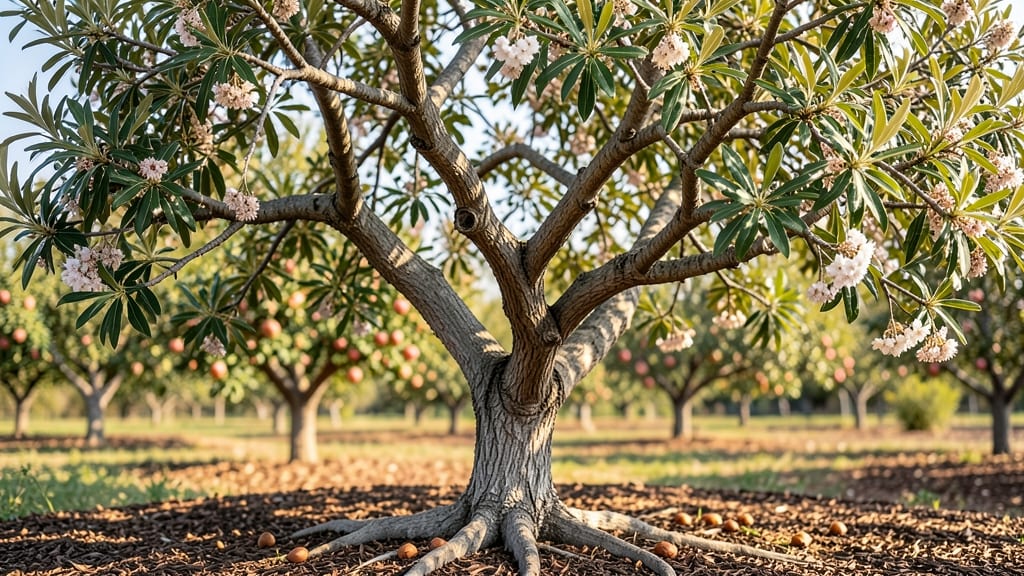
Almond trees thrive best in USDA climate zones 5 through 9, with peak performance in zones 6-8, because they need 100-200 hours of temperatures below 45°F (7°C) to trigger flowering. Zone 5 requires winter protection, while zones 9-10 demand extra irrigation to prevent heat stress.
Understanding these climate zones helps explain why almond orchards in California's Central Valley (zones 7-9) dominate production—they balance chill hours with warm growing seasons. 🌱 The 100-200 chill hour requirement isn't just about surviving winter; it's the biological trigger that wakes dormant buds in spring.
In cooler zones like 5, young trees often need row covers or mulch blankets to survive sub-freezing temperatures, while zone 9+ growers must select low-chill varieties or use shade cloth during summer's peak heat.
What's fascinating is how microclimates can shift these boundaries—even within a single county. A north-facing slope might push zone 5 into optimal territory, while a hot valley could turn zone 8 into a marginal growing area.
This explains why some commercial growers use windbreaks or drip irrigation systems to create artificial microclimates that extend the tree's productive range.
💡 In This Article
- USDA Zones 5-9: Almond Tree Chill Hour Requirements Explained
- Protecting Almond Trees in Extreme Zones (5, 9+, and Beyond)
USDA zones 5-9: almond tree chill hour requirements explained
Almond trees rely on a biological process called endodormancy, where winter cold triggers hormonal changes that prepare buds for spring growth. The required 100-200 chill hours (measured at 32-45°F (0-7°C)) aren't just about survival—they're the precise temperature window that converts dormancy hormones to growth hormones.
In zone 6, where winters average 180 chill hours, trees naturally receive this perfect trigger, while zone 5 might only get 150 hours, often requiring supplemental protection.
The science gets even more precise: almond buds need 30-50 hours of continuous exposure between 32-45°F (0-7°C), with fluctuations above 45°F (7°C) resetting the clock.
This explains why zone 8's 120-160 chill hours often need careful site selection—south-facing slopes with cold air drainage can push chill hours closer to the ideal range. 🌡️ The Nonpareil variety, for example, needs 180 chill hours, while Butte requires only 140 hours, showing how variety selection can expand growing zones.
What most gardeners miss is how temperature variability matters more than absolute cold. A zone 7 winter with 10 days below 32°F (-0°C) followed by 20 days between 32-45°F (0-7°C) provides better chill accumulation than a zone 5 winter with 30 days below 32°F (-0°C) but no moderate cold periods.
This explains why some zone 6 orchards thrive while nearby zone 5 trees struggle—microclimates create these critical temperature patterns.
For zones 9-10, the challenge shifts to heat stress during flowering. When daytime temps exceed 90°F (32°C) during bloom, pollen viability drops by 40%, and pistil receptivity declines. This is why California's Central Valley (zone 9) uses drip irrigation to maintain 60-70°F (15-21°C) soil temps during critical bloom periods.
The solution isn't just about chill hours—it's managing the post-chill thermal environment that follows.
Here's what this means practically: In zone 5, plant low-chill varieties like Carmel (120 hours) on south-facing slopes with 3-4 inches of mulch to moderate soil temps. In zone 9, choose heat-tolerant rootstocks like Peach-Almond hybrids and use 50% shade cloth during peak summer.
The key isn't just zone numbers—it's understanding how temperature patterns create the right biological triggers for your specific location.
Pro tip: Use a chill hour calculator with your local weather data to pinpoint exactly how many hours you're getting. Many free online tools let you input your county's average winter temps and get a precise chill hour estimate—this can reveal surprising opportunities in marginal zones. 🌱