
Blooming
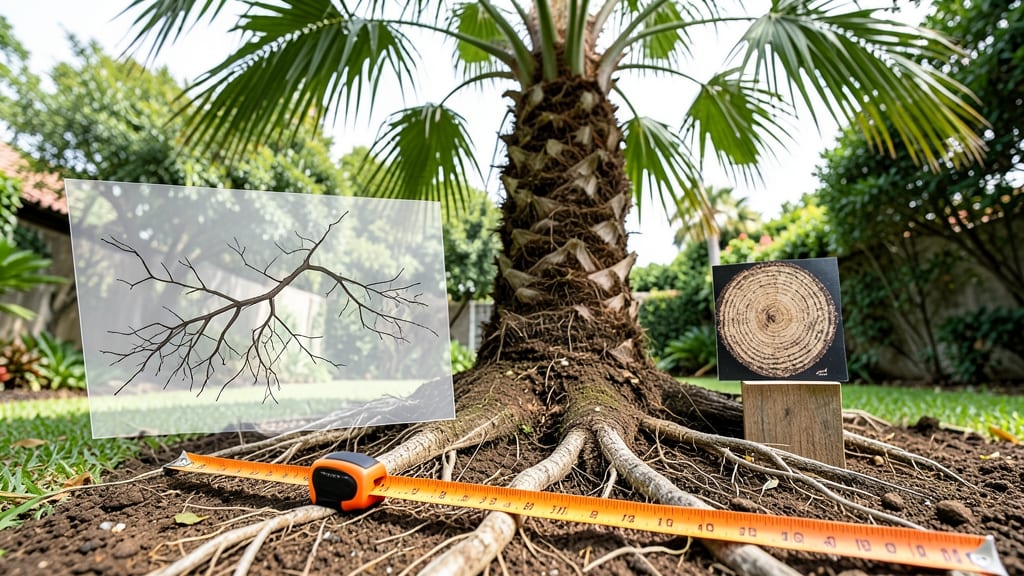
Palm tree roots spread 3 to 5 times wider than the tree’s canopy and typically reach 12 to 18 inches deep, though some species like coconut palms can extend 6 feet underground.
Understanding how far palm tree roots spread is key to preventing damage and ensuring healthy growth. 🌴 These roots grow horizontally to stabilize the tree, which is why they extend so widely—sometimes even beyond the tree’s height.
This shallow, sprawling system makes palms particularly sensitive to soil compaction and poor drainage, which can stunt growth or even kill the tree over time.
For example, a 10-foot-tall palm might have roots spreading 30 to 50 feet outward, creating a massive underground network. This is why planting too close to sidewalks, driveways, or other structures can lead to cracked foundations or blocked drainage systems.
The good news? With proper spacing and well-draining soil, you can support a thriving palm tree while protecting your property.
💡 In This Article
- Palm Tree Root System: How Depth and Spread Affect Growth
- Planting Palm Trees: Soil and Space Requirements for Root Health
Palm tree root system: how depth and spread affect growth
Palm trees have evolved a unique root system where horizontal spread outweighs vertical depth because their primary function isn't anchoring deep into soil but stabilizing against wind and storms.
Unlike oak trees that develop deep taproots, palms rely on a dense network of fibrous lateral roots that spread outward in all directions. These roots can extend 3 to 5 times wider than the tree's canopy, creating a natural shock absorber that prevents toppling during high winds.
For example, a 20-foot-tall palm might have roots spreading 60 to 100 feet in diameter.
The shallow depth—typically 12 to 18 inches—isn't a limitation but a strategic adaptation. Palm roots thrive in well-aerated, loose soil where they can quickly absorb water and nutrients from the topsoil layer.
In sandy soils, roots may grow even shallower (6 inches) because water drains too quickly, while in clay-heavy soils, they might extend deeper (24 inches) to escape waterlogging.
The coconut palm's 6-foot-deep roots are an exception, evolved to access freshwater in coastal environments where saltwater can otherwise poison the tree.
This root structure directly impacts a palm's resilience. Shallow roots make them more vulnerable to soil compaction (from heavy foot traffic or construction) and less drought-tolerant than deep-rooted trees. However, their wide spread allows palms to outcompete weeds and access scattered rainfall efficiently.
The trade-off? Poor drainage or hardpan layers can strangle growth, which is why amending soil with organic matter before planting is critical for long-term health.
Not all palms follow this rule identically. Some species, like the sago palm, develop prop roots—above-ground roots that grow into the soil for additional support, while others, like the date palm, have thicker, cable-like roots that can penetrate deeper.
These variations explain why some palms thrive in urban landscapes (with their wide but shallow roots) while others dominate coastal dunes (with deeper, salt-tolerant roots).
Here's what happens when roots can't spread properly: Soil compaction reduces oxygen flow, causing roots to suffocate; poor drainage leads to rot; and obstructions (like buried pipes) force roots to grow upward, weakening the tree's stability.
The solution? Planting in loose, well-draining soil with amended topsoil ensures roots can expand naturally, supporting the tree's full height potential.
Think of palm roots like a spider's web—extensive but delicate. Each root hair increases surface area for water uptake, while the web-like structure distributes weight evenly. This is why palms often lean rather than fall during storms: their roots stretch and bend rather than snap.
The key takeaway? Respect their horizontal reach when designing landscapes to avoid costly damage.