
Pruning
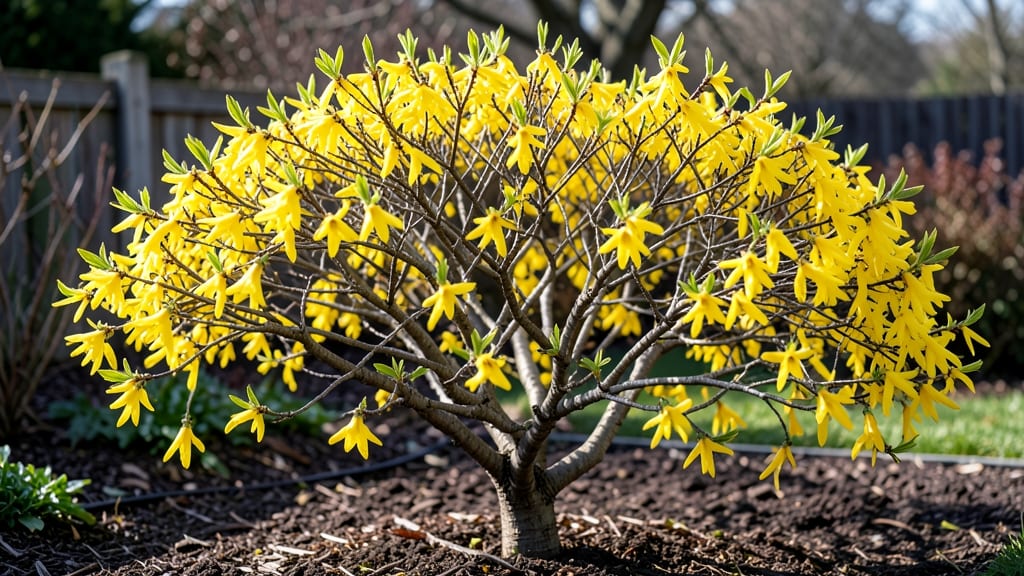
Forsythia tree form turns your garden's early spring into a golden explosion. 🌿 The difference between a wild, sprawling shrub and a graceful, multi-stemmed tree comes down to how you prune—and which cultivar you choose.
Some varieties naturally grow taller with a single trunk, while others need careful shaping to achieve that elegant, tree-like silhouette.
The secret lies in pruning during dormancy, just after blooms fade. For a tree form, select a sturdy central leader and remove competing stems early. Cultivars like 'Northern Gold' or 'Kinshire' respond beautifully to this training, developing a balanced canopy that catches sunlight from every angle.
The result? A showstopping focal point that announces spring with vibrant yellow blooms before most gardens even wake up.
You'll end up with a plant that's both functional and stunning—one that frames pathways, anchors a border, or stands alone as a statement piece. The blooms arrive earlier than most trees, and the foliage provides summer interest too.
Pruning takes just 30 minutes in late winter, and the payoff is years of effortless beauty.
Works for both formal and naturalistic garden styles, from structured hedgerows to wild, cottage-inspired plantings. Here's how to shape yours for maximum impact this season.
📚 In This Guide
- What you need
- Instructions
- Tips and common mistakes
- Wrapping up and next steps
What you need
- ● Pruning shears: Bypass pruners (sharp, clean, and disinfected with rubbing alcohol or a 10% bleach solution). Size: 6–8 inches for small branches.
- ● Loppers: For thicker branches (up to 2 inches in diameter). Look for: Long handles (24+ inches) for leverage.
- ● Pruning saw: For branches larger than 2 inches. Type: Curved blade for clean cuts.
- ● Gloves: Heavy-duty gardening gloves (cut-resistant, like mechanics’ gloves or pruning-specific options).
- ○ Disinfectant: 70% isopropyl alcohol or a commercial pruning sealant (optional but recommended to prevent disease).
- ● Rake or broom: For clearing fallen debris after pruning.
- ○ Twine or zip ties: (Optional but handy for temporarily securing branches during shaping.)
- ● Hand saw or pruning saw with a fine-tooth blade: For precision cuts on stubborn branches.
- ● Ladder or step stool: If your forsythia is tall (6+ feet). Safety first! Use a stable, non-slip model.
- ● Marking spray or chalk: To map out cuts before pruning (great for complex shapes).
- ● Protective eyewear: If working near dense foliage or using a saw.
- ● Notebook & pencil: To sketch your forsythia’s current form and plan adjustments.
Step-by-Step instructions for pruning forsythia to shape a natural canopy
Here's how to sculpt your forsythia into a balanced, flowering masterpiece—without sacrificing its signature spring display.
✂️ Step 1: Time Your Pruning for Optimal Growth
Prune forsythia immediately after its spectacular yellow blooms fade but before new growth begins—typically in late May to early June. This timing ensures you don’t cut off next year’s flower buds, which form on old wood. I always wait until all flowers have dropped completely; otherwise, you risk removing half your spring show.
If you missed this window, don’t panic. Forsythia is forgiving—just avoid heavy pruning in fall or winter, when the plant is dormant and vulnerable. A light shaping in late summer (after July 15) is better than nothing, though you’ll sacrifice some blooms the following spring.
🌿 Step 2: Assess the Canopy and Identify Structural Branches
Step back and study your forsythia’s shape. Look for 3-5 main branches that form the primary scaffold—these are your foundation. Healthy scaffolding branches should be at least ½ inch thick and spaced evenly around the trunk. Thin, weak branches that cross or rub against others need removal first.
Use your fingers to gently trace each branch’s path. If a branch grows straight up or angles sharply downward, it’s likely competing with others for light and energy. These are prime candidates for thinning. Never remove more than 25% of the plant’s total foliage in one session—forsythia recovers poorly from aggressive cuts.
✂️ Step 3: Thin Out Weak and Crossing Branches
Start with your pruners and cut back any branches that are thinner than a pencil or growing inward toward the center of the tree. Make clean cuts at the branch collar—the swollen area where the branch meets the trunk or another branch. Avoid leaving stubs, which invite disease and rot.
For branches that cross or rub, remove the weaker of the two. If they’re equal in size, choose the one growing at a less favorable angle. Here’s the thing—forsythia responds well to thinning, so don’t be shy about opening up the center. You’ll see more light reach the inner branches, encouraging denser foliage and even more blooms next year.
🪴 Step 4: Shape the Outer Canopy for Balance
Once you’ve thinned the interior, focus on the outer canopy. Use your pruners to trim back the tips of outward-growing branches by ⅓ of their length. This encourages bushier growth and prevents the tree from becoming top-heavy. Avoid cutting into old wood—always prune just above a leaf bud or lateral branch.
Step back frequently to check your progress. The goal is a rounded, vase-like shape with no bare spots at the base. If the tree looks lopsided, adjust by trimming slightly more from the denser side. Forsythia grows fast, so a little shaping now prevents major corrections later. Real talk: If you see water sprouts (thin, vertical shoots), cut them off at the base—they drain energy from the main structure.
💧 Step 5: Clean Up and Monitor for Recovery
After pruning, rake up all clippings and dispose of them in the trash—never compost forsythia trimmings, as they can harbor fungal spores. Sterilize your pruners with rubbing alcohol or a 10% bleach solution to prevent spreading disease between cuts. Water the base of the tree deeply to help it recover, especially if you’ve removed a significant portion of foliage.
Watch for new growth in 4-6 weeks. Healthy forsythia will sprout fresh shoots from the branch collars where you made cuts. If you see no new growth after 8 weeks, you may have pruned too aggressively. Next spring, you’ll notice a fuller canopy with fewer bare spots—proof your efforts paid off.
Tips & tricks for perfect forsythia tree form
Between us, shaping a forsythia into a natural canopy takes patience and precision—but these tricks will help you avoid the most common pitfalls.
The Timing Secret: If you prune too early (before flowers fade) or too late (after new growth starts), you risk cutting off next year’s blooms. Wait until all yellow flowers have dropped completely—this usually means late May to early June. If you miss this window, a light shaping after July 15 is better than nothing, though you’ll sacrifice some spring blooms. The key is to never prune during dormancy (fall/winter), when the plant is most vulnerable.
Branch Assessment Technique: When evaluating your forsythia’s structure in Step 2, run your fingers along each branch to feel its path. Branches growing straight up or sharply downward are energy hogs—they compete with others for sunlight and nutrients. These are perfect candidates for thinning. Remember the 25% rule: Never remove more than a quarter of the foliage in one session, or you’ll stress the plant. Think of it like giving your forsythia a haircut—you wouldn’t shave your head bald in one go!
Pruning Precision: In Step 3, always make clean cuts at the branch collar (that swollen area where the branch meets the trunk). Using sharp pruners, cut just outside the collar at a slight angle—this prevents water from pooling and causing rot. For branches thicker than a pencil, consider using a pruning saw. And here’s what nobody tells you: If you’re unsure which branch to remove when two cross, choose the one with the less favorable angle. Forsythia will thank you with denser growth next spring.
Recovery Strategy: After pruning, don’t just walk away—monitor your tree’s progress. Watch for fresh shoots emerging from the branch collars within 4-6 weeks. If you see no new growth after 8 weeks, you’ve likely pruned too aggressively. A deep watering after pruning helps the tree recover, especially if you’ve removed a significant portion of foliage. And for heaven’s sake, sterilize your pruners between cuts—rubbing alcohol or a 10% bleach solution prevents spreading disease. Trust me on this.
Pro Tips for Forsythia Tree Form
- Between us, shaping a forsythia into a natural canopy takes patience and precision—but these tricks will help you avoid the most common pitfalls.
- The Timing Secret: If you prune too early (before flowers fade) or too late (after new growth starts), you risk cutting off next year’s blooms.
- Branch Assessment Technique: When evaluating your forsythia’s structure in Step 2, run your fingers along each branch to feel its path.
Frequently asked questions
When is the best time to prune forsythia for optimal blooms?
Prune forsythia right after flowering (late spring) to encourage vibrant blooms next year. Avoid pruning in fall or winter—this can remove next season’s flower buds! Light shaping in early summer is fine, but avoid heavy cuts during active growth.
How do I prune forsythia to keep it bushy instead of leggy?
To maintain a full, bushy form, prune selectively—cut back 1/3 of the oldest stems to the ground annually. This stimulates new growth from the base. Thin out crowded branches inside the canopy to improve airflow and sunlight penetration.
Can I shape forsythia into a tree form, or is it better as a shrub?
Forsythia can be trained as a small tree with a single trunk, but it’s naturally shrub-like. To encourage a tree form, select the strongest central stem early and remove competing branches. Prune lower branches gradually to lift the canopy—but expect a more shrubby growth habit over time.
What if my forsythia isn’t blooming after pruning?
Lack of blooms often means over-pruning or cutting back too late. Forsythia flowers on old wood, so avoid heavy cuts in late summer/fall. If needed, prune lightly in late spring, and fertilize lightly in early spring to boost vigor.
Are there forsythia varieties that grow in a more structured tree form?
While most forsythia are shrubby, ‘Golden Tiger’ and ‘Northern Gold’ varieties tolerate pruning better for a neater shape. For a true tree form, consider ‘Show Off’, a dwarf cultivar that can be trained with careful pruning and staking.
Wrapping up and next steps
Transforming your forsythia into a stunning, naturally balanced beauty is totally within reach! By mastering the right pruning techniques—like thinning, shaping, and timing—you’ll encourage vibrant blooms, a lush canopy, and a healthy growth habit. Remember, patience and consistency are key, so don’t rush the process.
Ready to take the next step? Grab your pruners, mark your calendar for late winter or early spring, and start shaping your forsythia with confidence! 🌸✂️ Your garden will thank you with bursts of golden cheer every season.