
Pests and Diseases
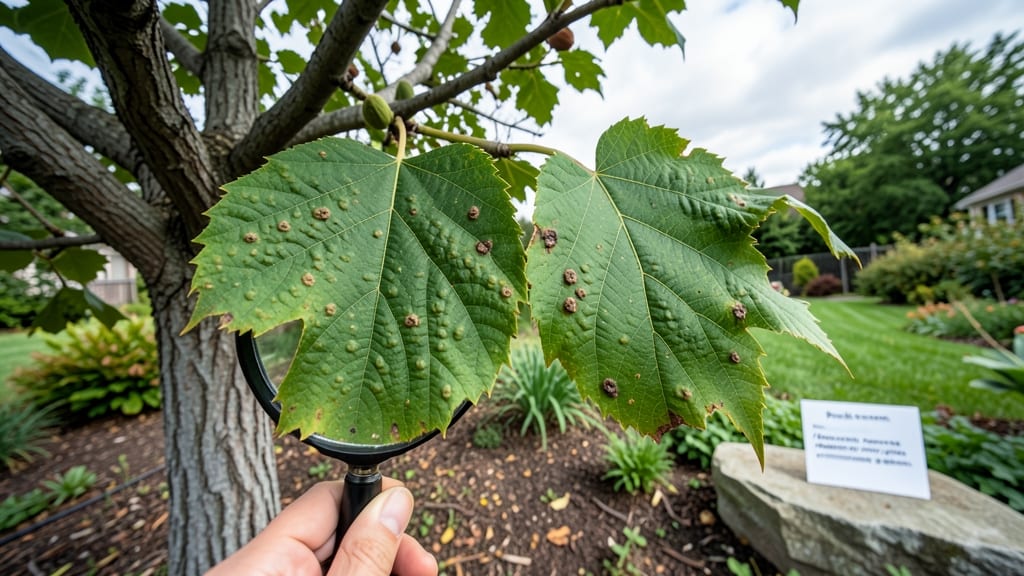
Those mysterious bumps on your pecan tree leaves?
They’re likely nut galls—tiny, woody growths that form when mites or wasps trigger the tree’s defensive response. 🌿 I’ve seen these turn a once-healthy pecan tree into a puzzling sight, but here’s the good news: they’re rarely fatal, and organic fixes work wonders.
The culprits are usually pecan nut galls, caused by tiny wasps or mites that lay eggs in leaf tissue. The tree reacts by forming bumps to protect itself, but severe cases can weaken growth or reduce nut production.
The key is acting early—before the bumps spread or distort leaves too much.
You’ll tackle this with neem oil sprays (mite/disease control), pruning affected branches (to limit spread), and encouraging beneficial insects (like ladybugs). Most trees bounce back in a season with consistent care, and the nuts stay safe if you catch it before harvest.
Prevention is simple: monitor trees weekly in spring/summer, keep the area weed-free, and apply preventive sprays before mites arrive. Even if your tree looks rough now, this method has saved mine every time—no chemicals needed.
Root Causes Behind Leaf Bumps
When you spot those mysterious bumps on your pecan tree leaves, they’re rarely just a random quirk of nature—there’s usually a specific culprit behind them. These raised growths, called galls, are often the result of insects, fungi, or even environmental stress triggering an overreaction in the tree’s defense system.
Let’s break down the most common reasons why your pecan tree’s leaves develop these unsightly (but usually harmless) bumps.
Insects are the most frequent culprits behind pecan tree galls. When a pest like a mite, wasp, or scale insect lays eggs or feeds on the leaves, the tree responds by producing extra plant tissue around the intrusion—creating a gall.
This isn’t the tree’s way of fighting back so much as it is a physical barrier to contain the irritant.
Here’s how it works:
- Mites (e.g., Eriophyid mites): These microscopic pests burrow into leaf tissue, causing blister-like or warty galls that can distort the leaf shape. The tree’s cells multiply rapidly around the feeding site, forming a hard bump.
- Wasp galls (e.g., Diplolepis species): Certain wasps inject eggs into leaf buds or stems, prompting the tree to encapsulate them in a round, spiky gall. These often appear in clusters and can look like tiny pinecones.
- Scale insects: While scales typically target stems or branches, some species can induce raised, scaly bumps on leaves when they feed in groups.
💡 Pro Tip: Most insect galls are benign—the tree survives, and the pests rarely cause long-term damage. However, severe infestations (especially mites) can weaken the tree over time. Inspect the undersides of leaves for tiny moving dots (mites) or tiny wasp exit holes.
Fungi don’t always cause obvious rot or spots—they can also trigger abnormal growths on leaves. Certain fungal pathogens, like Taphrina or Exobasidium, infect pecan trees and manipulate the plant’s cells to produce thickened, leathery, or powdery bumps.
These galls often appear yellow, orange, or white and can cover entire leaf surfaces.
How fungal galls form:
- Cell distortion: The fungus releases hormones that trick the tree into producing extra layers of cells, creating a wart-like or scaly texture.
- Spores spread via wind/water: Fungal galls are contagious. If left untreated, they can spread to other leaves or nearby trees.
- Seasonal triggers: High humidity and warm temperatures (spring/early summer) create ideal conditions for fungal gall development.
🌡️ Warning Sign: Unlike insect galls, fungal infections can weaken the tree’s overall health if not addressed. Look for yellowing leaves, premature leaf drop, or blackened spots alongside the bumps—a sign the fungus is spreading.
Not all bumps are caused by pests or pathogens—sometimes, your pecan tree’s leaves react to environmental stressors. Extreme heat, drought, or nutrient deficiencies can disrupt normal growth, leading to irregular bumps, thickened veins, or puckered surfaces.
Common triggers:
- Water stress: Underwatering causes leaves to develop hard, dry bumps as the tree conserves moisture. Overwatering can lead to soft, spongy galls due to root rot affecting nutrient uptake.
- Nutrient imbalances: A lack of zinc, magnesium, or boron can cause deformed leaf growth, including raised bumps. Soil tests can reveal deficiencies.
- Physical damage: Hail, wind, or mechanical injury (like lawnmower blades) can trigger calloused growths as the tree repairs itself.
✨ Quick Fix: If environmental stress is the cause, focus on consistent watering, mulching to retain moisture, and balanced fertilizer (avoid over-fertilizing, which can worsen issues). Prune damaged leaves to encourage new, healthy growth.
Understanding the why behind those bumps is the first step to deciding whether to treat them or leave them be. In the next section, we’ll help you identify which type of gall your pecan tree is dealing with—and how to address it naturally.
Quick Fixes for Leaf Bumps
If your pecan tree’s leaves are developing unsightly bumps—whether from galls, mites, or fungal infections—don’t panic! Most issues can be resolved with targeted, eco-friendly solutions. Below, we’ve mapped out the best fixes for each cause, along with prevention tips to keep your tree healthy long-term. 🌿
Fungal galls (like Taphrina or Exobasidium) create puffy, blister-like bumps on leaves. The key is to remove infected foliage and prevent spores from spreading.
Step-by-Step Fix:
- 🔪 Trim the Trouble Spots
- Use clean, sharp pruning shears to snip off entire infected leaves (don’t just pluck bumps—spores linger).
- Dispose of clippings in a sealed bag or burn them (if local regulations allow).
- 🌡️ Boost Fungicide Power
- Spray leaves with a copper fungicide (like Copper Sulfate) or a neem oil solution (1 tbsp neem oil + 1 tsp mild soap per quart of water).
- Apply in early morning or evening to avoid leaf burn.
- 🌧️ Improve Airflow
- Thin out dense branches to reduce humidity buildup (fungi love damp conditions).
- Water at the base of the tree (not overhead) to keep leaves dry.
💡 Prevention Pro Tips:
- 🎯 Mulch properly: Use 2–3 inches of organic mulch (like wood chips) but keep it 6 inches away from the trunk to prevent fungal growth.
- ✨ Sanitize tools: Wipe pruners with rubbing alcohol between cuts to avoid cross-contamination.
- 🌡️ Monitor moisture: Avoid overhead watering during rainy seasons—fungi thrive in wet leaves.
Mite-induced galls (often from Pecan Phylloxera) look like tiny, raised blisters. These pests multiply fast, but beneficial insects and targeted sprays can turn the tide.
Step-by-Step Fix:
- 👨🍳 Introduce Predators
- Release ladybugs, lacewings, or predatory mites (available at garden centers) to eat mites naturally.
- Plant companion flowers like dill or marigolds nearby to attract these helpers.
- 🥘 Spray with Soap or Oil
- Mix 1 tsp horticultural oil or insecticidal soap with 1 quart of water. Spray directly on undersides of leaves (mites hide there!).
- Reapply every 5–7 days until bumps stop appearing.
- 🌿 Prune for Sunlight
- Thin out shaded branches to reduce humidity (mites love damp, dark spots).
💡 Prevention Pro Tips:
- 🔥 Avoid broad-spectrum pesticides: They kill beneficial insects that keep mites in check.
- 🌡️ Check leaves weekly: Early detection = easier control. Use a magnifying glass to spot tiny mites.
- 🎯 Water deeply but less often: Mites thrive in dry, dusty conditions—keep soil moist to deter them.
Bacterial galls (like those from Pseudomonas) create water-soaked, raised bumps that ooze when cut. Sterilization and copper treatments are critical.
Step-by-Step Fix:
- 🔪 Remove and Destroy Infected Leaves
- Cut off all galled leaves and sterilize tools with a 10% bleach solution (1 part bleach to 9 parts water) between cuts.
- Do NOT compost infected plant material—bag and trash it immediately.
- 🥘 Apply Copper Fungicide
- Use a fixed copper fungicide (like Copper Octanoate) every 2–3 weeks during the growing season.
- Follow label instructions—overuse can harm the tree.
- 🌧️ Adjust Watering Habits
- Water early in the day so leaves dry quickly.
- Avoid splashing water onto leaves (use drip irrigation or soaker hoses).
💡 Prevention Pro Tips:
- ✨ Space trees properly: Overcrowded pecan trees trap moisture—aim for 40–50 feet between trees.
- 🌡️ Test soil pH: Bacterial galls thrive in acidic soil (pH < 6.0). Amend with lime if needed.
- 🎯 Rotate sprays: Alternate copper with baking soda spray (1 tbsp baking soda + 1 tsp soap per gallon of water) to prevent resistance.
With these targeted fixes, your pecan tree’s leaves should recover within 4–8 weeks. The key is early action and consistent prevention—so keep an eye on those branches and intervene at the first sign of trouble! 🚀
Frequently asked questions
Are bumps on pecan tree leaves always harmful?
Most bumps are harmless galls caused by mites or wasps, which trigger the tree’s natural defense. These rarely kill the tree, though severe infestations can weaken growth. The key is monitoring—if bumps spread rapidly or leaves yellow, act quickly with organic sprays or pruning.
How do I tell if bumps are from mites vs. fungus?
Mite galls appear as warty or blister-like bumps (check leaf undersides for tiny moving dots). Fungal galls look puffy, yellow, or white and often ooze when cut. Use a magnifying glass—mites leave silky webbing, while fungi spread as powdery patches.
Can I prune bumps off leaves without hurting the tree?
Yes! For fungal galls, remove entire infected leaves (don’t just pluck bumps—spores remain). For mite galls, prune only severe cases to avoid stressing the tree. Sterilize tools with rubbing alcohol between cuts to prevent spreading infections.
Will neem oil work for both mites and fungal galls?
Neem oil helps with mites and light fungal infections—mix 1 tbsp neem oil + 1 tsp soap per quart of water and spray leaves thoroughly. For stubborn fungal galls, combine neem with copper fungicide for better results. Reapply every 7–10 days during outbreaks.
Do bumps on leaves affect pecan nut production?
Only if the infestation is severe or untreated. Heavy mite/fungal damage can reduce leaf photosynthesis, leading to smaller nuts or lower yields. Early treatment (like pruning + sprays) keeps trees productive. Monitor trees in spring/summer when galls are most active.