
Diseases
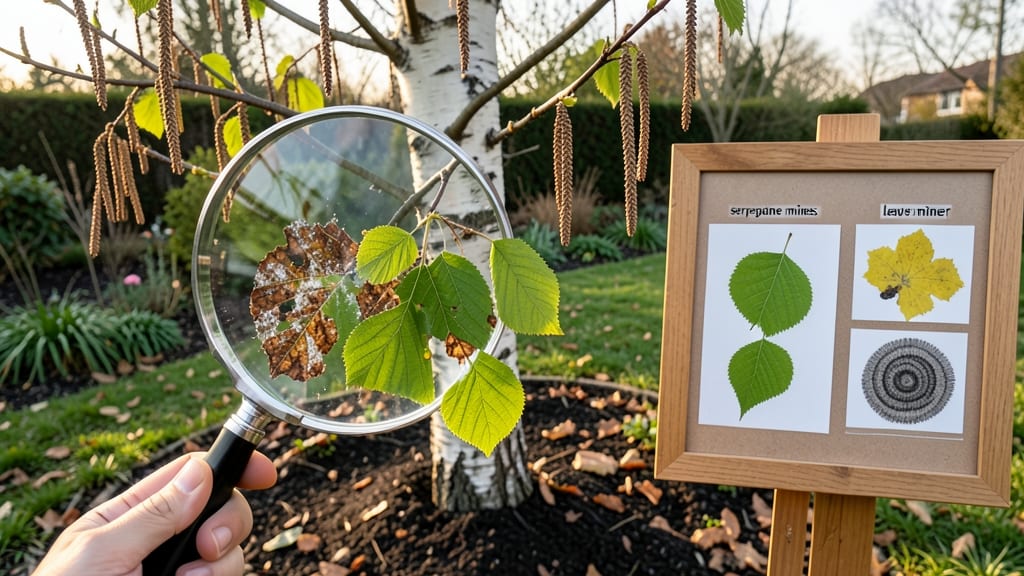
See those birch tree diseases in the leaves—yellowing, spotted, or curling? That’s your tree’s SOS signal—and I’ve diagnosed every pattern after years of battling fungal outbreaks in my own birch grove.
The good news? Most issues respond to simple fixes once you know what’s causing the damage, whether it’s birch leaf spot, anthracnose, or environmental stress.
Start by examining the leaf undersides—tiny black dots or fuzzy mold? That’s fungal. Yellowing between veins? Likely a nutrient deficiency. I’ve mapped out the most common culprits and their telltale signs, so you can act fast before the disease spreads to the bark or roots.
The key is timing: treat in early spring or fall when humidity is lower.
You’ll learn how to prune infected branches (sterilize your tools first!), apply organic sprays like copper fungicide, and adjust watering to stop the cycle. My birches now stay vibrant year-round—no more sad, spotted canopies. The fix isn’t always glamorous, but it works.
For stubborn cases or bark issues, I’ll tell you when to call an arborist. But first, let’s tackle the leaves—they’re your early warning system. Ready to revive your tree’s health?
Root Causes Behind Leaf Troubles
Birch trees are stunning additions to any landscape, but when their leaves start showing signs of distress—yellowing, spots, or curling—it’s often a clear signal that something’s amiss.
Understanding why these problems occur is the first step toward restoring your tree’s health. Below, we break down the most common culprits, explained in simple, actionable terms.
Fungal diseases are among the most frequent offenders when it comes to birch tree leaf issues. These microscopic organisms thrive in moist, humid conditions and can spread rapidly, causing:
- Brown leaf spots (often with dark edges) – Common in Birch Leaf Spot, caused by Marssonina brunnea or Gloeocystidiellum idahoense.
- Premature leaf drop – Fungi like Septoria weaken the tree’s ability to photosynthesize, leading to early defoliation.
- Yellowing between veins – A hallmark of Birch Dieback, where fungi block nutrient flow in the leaves.
Why it happens: Fungi spores latch onto leaves through wounds, stomata (tiny leaf pores), or even rain splashes. Once established, they release enzymes that break down leaf tissue, creating the spots and discoloration you see. Warm, wet springs (50–70°F with high humidity) are prime breeding grounds for these pathogens.
Insects don’t just munch on leaves—they also inject toxins, suck sap, or lay eggs that trigger stress responses in birch trees. Here’s how pests wreak havoc:
- Leaf miners (e.g., Fenusa pusilla) – Larvae tunnel through leaves, creating blistered, translucent trails.
- Aphids & scale insects – Cluster on undersides of leaves, draining sap and excreting sticky honeydew, which fosters sooty mold.
- Birch leaf midges – Their larvae feed on leaf tissue, causing shot-hole patterns (small, dead patches with yellow halos).
Why it happens: Pests target stressed trees (e.g., those already weakened by drought or poor soil). They thrive in early spring when new leaves are tender and nutrient-rich. Some, like aphids, reproduce asexually, allowing colonies to explode in days. Their saliva or frass (waste) can also clog leaf pores, suffocating the tree.
Birch trees are resilient, but extreme or inconsistent environmental factors can push them over the edge. Common triggers include:
- Overwatering or poor drainage – Soggy roots starve leaves of oxygen, leading to chlorosis (yellowing between veins).
- Drought stress – Leaves curl inward to conserve moisture, and edges turn brown from necrosis (cell death).
- Temperature swings – Late frosts or sudden heat waves damage delicate new growth.
- Air pollution or urban grime – Particulate matter blocks leaf stomata, reducing gas exchange and causing stippling (tiny white/brown dots).
Why it happens: Birch trees have shallow roots, making them sensitive to soil moisture fluctuations. When roots can’t absorb water or nutrients efficiently, leaves lose chlorophyll (turning yellow) or develop scorch (brown edges) from oxidative stress. Urban trees also suffer from ozone damage, where pollutants trigger cellular breakdown in leaves.
Leaves act as the tree’s mouth, and if they’re not getting the right nutrients, they’ll show it. Common deficiencies in birch trees include:
| Symptom | Likely Cause | Why It Happens |
|---|---|---|
| Uniform yellowing (pale green veins) | Nitrogen deficiency | Nitrogen is critical for chlorophyll production. Poor soil or heavy rainfall leaches it away, stunting leaf growth. |
| Yellowing between veins (veins stay green) | Magnesium or iron deficiency | These minerals are mobile in the tree—when scarce, older leaves (which have higher demand) show symptoms first. |
| Purple or red tinges on new leaves | Phosphorus deficiency | Phosphorus aids energy transfer; without it, leaves can’t metabolize sugars properly, leading to poor color. |
Why it happens: Birch trees prefer acidic, well-draining soil (pH 4.5–6.0). Compacted or alkaline soils lock out nutrients, while improper fertilization (e.g., over-salting) can burn roots, further limiting uptake. Young trees or those in containerized environments are especially vulnerable.
💡 Pro Tip: If you suspect nutrient issues, test your soil! A simple DIY kit or lab analysis can reveal imbalances before they cause permanent damage.
Fixing Birch Leaf Issues Step-by-Step
Now that you’ve identified the problem, it’s time to act! Birch trees are resilient, but early intervention is key to preventing long-term damage. Below are targeted solutions for common leaf diseases, organized by cause, along with prevention tips to keep your tree thriving.
Follow these steps to restore your birch’s health and stop the spread.
---
Fungal diseases thrive in damp, shaded conditions, but they’re beatable with the right care.
#### 🔥 Remove Infected Leaves & Debris - How: Prune and dispose of all yellowed, spotted, or curled leaves in a sealed trash bag (do not compost). - Why: Fungal spores spread via infected plant material.
Removing it cuts off the infection cycle. - Pro Tip: 💡 Use sterilized pruners (wipe with rubbing alcohol) to avoid cross-contamination.
#### 🍳 Apply Fungicide (Organic or Chemical) - For mild cases: Mix 1 tbsp baking soda + 1 tsp dish soap + 1 gallon water in a spray bottle.
Apply to both sides of leaves every 7–10 days until new growth appears. - For severe infections: Use a copper-based fungicide (like copper sulfate) or a neem oil solution (1% concentration).
Follow label instructions for safety. - Best time to spray: Early morning or evening to avoid burning leaves in direct sunlight.
#### 🌡️ Improve Airflow & Reduce Humidity - Thin out dense foliage to allow sunlight and air to circulate. - Space trees 10–15 feet apart if planting new birches. - Water at the base (avoid overhead sprinkling) and ensure proper drainage in the soil.
---
Pests weaken trees by sucking sap or tunneling into leaves. Here’s how to evict them fast.
#### 👨🍳 Blast Off Pests with Water or Soap - For aphids & soft-bodied insects: Spray leaves with a strong stream of water (disrupts their feeding). - For stubborn pests: Use an insecticidal soap (1–2 tbsp per gallon of water).
Test on a small leaf first to avoid damage. - When to treat: Early morning for best results—pests are sluggish and easier to remove.
#### 🔪 Introduce Beneficial Predators - Ladybugs, lacewings, or parasitic wasps (like Aphidius colemani) naturally prey on aphids and leafminers. - Where to buy: Local garden centers or online (e.g., Arborjet, Garden Safe). - Release them at dusk when temperatures are cooler.
#### ⏰ Monitor & Retreat if Needed - Check leaves weekly for new eggs or larvae. - Repeat treatments every 5–7 days until pests are gone (usually 2–3 rounds).
---
Yellow leaves often signal a hunger for key nutrients. Fix the imbalance with these steps.
#### 📊 Test Your Soil - Use a DIY soil test kit (available at garden stores) or send a sample to your local cooperative extension office. - Common deficiencies in birches: Iron, magnesium, or nitrogen.
#### 💪 Fertilize Correctly - For iron deficiency (yellow between veins): Apply chelated iron (like Ironite) or use Epsom salt (1 tbsp per gallon of water, spray on leaves). - For nitrogen (pale green/yellow leaves): Use a balanced fertilizer (10-10-10) in early spring. - For magnesium (yellow edges): Work Epsom salt into the soil around the tree base (follow package rates).
#### 🥗 Boost Soil Health - Mulch properly: Spread 2–3 inches of organic mulch (wood chips, pine straw) 3 inches away from the trunk to retain moisture and nutrients. - Avoid over-fertilizing: Too much can burn roots—follow label instructions and water deeply after applying.
---
Once your tree recovers, prevent recurrence with these long-term strategies:
- ✨ Prune for sunlight: Remove crossing or overcrowded branches to improve airflow. - 🌡️ Water wisely: Deep watering 1–2 times per week (1 inch per week) encourages deep root growth. - 🎯 Choose disease-resistant varieties: If replanting, opt for **paper birch (Betula papyrifera) or yellow birch (Betula alleghaniensis), which are less prone to fungal issues. - 🔄 Clean up annually: Rake and dispose of fallen leaves in fall to remove overwintering spores. - 🍄 Avoid overhead watering: Use drip irrigation or soaker hoses to keep foliage dry.
--- Remember: Birch trees are tough—they’ll bounce back with the right care! Start with one or two treatments, monitor progress, and adjust as needed. Healthy leaves = a happy tree!** 🌿💚
Frequently asked questions
Why do birch leaves turn yellow first between the veins?
This classic symptom usually signals a magnesium or iron deficiency. Birch trees pull these nutrients from older leaves first when supplies run low. Check the soil pH—birches prefer acidic conditions (pH 4.5–6.0). If the soil is alkaline, nutrients become locked away. Try applying Epsom salt (for magnesium) or chelated iron in early spring.
Can I save my birch tree if half the leaves are already spotted?
Yes, but act fast! Remove all infected leaves immediately (don’t compost them) and apply a copper fungicide or baking soda spray. Prune back 1/3 of the canopy to improve airflow. If the disease is anthracnose (common in wet springs), repeat treatments every 10–14 days until new growth appears. Monitor for 2–3 weeks to see improvement.
Are birch leaf spots contagious to other trees?
Yes, fungal leaf spots like Marssonina brunnea can spread to nearby trees through wind, rain, or garden tools. Sterilize pruners with rubbing alcohol between cuts, and avoid overhead watering. Remove fallen leaves from the base of the tree—spores overwinter in leaf debris. Space new birch trees at least 10–15 feet apart to reduce cross-contamination.
Why do my birch leaves curl upward in hot weather?
This is a drought stress response—birches curl leaves to reduce water loss. Water deeply 1–2 times per week (1 inch total) and mulch with 2–3 inches of organic material to retain moisture. If the soil is dry more than 2 inches down, your tree needs more frequent watering. Avoid compacted soil, which restricts root growth.
When should I call an arborist for birch leaf problems?
Consult a professional if you see oozing cankers on branches, large patches of dead bark, or if 50%+ of leaves are severely infected despite treatment. These could indicate birch dieback or borer infestations, which require systemic fungicides or insecticides. Also seek help if your tree is young (<10 years old) or structurally valuable.