
Diseases
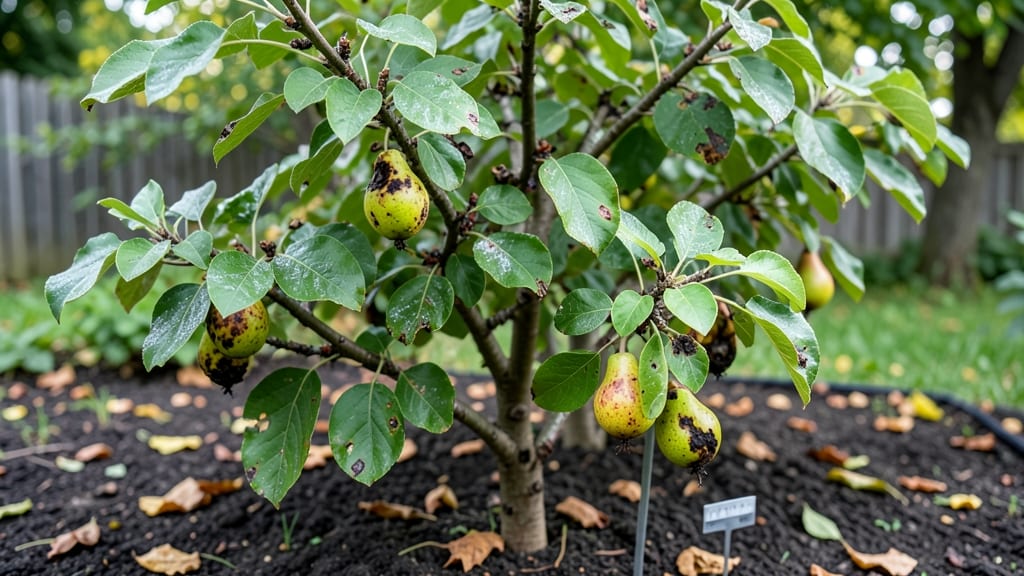
Spotting pictures of pear tree diseases early saves your harvest—and your tree. 🌳 Fire blight, black spot, and powdery mildew turn lush foliage into a nightmare faster than you'd think, but knowing what to look for means catching them before they spread.
I've seen healthy trees go from vibrant to struggling in just weeks, and I'm here to help you recognize the warning signs before they become full-blown problems.
This guide shows you exactly what to watch for—darkened branches, odd leaf spots, or that telltale white powder—along with clear photos so you can compare what you see in your own yard.
Most issues start small: a single blackened cane, a few yellow spots, or a patch of fuzzy white growth. The sooner you spot these, the easier they are to treat, whether you're using organic sprays or targeted pruning.
You'll learn how to stop the spread before it reaches your fruit, plus how to keep your tree healthy year-round with simple prevention. Think of it as your first line of defense—because once these diseases take hold, they're nearly impossible to reverse.
Let's get your pear tree back to its best.
Works for backyard orchards, urban trees, and even container-grown pears. Whether you're dealing with a single branch or a whole tree, these solutions are designed to work fast and keep your harvest safe for years to come.
Underlying Causes Of Tree Stress
Pear trees, like any living organism, succumb to diseases when their natural defenses weaken. Understanding the root causes—often a mix of environmental, biological, and human factors—helps you take preventive action before symptoms appear. Below, we break down the key triggers behind pear tree diseases, so you can address them head-on.
---
Fungal diseases (like fire blight, brown rot, or powdery mildew) thrive when moisture lingers on leaves, branches, or bark. Here’s why:
- Excessive Rain or Irrigation: Prolonged dampness creates the perfect breeding ground for fungal spores. Example: Fire blight spreads rapidly in spring when rainy weather follows blooming. - Poor Air Circulation: Dense foliage or overcrowded trees trap humidity, giving fungi a foothold. Actionable tip: Prune to improve airflow, especially after rain. - Warm Temperatures: Fungi like Monilinia (brown rot) flourish in 70–85°F (21–29°C) ranges. Pro tip: Avoid overhead watering in late afternoon to reduce evening moisture.
🔍 Spot the Signs: Look for oily sheens on leaves (fire blight), fuzzy white patches (powdery mildew), or mummified fruit (brown rot).
---
Bacteria (e.g., Erwinia amylovora in fire blight) enter through physical damage or natural openings like: - Pruning Cuts: Jagged cuts leave entry points for bacteria. Fix: Sterilize tools with 70% rubbing alcohol between cuts and make clean, angled prunes. - Insect Damage: Sap-sucking pests (like pear psylla) create wounds that bacteria exploit. Solution: Monitor for pests and treat early with neem oil or insecticidal soap. - Hail or Wind: Storms strip bark, exposing vulnerable tissue. Prevent: Mulch heavily to protect roots and reduce wind exposure.
💡 Key Insight: Bacteria spread via rain splash or insects—sanitize tools and remove infected branches immediately (don’t compost them!).
---
A malnourished tree is like an open invitation for pathogens.
Common deficiencies include: - Nitrogen (N) Shortage: Leads to yellowing leaves (chlorosis) and stunted growth, making trees susceptible to stress-related diseases like anthracnose. - Fix: Apply balanced fertilizer (10-10-10) in early spring. - Potassium (K) Deficiency: Weakens cell walls, inviting fungal attacks. Symptoms: Brown leaf edges or "scorch." - Fix: Use wood ash or a potassium-rich supplement like greensand. - Zinc or Iron: Critical for enzyme production.
Deficiencies show as interveinal yellowing (iron) or stunted shoots (zinc). - Fix: Soil test first! Apply chelated micronutrients if needed.
⚠️ Warning: Over-fertilizing with phosphorus can also stress roots—moderation is key.
--- Insects don’t just damage fruit—they carry diseases and weaken trees indirectly: - Pear Psylla: Their honeydew feeds sooty mold fungi, which smothers leaves. - Control: Apply horticultural oil in dormant season. - Borers (e.g., pear tree borer): Larvae tunnel into bark, creating wounds for bacteria/fungi. - Solution: Wrap trunks with burlap bands treated with kaolin clay to deter adults. - Aphids: Spread viral diseases like pear decline virus. - Prevent: Introduce ladybugs or spray soapy water on undersides of leaves.
🎯 Pro Tip: Inspect trees weekly during growing season for early signs of infestation.
--- Even without pathogens, pear trees can develop stress-related conditions like: - Drought Stress: Wilting leaves roll inward, inviting canker diseases. - Fix: Deep water 1–2 times per week (1 inch per week in dry climates). - Extreme Heat: Sun scald (brown patches on bark) cracks skin, letting in infections. - Prevent: Apply white latex paint to trunk in hot climates. - Compacted Soil: Poor drainage roots lead to root rot (e.g., Phytophthora). - Solution: Aerate soil with gypsum or plant on a slight mound for drainage.
💡 Remember: Healthy soil = healthy tree. Mulch (3–4 inches of organic matter) retains moisture and regulates temperature.
--- Mistakes in pruning, watering, or sanitation turn minor issues into epidemics: - Topping Trees: Removing large branches shocks the tree, inviting decay fungi. - Fix: Use proper pruning techniques (3-cut method for branches >2 inches). - Reusing Infected Tools: Contaminated pruners spread diseases like fire blight between trees. - Solution: Bleach or alcohol sterilize tools between cuts. - Planting Too Close: Crowded trees trap moisture and limit airflow. - Prevent: Space pear trees 15–20 feet apart for mature size.
✨ Golden Rule: When in doubt, remove and destroy (don’t compost) infected plant debris!
Fixing Your Pear Tree’s Health
Now that you’ve identified the problem, let’s roll up our sleeves and get your pear tree back on track! Each disease has its own battle plan, but the good news is that early action makes all the difference.
Below, we’ll break down practical, step-by-step solutions for the most common pear tree diseases—plus tips to keep them from coming back. Think of this as your tree’s emergency first aid kit!
---
Cause: Erwinia amylovora bacteria, spread by rain, insects, or pruning tools. Fix: - 🔥 Prune infected branches immediately (at least 6–12 inches below the blighted area) using sterilized tools (rubbing alcohol or bleach solution). Dispose of pruned wood in a sealed bag—do not compost! - 🍳 Apply copper-based bactericides (like Bordeaux mixture or copper fungicide) during bud swell and after flowering to prevent spread. - 👨🍳 Thin out dense canopies to improve airflow—this reduces moisture that bacteria love. - ⏰ Time it right: Prune in dry weather (never when rain is forecasted) to avoid splashing bacteria.
💡 Prevention Pro Tip: Train your tree to grow open-centered (not too dense) and avoid overhead irrigation—drip systems keep foliage dry!
---
Cause: Marssonina medusae or Diplocarpon mespili fungi, thriving in wet, humid conditions. Fix: - 🔪 Remove and destroy infected leaves (don’t leave them on the ground). Rake up fallen leaves and compost them separately (heat kills spores). - 🌡️ Spray fungicides (sulfur, neem oil, or copper fungicide) every 7–14 days during wet seasons. Start at bud break and repeat after rain. - 🎯 Improve airflow by pruning suckers and crossing branches. Space trees 15–20 feet apart if replanting.
🔥 Quick Fix: Mix 1 tsp baking soda + 1 tbsp vegetable oil + 1 tbsp dish soap per gallon of water for a DIY fungicide spray (test on a small area first).
---
Cause: Venturia nashicola fungus, overwinters in fallen leaves and buds. Fix: - 🍳 Clean up debris thoroughly—burn or bag infected leaves (do not mulch). - 👨🍳 Apply fungicides early (copper or sulfur-based) before buds swell and again after petal fall. Repeat every 10–14 days during wet spells. - ✨ Prune for sunlight: Thin branches to let morning sun dry dew faster—fungi hate dry conditions.
💡 Prevention Hack: Plant resistant varieties like ‘Moonglow’ or ‘Kieffer’ if scab is recurrent in your area.
---
Cause: Psylla pyricola (sap-sucking insects) leave sticky honeydew and sooty mold. Fix: - 🔪 Blast off adults with a strong hose spray in early spring to dislodge overwintering eggs. - 🌡️ Use insecticidal soap or horticultural oil (like Neem Oil) when buds swell and again after petal fall. - 🎯 Set up yellow sticky traps to monitor and catch adults. - 🔥 Introduce natural predators: Ladybugs and lacewings love psylla eggs!
🌿 Organic Boost: Spray kaolin clay (like Surround WP) to create a physical barrier that bugs hate.
--- No matter the disease, strong trees fight better.
Keep your pear tree healthy with: - 💪 Proper watering: Deep water 1–2x per week (avoid wetting leaves). - 🍎 Balanced fertilizer: Use a 10-10-10 or organic compost in early spring. - 🌿 Mulch correctly: Apply 2–3 inches of mulch (keep it 6 inches away from the trunk). - 🔄 Regular pruning: Remove dead, diseased, or crossing branches in late winter/early spring.
--- ✨ Final Reminder: Act fast—most tree diseases spread like wildfire! Once you spot symptoms, isolate the tree (if possible) and sterilize tools between cuts. With these fixes, your pear tree can bounce back—and next season, you’ll be the proud owner of juicy, disease-free pears! 🍐🌟
Frequently asked questions
How can I tell if my pear tree's blackened branches are fire blight or just winter damage?
Fire blight shows oily, blackened cankers that ooze when cut, while winter damage often appears as dry, brown patches without oozing. Look for shepherd's crook (bent branches) or blackened blossom clusters—these are classic fire blight signs. Winter damage usually affects only the tips and doesn't spread down the branch.
What's the fastest way to confirm if my pear tree has powdery mildew?
Rub a white cotton swab gently on the fuzzy white patches. If the swab comes away with powdery residue, it's powdery mildew. For instant confirmation, use a 10x magnifying glass—you'll see the characteristic white, powdery fungal spores covering leaf surfaces.
Can I use the same fungicide for all pear tree diseases?
No—fungicides target specific pathogens. Copper-based sprays work for fire blight and brown rot, while sulfur or neem oil control powdery mildew. For pear scab, use fungicides containing myclobutanil or potassium bicarbonate. Always check the label for disease-specific coverage.
My pear tree leaves have brown spots with yellow halos—what could it be?
Those symptoms likely mean anthracnose or bacterial spot. Anthracnose shows raised, sunken spots that develop dark centers, while bacterial spot creates water-soaked lesions with yellow borders. Test for bacterial spot by pressing a clear tape on the spot—if you see tiny yellow dots, it's bacterial.
How do I safely dispose of infected pear tree branches?
Never compost infected branches—bag them in sealed plastic and throw them in the trash. For severe cases like fire blight, burn the debris (if local laws allow) or take it to a landfill. Disinfect your tools with 70% rubbing alcohol or bleach solution (1 part bleach to 9 parts water) after cutting.