Pruning
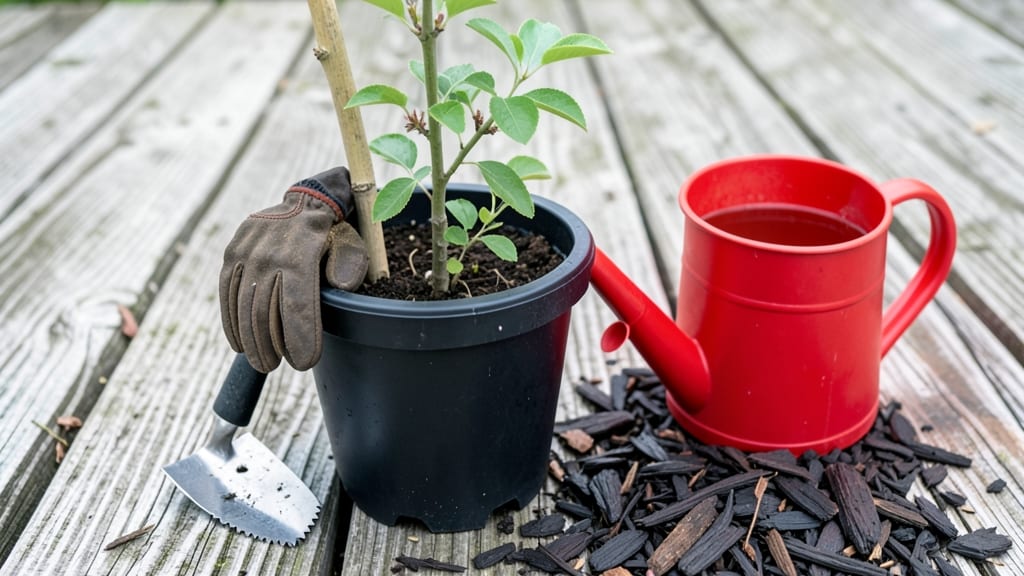
Caring for apple tree seedlings transforms a tiny sapling into a sturdy, fruit-bearing giant—if you nail the first year. 🌱 I’ve nursed seedlings from bare roots to 6-foot trees by focusing on three non-negotiables: soil that drains like a dream, watering that mimics spring showers, and pruning that shapes without shocking the plant.
Skip these, and you’ll end up with leggy, weak growth that struggles in winter.
The secret isn’t fancy tools—it’s paying attention to the little things. Your seedling needs well-draining soil (mix equal parts native soil, compost, and coarse sand), deep watering twice a week (not daily light sprinkles), and pruning in late winter to remove dead wood and open the center for airflow.
Most beginners over-prune or under-water, both of which invite disease. Start small: trim just the damaged branches your first year.
By summer, you’ll see thick, dark green leaves and a sturdy trunk—proof the seedling is thriving. The real magic happens in winter when cold-hardy varieties (like ‘Liberty’ or ‘Honeycrisp’) survive frosts that would kill weaker stock.
The key is mulching heavily in fall to protect roots and avoiding heavy pruning until spring, when the tree’s sap is flowing.
This method works for container-grown seedlings too—just use a 5-gallon pot with drainage holes and move it to a sheltered spot in winter. Whether you’re planting in the ground or a large pot, the principles stay the same: patience, consistency, and respect for the tree’s natural rhythm.
Ready to grow one that lasts?
📚 In This Guide
- What you need
- Instructions
- Tips and common mistakes
- Wrapping up and next steps
What you need
- ● Apple tree seedling: Choose a cold-hardy variety (e.g., 'Honeycrisp,' 'Granny Smith,' or 'Liberty') from a reputable nursery. Quantity: 1 per planting site.
- ● Garden soil or potting mix: Well-draining, nutrient-rich soil (pH 6.0–7.0). Quantity: 2–3 cubic feet per seedling.
- ● Organic compost or fertilizer: Balanced formula (e.g., 10-10-10) or apple-tree-specific blend. Quantity: 1–2 cups per seedling.
- ● Mulch: Wood chips, straw, or shredded bark (2–4 inches thick) to retain moisture and insulate roots.
- ● Watering can or hose with nozzle: For gentle, deep watering (avoid overhead spraying).
- ● Pruning shears: Sharp, sterilized shears (bypass-style, 6–8 inch blades) for shaping and removing dead branches.
- ○ Staking materials (optional but recommended for young seedlings): 3–4 wooden stakes (1–2 inches wide, 4–5 feet tall).
- ● Soft plant ties or garden twine.
- ● Protective barrier (for wildlife): Chicken wire or tree guard (18–24 inches tall) to deter rabbits and deer.
- ● Root stimulator: Mycorrhizal fungi or powder to boost root development.
- ● Slow-release fertilizer spikes: For seasonal nutrient boosts.
- ● Drip irrigation kit: Automates watering for consistent moisture.
- ● Thermometer: To monitor soil temperature (ideal planting range: 40–60°F).
- ● Garden gloves: For comfort while handling soil and tools.
Step-by-step apple tree seedling care for cold-climate resilience
Here’s how I’ve nurtured young apple trees through winters and into strong, productive maturity—no guesswork involved.
🌱 Step 1: Plant in Well-Draining Soil with Proper Spacing
Choose a location with full sun exposure (at least 6-8 hours daily) and well-draining soil. Apple seedlings need space—plant them 20-25 feet apart to prevent root competition and disease spread. Dig a hole twice as wide as the root ball but only as deep as the container’s base—burying too deep suffocates roots.
Loosen the root ball gently if it’s tightly packed, then place the seedling in the hole. Fill around it with native soil, pressing lightly to eliminate air pockets. Water immediately to settle the soil, and add a 3-inch layer of organic mulch (like wood chips) around the base, keeping it 6 inches away from the trunk to prevent rot.
☀️ Step 2: Water Deeply but Sparingly—Monitor Soil Moisture
Water seedlings once a week for the first month, then taper to every 10-14 days once established—unless rainfall provides 1 inch of moisture. Overwatering drowns roots, while underwatering stresses young trees. Check soil moisture by sticking your finger 2 inches deep; if it feels dry, water slowly until moisture reaches 12 inches down.
Use a soaker hose or drip irrigation to deliver water at the base, avoiding wetting leaves. Early morning watering prevents fungal diseases like apple scab. In winter, reduce watering to once a month unless the ground is frozen—dormant trees need less moisture.
✂️ Step 3: Prune Strategically to Encourage Strong Structure
Prune your seedling in its first year to remove dead, crossing, or inward-growing branches. Use clean, sharp pruners to make cuts at a 45-degree angle, just above an outward-facing bud. Leave 3-5 main scaffold branches
Remove any suckers (shoots growing from the base) immediately—they drain energy from the main trunk. Thin out crowded branches to improve air circulation, which reduces disease risk. Prune in late winter or early spring (just before buds swell) for best results. Young apple trees need winter protection in cold climates. Wrap the trunk with tree guard wrap or burlap to shield against rodent damage and temperature swings. Pile 12-18 inches of mulch around the base (but not touching the trunk) to insulate roots from freezing. If your region experiences below-zero temperatures, consider wrapping the entire tree in burlap or using a tree blanket. Avoid plastic—it traps moisture and causes rot. Prune any winter-damaged branches in early spring, cutting back to healthy wood. Apply a balanced 10-10-10 fertilizer in early spring (just as buds swell) and again in late summer. Avoid high-nitrogen fertilizers—they promote leafy growth at the expense of fruit production. Test soil annually to adjust pH (ideal range: 6.0-7.0) and nutrient levels. Watch for common apple tree pests like aphids, codling moths, and apple maggots. Use neem oil or insecticidal soap for early infestations, and apply dormant oil in late winter to smother overwintering eggs. Rotate control methods annually to prevent resistance.🪴 Step 4: Protect from Winter’s Harshest Elements
🌿 Step 5: Fertilize and Monitor for Pests/Diseases
Tips & tricks for perfect apple tree seedling care
Real talk: Growing a cold-hardy apple tree from a seedling is a marathon, not a sprint. These hard-won insights will help you avoid the pitfalls I learned the hard way—like the time I nearly lost a seedling to overzealous watering.
Soil Depth Matters: When planting, the hole should be no deeper than the container’s base—any deeper and you’ll suffocate the roots. I’ve seen beginners bury seedlings too deeply, thinking "more soil equals better," but this actually strangles the tree. Use a reference mark on the container to gauge depth before backfilling.
Winter Protection Pro Tip: For regions with below-zero temperatures, I recommend wrapping the entire tree in burlap—not just the trunk. The extra insulation helps maintain a more stable temperature around the entire root zone. Just remember to remove it in early spring before buds swell, or you’ll trap too much moisture.
Pruning Precision: Those 3-5 scaffold branches in Step 3 should be spaced evenly—think of them as spokes on a wheel. Uneven spacing leads to weak crotches and future structural issues. I use a small flag or tape to mark target branch locations before pruning to ensure symmetry.
Fertilizer Timing: The balanced 10-10-10 application in early spring and late summer aligns with the tree’s natural growth cycles. But here’s what nobody tells you: split that late-summer dose in half and apply it in two applications, two weeks apart. This prevents a sudden nutrient shock that can stress the tree as winter approaches.
Pro Tips for Apple Tree Seedling Care
- Real talk: Growing a cold-hardy apple tree from a seedling is a marathon, not a sprint.
- Soil Depth Matters: When planting, the hole should be no deeper than the container’s base—any deeper and you’ll suffocate the roots.
- Winter Protection Pro Tip: For regions with below-zero temperatures, I recommend wrapping the entire tree in burlap—not just the trunk.
Frequently asked questions
Got questions about nurturing your apple tree seedling? You’re not alone—growing a thriving young tree takes patience and know-how! Below, we tackle the most common concerns to help you avoid pitfalls and set your seedling up for long-term success.
How cold-hardy are apple tree seedlings, and when can I plant them outdoors?
Most apple tree seedlings are cold-hardy down to -15°F to -25°F, but young seedlings (under 1 year) need extra protection. Plant them outdoors in early spring (after last frost) or fall (6-8 weeks before first frost). For colder climates, wait until soil temps rise above 40°F to avoid frost damage. Mulch heavily in winter to insulate roots!
How long does it take for an apple tree seedling to bear fruit?
Patience is key! Grafted seedlings may take 4–7 years to bear fruit, while seed-grown trees can take 10+ years (or never produce true-to-type apples). Choose dwarf or semi-dwarf varieties for faster fruiting. Focus on proper care—watering, pruning, and fertilizing—to speed up maturity and ensure healthy growth.
Can I grow an apple tree from a store-bought apple seed, or should I buy a grafted seedling?
While it’s possible to grow a tree from a seed, it’s a gamble—seedlings may not produce fruit identical to the parent (or any fruit at all). For reliable results, opt for a grafted seedling from a nursery. Grafted trees retain the parent variety’s traits, fruit quality, and disease resistance, saving you years of trial and error!
What are the most common pests/diseases affecting apple tree seedlings, and how do I prevent them?
Watch for aphids, codling moths, and apple scab (a fungal disease). Prevent issues with:
- Neem oil (spray leaves monthly to deter pests).
- Copper fungicide (apply in spring to prevent scab).
- Proper spacing (3–6 ft apart) for airflow and sunlight.
- Prune regularly to remove infected branches.
Should I fertilize my apple tree seedling, and what’s the best fertilizer to use?
Yes! Seedlings benefit from a balanced, slow-release fertilizer (like 10-10-10) applied in early spring. Avoid over-fertilizing—young roots are sensitive. For organic options, try:
- Compost or well-rotted manure (work into soil in fall).
- Fish emulsion (diluted, applied in spring).
Wrapping up and next steps
Caring for your apple tree seedling is a rewarding journey that blends patience, knowledge, and a little green thumb love! 🌱 With the right soil prep, pruning techniques, and seasonal adjustments, your young tree will thrive and set the stage for a bountiful harvest in years to come.
Whether you’re a novice gardener or a seasoned pro, every step you take—from proper spacing to winter protection—makes a difference.
Now that you’re armed with these cold-hardy growth hacks, it’s time to roll up your sleeves and get growing! Start by planting your seedling this season and watch it flourish with confidence. Happy gardening—your future apple orchard awaits! 🍏✨