
Trees
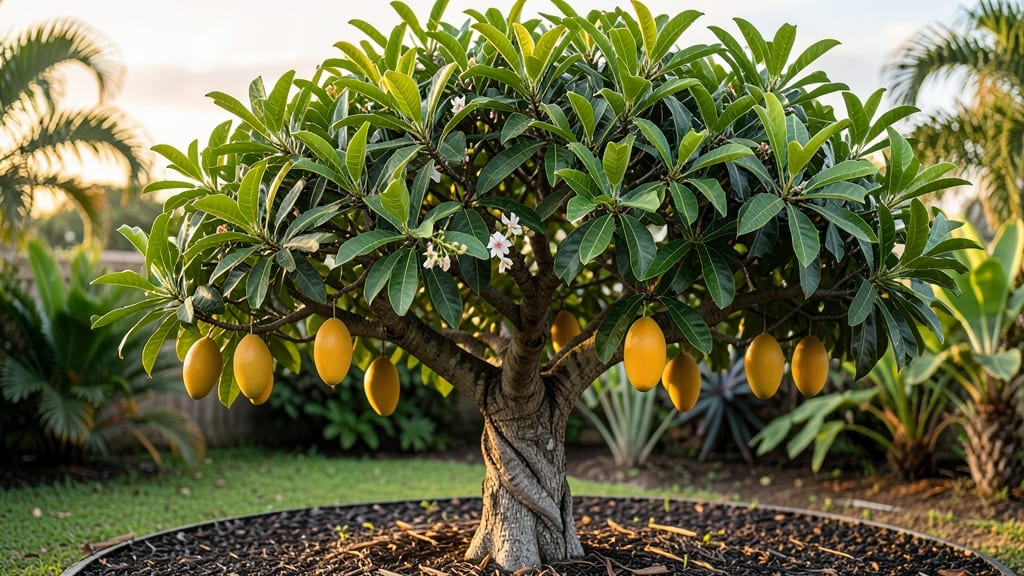
The Alphonso mango tree height can soar to 25–50 feet at maturity—taller than a three-story building—if left unchecked, making it a stunning but space-hogging tropical giant.
Dreaming of growing your own Alphonso mango tree but worried about space? This iconic variety can reach towering heights—here’s how to plan for its growth while keeping your garden thriving.
In its first year, your sapling will grow just 2–4 feet, but by year three, it could already be 12–18 feet tall if conditions are ideal. Without pruning, most trees hit their full height by 5–7 years, which is why spacing and early training matter so much.
Below, I’ll break down how to manage its height—whether you’re working with a small urban garden, a container, or just want to keep it from overshadowing your patio.
You’ll also learn the truth about dwarf varieties (spoiler: they’re rare) and how pruning can turn this giant into a manageable fruit-bearing beauty.

Alphonso mango tree height by growth stage: what to expect year by year
The Alphonso mango tree is one of the most prized varieties, but its impressive height—up to 50 feet—can be intimidating for home gardeners. Understanding its growth stages helps you plan for space, sunlight, and even pruning strategies.
From a tiny sapling to a towering fruit-bearing giant, each year brings dramatic changes in height and structure.
In its first year, your Alphonso mango tree will grow surprisingly fast, reaching 2 to 4 feet tall if planted in ideal conditions. This rapid early growth sets the stage for its future stature, so proper care during this phase is critical.
The tree’s height in year two can double, with some varieties shooting up to 10 feet if given full sun and regular watering.
By year three, the tree enters its most dramatic growth phase, often doubling in height again to reach 12 to 18 feet. This is when you’ll notice the development of a strong trunk and the first signs of branching.
Without intervention, the tree will continue its upward trajectory, reaching its mature height of 25 to 50 feet between years five and ten.
| Growth Stage | Height Range | Key Features | Care Focus |
|---|---|---|---|
| Year 1 | 2-4 ft | Thin trunk, minimal branching | Watering, sunlight, staking |
| Year 2 | 6-10 ft | Trunk thickens, first branches form | Pruning young shoots, fertilizer |
| Year 3-5 | 12-18 ft | Rapid vertical growth, dense canopy | Structural pruning, pest control |
| Years 6-10 | 25-50 ft | Mature height, full fruit production | Regular pruning, soil health |
Your Alphonso mango tree’s height isn’t just determined by age—climate plays a huge role. In tropical regions like Florida or California’s coastal areas, trees grow faster due to year-round warmth and humidity.
Meanwhile, in subtropical zones like parts of Texas or Arizona, growth may slow slightly during cooler months but still reach impressive heights with proper care.
Pruning is another critical factor. If you prune aggressively in early years, you can reduce height by 20-30% while encouraging a bushier shape. I recommend pruning in late winter or early spring to remove water sprouts and shape the canopy.
Without pruning, the tree will grow uncontrolled vertical growth, which can make harvesting difficult.
One common misconception is that Alphonso mango trees stay small. While some varieties like Dasheri or Langra may grow slightly shorter, Alphonso is consistently one of the tallest, often surpassing 30 feet even in ideal conditions.
If you’re limited on space, consider espalier training or growing it in a large container, though container growth may slightly stunt its height.
For gardeners in USDA Zones 10-11, the tree’s height progression is most predictable. Outside these zones, growth may be slower, but with greenhouse cultivation or microclimate protection, you can still achieve impressive results. Always monitor your tree’s height against local climate patterns to adjust care accordingly.
If you’re planning to grow an Alphonso mango tree in a small garden, start by choosing the right location—at least 15 feet of clearance is ideal for mature trees. In urban settings, consider dwarfing rootstock or container training, though these methods may reduce fruit quality.
With the right approach, you can enjoy this iconic variety without sacrificing your garden’s layout.
Remember, the first 5 years are the most critical for height control. By understanding each growth stage and adjusting your care routine, you’ll set your Alphonso mango tree up for success—whether it’s a towering giant or a carefully managed feature in your landscape. 🌳
How to control Alphonso mango tree height in small gardens: pruning & training techniques
Your Alphonso mango tree can reach 25-50 feet tall, making it a challenge for small gardens. The good news? With strategic pruning and training techniques, you can manage its height while still enjoying abundant fruit production.
Start by understanding that vertical growth happens primarily in the first 5 years, so early intervention is key.
For small spaces, focus on structural pruning to shape the tree and espalier training to grow it along walls or fences. These methods don’t just control height—they also improve air circulation and fruit accessibility.
Remember, never remove more than 25% of the canopy in a single session to avoid stressing the tree.
- Step 1: Prune in Late Winter – Trim dead or crossing branches first to improve airflow. Use clean, sharp pruners to make 45-degree cuts just above a leaf node.
- Step 2: Train with Espalier – Attach horizontal branches to a trellis or wall using soft ties. This spreads growth outward instead of upward, keeping the tree under 10 feet tall.
- Step 3: Head Back Main Trunk – Cut the central leader by 1/3 to encourage lateral branching. Do this when the tree is 2-3 feet tall to prevent vertical dominance.
- Step 4: Thin Out Dense Foliage – Remove overlapping branches to reduce shade and improve fruit quality. Focus on the lower canopy to lift branches upward naturally.
- Step 5: Fertilize Strategically – Use a balanced 6-6-6 fertilizer in spring and fall to promote controlled growth. Avoid high-nitrogen fertilizers, which encourage rapid vertical growth.
- Step 6: Monitor Growth Year-Round – Check for water sprouts (fast-growing vertical shoots) and prune them immediately. These compete for nutrients and can double your tree’s height in a season.
To further control height, consider topiary shaping or pollarding, where you cut back the entire tree to a head every few years. This method is aggressive but keeps the tree under 12 feet tall. Pair it with regular pruning to maintain shape and encourage fruit-bearing branches.
For container growing, choose a large pot (3+ feet wide) and prune roots annually to limit size. Use slow-release fertilizer and dwarfing rootstock if available, though true dwarf Alphonso varieties are rare.
Keep in mind that container trees may produce smaller fruit but are easier to manage in urban spaces.
Finally, patience is key. Even with pruning, an Alphonso mango tree will naturally grow tall. By combining training techniques with consistent care, you can enjoy your tree’s sweet fruit without sacrificing your garden’s layout.
Start young—prune when the tree is 2-3 feet tall—and you’ll see the best results over time.