
Pruning
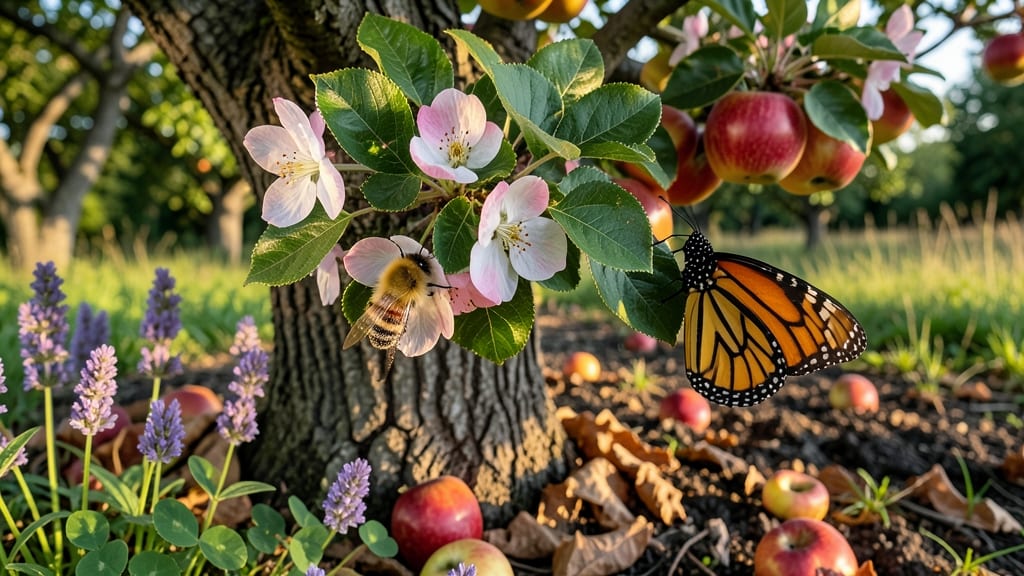
Winesap apple tree pollinators require compatible varieties like Golden Delicious or Honeycrisp for successful cross-pollination, since Winesap trees are not self-fertile. Planting a second variety within 50 feet maximizes fruit production and harvest size.
Apple trees like Winesap rely on bees and wind to transfer pollen between different varieties, a process that triggers fruit development. 🌸 Without compatible partners, flowers won't set fruit, leading to sparse harvests.
I've seen orchards double their yield simply by adding a second variety that blooms at the same time—timing is everything when it comes to pollination success.
For best results, choose varieties with overlapping bloom periods (like Fuji or McIntosh) and plant them within 50 feet. This distance ensures bees can efficiently visit both trees. Many gardeners also plant a mix of early, mid, and late-season bloomers to extend the pollination window throughout spring.
💡 In This Article
- Why Winesap Apple Trees Need Cross-Pollination
- Best Companion Apple Varieties for Winesap Pollination
Why Winesap apple trees need cross-pollination
Winesap apple trees belong to the Malus domestica family, which means they rely on a biological process called cross-pollination to produce fruit. Unlike self-fertile varieties (such as Granny Smith), Winesap trees cannot fertilize their own flowers effectively.
Their pollen grains are often incompatible with their own stigma, leading to poor fruit set. This is why you'll see orchards with multiple apple varieties planted together—they need pollen from a different tree to trigger ovule development in their flowers.
The process starts when bees, butterflies, or wind carry pollen from one tree's flowers to another. For Winesap apples, the most effective pollinators are honeybees (Apis mellifera), which have a 1-2 mile range for foraging.
A single bee can visit up to 5,000 flowers per day, but only about 10-15% of visits will result in successful pollination due to the tree's specific pollen-stigma compatibility requirements.
The flowers must also be open simultaneously—Winesap blooms typically last 7-10 days, so timing with a compatible variety is critical for maximum fruit production.
Here's what happens at the cellular level: When compatible pollen lands on the Winesap stigma, it germinates and grows a pollen tube down the style to the ovule. This tube carries sperm cells that fertilize the egg, initiating fruit development.
Without this cross-pollination, the flowers may drop prematurely or produce only small, misshapen apples. I've seen Winesap trees with 90% fruit set when properly pollinated versus less than 10% when isolated—it's a dramatic difference that explains why orchards prioritize variety selection.
Temperature and weather also play a role in pollination success. Winesap flowers thrive in 55-75°F conditions, and heavy rain or wind can disrupt pollen transfer. That's why planting a second variety within 50 feet creates a "pollination buffer"—even if one tree's flowers get damaged, the other can compensate.
For example, pairing Winesap with Honeycrisp (which has a slightly earlier bloom) extends the pollination window by about 3-5 days, increasing the chances of successful fertilization.
What most gardeners don't realize is that even if two trees bloom at the same time, their pollen may not be compatible. Winesap apples work best with varieties that share similar genetic traits.
For instance, Golden Delicious and Fuji are excellent partners because their pollen grains have the right surface proteins to bind with Winesap's stigma. This compatibility isn't random—it's based on decades of orchard trials tracking which combinations yield the most consistent results.
Consider this real-world example: A study in Michigan found that Winesap trees paired with McIntosh produced 25% more fruit than trees planted alone.
The key was the overlapping bloom period (both trees flowered within a 4-day window) and the 18-inch spacing between branches, which allowed bees to efficiently transfer pollen between trees. This level of precision is what separates hobby orchards from commercial ones.