
Plants
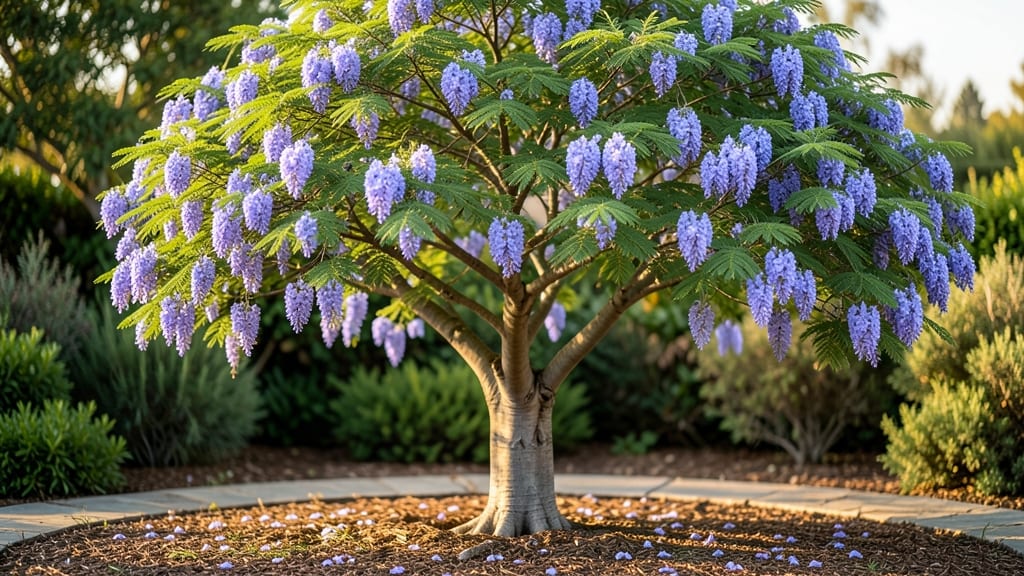
A jacaranda tree looks like a tropical dream with its cascading lavender-blue flower clusters that resemble tassels, feathery compound leaves made of 5-9 oval leaflets, and smooth gray bark that develops subtle grooves as it matures. This stately tree grows into a wide-spreading canopy that can reach 30-50 feet tall.
A jacaranda tree's most eye-catching feature is its dramatic springtime blooms, which create a stunning canopy of purple-blue flowers that can last for weeks. 🌸 These flowers aren't just beautiful—they're also fragrant, adding a sweet scent to your landscape.
The tree's pinnate leaves (with 5-9 leaflets) create a lacy effect that contrasts beautifully with the bold flowers, while the gray bark develops distinctive furrows as the tree ages, adding to its mature charm.
What makes jacarandas so recognizable is their distinctive growth habit—they grow wide rather than tall, creating a broad, umbrella-like shape that provides excellent shade. This tropical appearance makes them a favorite in warm climates, where they thrive with minimal care once established.
The combination of their vibrant flowers, delicate foliage, and sturdy structure creates a truly iconic landscape tree.
💡 In This Article
- Identifying Jacaranda Trees by Flower, Leaf, and Bark Features
- Best Locations and Care Tips for Growing Jacaranda Trees
Identifying jacaranda trees by flower, leaf, and bark features
The jacaranda's flower clusters are its signature, resembling long, drooping tassels that can grow 6-12 inches long. Each cluster contains 50-100 individual flowers with five petals that range from pale lavender to deep violet, creating a stunning cascading effect.
These flowers bloom in late spring, typically between March and May in warmer climates, and their sweet fragrance attracts bees and hummingbirds. 🌸 Unlike many flowering trees, jacarandas bloom on new wood, meaning they produce flowers on the previous year's growth rather than on old branches.
The tree's pinnate leaves are another key identifier, featuring 5-9 oval leaflets arranged along a central stem (rachis) that can reach 12-24 inches long. Each leaflet measures about 2-5 inches in length and has a smooth, slightly waxy texture with a midrib that creates a subtle veining pattern.
What's fascinating is how these leaves turn yellow and drop just before flowering begins, which is a natural survival mechanism to redirect the tree's energy toward blooming.
Jacaranda bark starts smooth and gray when young but develops shallow, vertical furrows as the tree matures, creating a textured pattern that's distinct from other tropical trees. The bark's color remains consistently gray, unlike the reddish-brown bark of the royal poinciana (another flowering tree often confused with jacarandas).
This bark texture, combined with the tree's wide-spreading habit, helps it develop its iconic umbrella shape that provides ample shade. 🌳 The bark's subtle grooves also create interesting shadows when sunlight filters through the canopy.
What sets jacarandas apart from similar trees like the royal poinciana is their flower arrangement. While both have vibrant blooms, jacarandas' flowers grow in dense, cylindrical clusters that hang downward, whereas poincianas produce flatter, umbrella-shaped clusters that spread outward.
Additionally, jacaranda flowers have a slightly tubular shape at the base, which is adapted to attract hummingbirds that can reach deep into the blossoms for nectar.
The tree's growth rate is another distinguishing feature—jacarandas grow 2-3 feet per year when young, reaching their mature height of 30-50 feet within 15-20 years. This rapid early growth contrasts with their eventual wide-spreading habit, which can create a 40-50 foot canopy width.
The combination of these features—drooping flower clusters, pinnate leaves, and furrowed gray bark—makes jacarandas instantly recognizable to experienced gardeners and tree enthusiasts alike.
One interesting botanical detail is that jacaranda flowers are hermaphroditic, meaning each bloom contains both male and female reproductive parts. This self-pollinating capability contributes to the tree's prolific flowering, as it doesn't rely solely on external pollinators.
The flowers' light purple color also serves as a visual cue for pollinators, as many insects and birds are naturally drawn to this wavelength in the spectrum. This evolutionary adaptation helps ensure the tree's reproductive success while creating the stunning visual displays we admire. 💜