
Pruning
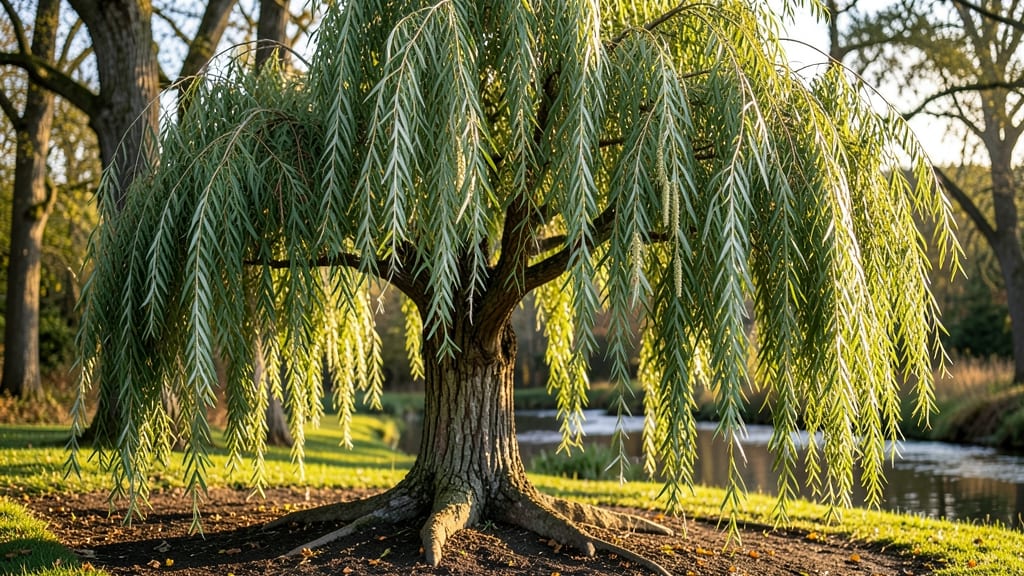
A weeping willow tree size can reach 30 to 50 feet tall with a spread of 20 to 30 feet, making it a dramatic focal point for large properties.
If you're dreaming of a graceful, drooping canopy to shade your backyard or waterfront property, the weeping willow tree's rapid growth might seem intimidating at first. But with the right planning, it can become a stunning, fast-growing addition that transforms any outdoor space.
Understanding its mature dimensions and root spread is key to choosing the perfect planting location. Too close to structures or water sources, and you risk damage—or worse, a tree that outgrows its welcome.
The good news? Varieties like 'Pendula' and 'Trichophora' offer slightly smaller profiles, giving you options depending on your landscape.
In this guide, I’ll break down everything you need to know—from growth rates and spacing requirements to pruning tips—to keep your weeping willow healthy and well-behaved for years to come.


Weeping willow tree size: mature dimensions & growth rate by variety
The weeping willow tree (Salix babylonica) is famous for its elegant, drooping branches and rapid growth, but its mature size can vary dramatically between varieties. Whether you're planning a backyard retreat or waterfront landscaping, understanding these dimensions helps you choose the right type for your space.
Most varieties reach 30-50 feet tall with a spread of 20-40 feet, but some dwarf cultivars stay under 20 feet—perfect for smaller yards.
Growth speed is another key factor: weeping willows can add 3-6 feet per year in ideal conditions, making them one of the fastest-growing trees. However, climate plays a huge role—warmer regions with plenty of water accelerate growth, while cooler or drier areas slow it down.
Let’s break down the most popular varieties to help you visualize their potential impact on your landscape.
🌳 Pro Tip: Always check your local USDA hardiness zone (typically zones 5-8) and soil moisture levels before planting, as these directly affect how quickly and large your tree will grow.
The 'Pendula' variety is the classic weeping willow, often reaching 50 feet tall with a 40-foot spread in ideal conditions.
Its rapid growth rate of 4-6 feet per year makes it a favorite for quick shade solutions, but it requires plenty of space—plant it at least 50 feet from structures to avoid root or branch interference.
This variety loves moist, well-drained soil and full sun, which maximizes its lush, drooping foliage.
If you're working with limited space, the 'Nana' cultivar is a game-changer. Growing only 20-30 feet tall with a 15-25 foot spread, it’s perfect for smaller yards or urban gardens.
Its slower growth rate of 2-4 feet per year means you won’t need to prune as aggressively, though it still benefits from regular watering. This variety is also more adaptable to drier conditions than its larger cousins, making it a versatile choice.
For a balance between size and speed, the 'Trichophora' variety is an excellent middle-ground option. It typically matures at 30-40 feet tall with a 20-30 foot spread and grows 3-5 feet annually.
What sets it apart is its cold-hardiness, making it a great pick for northern climates where other varieties might struggle. However, it’s worth noting that its growth slows significantly in dry or poor soil conditions.
When choosing a weeping willow, consider not just the mature height but also the spread and growth rate. A tree planted too close to a house or power lines can become a maintenance nightmare as its branches stretch outward.
Always measure your available space and account for the tree’s root spread, which can extend 2-3 times the canopy width. For example, a 30-foot-tall weeping willow might need 60 feet of clearance for its roots to spread comfortably.
Climate is another critical factor. In warmer, humid regions like the Southeast, weeping willows grow faster and larger, while in cooler, drier areas like the Pacific Northwest, their growth may be more restrained.
If you live in a USDA zone 9 or higher, expect your tree to reach its mature size 20-30% faster than in zone 5. Always research your local climate and soil type before planting to set realistic expectations for your tree’s development.
One common mistake gardeners make is underestimating the horizontal growth of weeping willows. Even dwarf varieties like 'Nana' can develop a 20-foot spread, which may encroach on neighboring plants or hardscapes.
To mitigate this, plant your weeping willow in an open area with full sun exposure and avoid placing it near patios, decks,
How much space does a weeping willow need? Root spread & planting zones
The weeping willow tree (Salix babylonica 'Pendula') is a stunning landscape feature, but its aggressive root system and rapid growth demand careful planning. Mature trees reach 30-50 feet tall with a 30-40 foot spread, making them unsuitable for small yards.
Their roots can extend 50+ feet from the trunk, potentially damaging foundations, sidewalks, and underground pipes.
For a healthy weeping willow, prioritize open spaces with full sun exposure. Avoid planting near structures, driveways, or septic systems—maintain at least 30-50 feet of clearance. Their water-loving nature means they thrive near ponds, streams, or with consistent irrigation, but poor drainage can lead to root rot.
Weeping Willow Tree Spacing & Location
Pros
- ✅ Dramatic shade for large areas
- ✅ Fast growth (1-3 ft/year)
- ✅ Wildlife habitat for birds and insects
- ✅ Low maintenance once established
Cons
- ❌ Aggressive roots damage foundations
- ❌ Heavy litter from drooping branches
- ❌ Short lifespan (30-50 years)
- ❌ Needs constant moisture (not drought-tolerant)
When selecting a planting location, consider soil type. Weeping willows prefer moist, well-drained soil with a slightly acidic to neutral pH (6.0-7.5). Heavy clay soils should be amended with compost or sand to prevent waterlogging.
If your yard has poor drainage, plant on a slight mound to encourage root aeration.
For urban or suburban gardens, opt for dwarf varieties like 'Nana' (20-30 ft tall) or 'Trichophora' (golden foliage, similar size). These still require 20-30 feet of space but are more manageable. Always call 811 before digging to locate underground utilities—weeping willow roots can disrupt sewer lines and cables.
If you're planting near a water source, ensure the tree isn’t too close to prevent erosion or root intrusion into ponds. A 5-10 foot buffer between the tree and water’s edge is ideal.
Mulch the base with 3-4 inches of organic mulch (like wood chips) to retain moisture and suppress weeds, but keep mulch 6 inches away from the trunk to prevent rot.
Regular root pruning can help control spread, but this should only be done by professionals. For most gardeners, the best approach is proactive spacing—plant your weeping willow where it has room to grow without encroaching on your home or neighbors' property.
With the right location, this tree will be a showstopper for decades.