
Trees
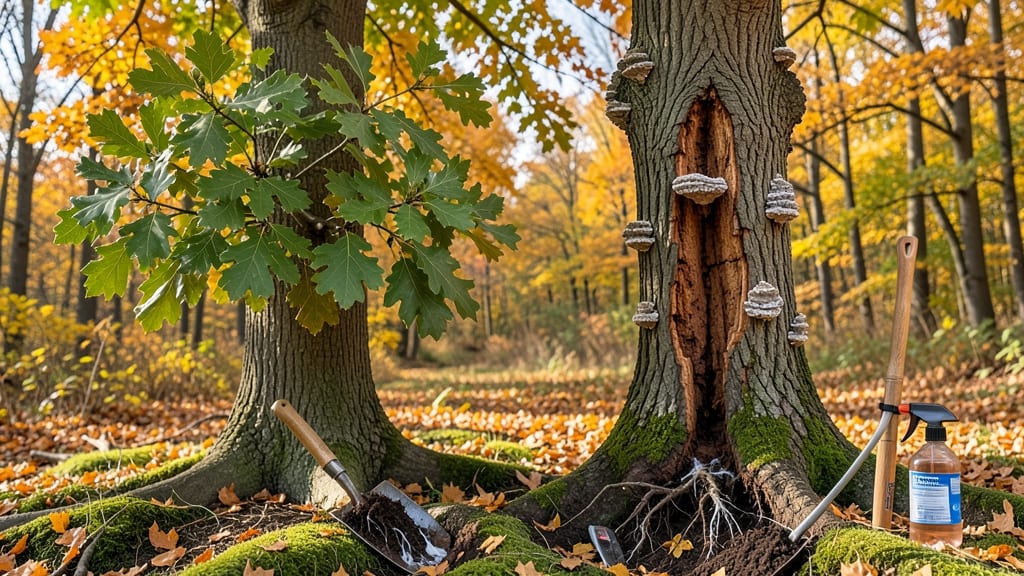
That mushroom ring at your tree’s base isn’t decoration—it’s a tree rot fungus invasion that could kill your tree in months. 🌱 I’ve seen healthy oaks collapse from Armillaria in just two seasons, but early action can turn the tide.
The key is acting fast before the fungus spreads to the roots.
Most people wait until mushrooms appear or branches snap, but by then it’s often too late. Look for shelving fungi on trunks, conks at the base, or sudden leaf yellowing—these are red flags.
The fungus thrives in wet, compacted soil, so improving drainage and air circulation is your first line of defense.
You can prune infected limbs (sterilize tools between cuts!) and apply organic treatments like copper fungicide or hydrogen peroxide to slow spread. For severe cases, soil solarization or beneficial microbes like Trichoderma can help restore balance. The goal isn’t always saving the tree—sometimes removing it protects your yard.
Prevention is easier than cure: mulch properly, avoid wounding bark, and inspect trees after storms. Even a 10-minute check every spring can catch fungus before it takes hold. Let’s stop this silent killer in its tracks.
Root Causes Of Wood Decay
Tree rot fungus isn’t just a random attack—it thrives because of specific conditions that weaken trees and create the perfect breeding ground. Understanding these triggers helps you spot early warning signs and take action before the damage spreads.
Below are the most common reasons why trees fall victim to rot-causing fungi, broken down into clear, actionable explanations.
Fungi love water—it’s their lifeline. When trees sit in soggy soil or suffer from waterlogging, their roots suffocate, creating the ideal environment for spores to germinate and spread. Here’s how it happens:
- Compacted or clay-heavy soil: These soils repel water instead of absorbing it, leaving roots waterlogged. Example: A maple tree planted in dense clay after heavy rain will show signs of rot within weeks.
- Improper grading: If the ground slopes toward the tree (rather than away), water pools at the trunk, accelerating decay. Fix: Ensure a 6-inch downward slope for 3–4 feet around the base.
- Overwatering: While trees need hydration, daily watering (especially with sprinklers) keeps the trunk damp for prolonged periods, inviting fungal growth. Pro Tip: Water deeply but infrequently—aim for 1–1.5 inches per week during dry spells.
💡 Quick Test: Stick a screwdriver into the soil near the tree. If it comes out muddy instead of slightly damp, drainage is the issue.
Fungi don’t just infect trees—they invade through open wounds. Any break in the bark’s protective barrier gives spores a direct entry point. Common culprits include:
- Improper pruning: Cuts too close to the trunk (within 6–12 inches) leave jagged edges that don’t heal, creating entry points for Armillaria root rot or Heterobasidion. Fix: Use sharp tools and make cuts at a 45-degree angle just outside the branch collar.
- Lawnmower or string trimmer injuries: Even minor scrapes on the trunk can introduce pathogens. Solution: Apply a wound dressing (like Tanglefoot Tree Wound Pruning Sealer) to seal wounds within 24 hours.
- Animal or human damage: Gnawing rodents, climbing pets, or even leaning ladders can create deep gouges. Prevent: Install tree guards or metal collars around young trunks.
⚠️ Warning Sign: If you see oozing sap or dark, stringy fungal strands (like mycelium) at a wound, act fast—rot may already be spreading inward.
Healthy trees resist fungal attacks, but stress from nutrient deficiencies, disease, or environmental factors lowers their defenses. Common stressors include:
| Stressor | How It Helps Fungi | Solution |
|---|---|---|
| Drought | Weakens root systems, making trees more susceptible to Fomes root rot. | Mulch with 3–4 inches of organic mulch (wood chips, bark) and water deeply every 7–10 days in dry climates. |
| Competing plants | Grass, weeds, or shrubs steal nutrients, leaving trees malnourished. | Remove competing vegetation within a 5–6 foot radius of the trunk. |
| Pests (borers, beetles) | Insect tunnels create entry points for fungi like Polyporus. | Apply neem oil or beneficial nematodes to control infestations. |
| Poor soil pH | Extreme acidity (pH < 5.0) or alkalinity (pH > 8.0) stunts growth, inviting rot. | Test soil and amend with lime (to raise pH) or sulfur (to lower pH) as needed. |
🌡️ Health Check: Look for yellowing leaves, stunted growth, or thin canopies—these are red flags that your tree’s immune system is compromised.
Trees planted too closely together or in confined spaces (like urban sidewalks) struggle to access sunlight, air, and nutrients—perfect conditions for fungal outbreaks. Key issues:
- Root competition: Trees planted within 15–20 feet of each other may develop intertwined roots, spreading disease faster. Fix: Space large trees at least 25 feet apart.
- Girdling roots: Roots that wrap around the trunk strangle the tree, cutting off nutrient flow. Solution: Prune girdling roots with a clean saw and apply mycorrhizal fungi to boost root health.
- Urban pollution: Trees in cities face acid rain, ozone damage, and compacted soil, weakening their bark. Help Them: Use mulch and foliar sprays with seaweed extract to improve resilience.
🔍 Pro Tip: If you’re planting a new tree, avoid “volcano mulching” (piling mulch against the trunk)—this traps moisture and promotes rot. Keep mulch 2–3 inches deep and 6 inches away from the trunk.
By addressing these root causes, you can starve out fungal growth before it takes hold. In the next section, we’ll cover early warning signs so you can catch rot before it’s too late.
Fixing Fungal Tree Damage Fast
Fungal decay in trees doesn’t have to mean the end of your beloved greenery. With the right approach, you can stop the spread, restore health, and even prevent future outbreaks. Below are practical, step-by-step solutions tailored to common causes—plus prevention tips to keep your trees thriving.
---
Root rot is often silent until it’s severe, so early action is key.
#### 🍳 Step 1: Improve Drainage Poor soil drainage is the #1 culprit for root rot.
If water pools around the base of your tree: - 🔹 Dig a shallow trench (6–12 inches deep) around the root zone to redirect excess water. - 🔹 Amend the soil with organic matter like compost or perlite to loosen compacted soil. - 🔹 Consider raised beds for shallow-rooted trees in soggy areas.
#### 👨🍳 Step 2: Prune Affected Roots (Carefully!) If roots are visibly mushy or discolored: - ⚠️ Call an arborist—root pruning should never be DIY unless you’re experienced. - ✂️ Remove only dead roots (healthy roots are white; rotten roots are brown/black and crumbly). - 💡 Pro Tip: Avoid pruning in wet soil—wait for dry conditions to minimize stress.
#### 🥘 Step 3: Apply Fungal Treatments Natural remedies can help break the cycle: - 🍄 Hydrogen peroxide (3%) – Spray or pour around the root zone to kill fungus (repeat weekly). - 🌿 Neem oil or copper fungicide – Mix with water and apply as a soil drench (follow label rates). - 🍯 Beneficial microbes – Add Trichoderma or mycorrhizal fungi to outcompete harmful pathogens.
#### ⏰ Step 4: Monitor & Adjust Watering - 💧 Water deeply but infrequently—trees hate soggy feet! Aim for 1–1.5 inches per week (including rain). - 🌧️ Install a French drain if your yard floods regularly.
---
Fungal infections like Armillaria or Heterobasidion attack above ground—here’s how to fight back.
#### 🔪 Step 1: Remove Infected Wood - ✂️ Prune out all decayed branches (cut 6–12 inches below the rot to ensure removal). - 🔴 Burn or chip infected wood—do not compost—to prevent spore spread. - 💡 Pro Tip: Look for shelf fungi (conks) or mushrooms at the base—these are red flags!
#### 🌡️ Step 2: Seal Wounds Properly - 🛡️ Use tree wound paint or pruning sealant (like Tanglefoot Tree Wound Pruning Seal) on cuts larger than ½ inch. - ❌ Avoid power washing—it can push spores deeper into the tree.
#### 🎯 Step 3: Boost Tree Immunity A healthy tree fights rot better.
Try these natural boosters: - 🍂 Mulch correctly – Apply 2–4 inches of organic mulch (wood chips, bark) 3 inches away from the trunk. - 💪 Fertilize with slow-release organic options (like fish emulsion or worm castings) to strengthen roots. - 🌿 Foliar spray with seaweed extract – Enhances disease resistance naturally.
#### ✨ Step 4: Prevent Re-infection - 🌧️ Avoid overhead watering—use drip irrigation or soaker hoses to keep foliage dry. - 🍄 Remove nearby debris (fallen leaves, branches) where spores love to hide.
---
An ounce of prevention saves pounds of heartache. Here’s how to protect your trees long-term:
| Risk Factor | Prevention Fix | When to Do It | |-----------------------|--------------------------------------------|----------------------------| | Compacted soil | Aerate + add compost | Early spring or fall | | Overwatering | Install rain barrels + check drainage | Before rainy season | | Injured bark | Avoid lawnmower damage + prune properly | Year-round | | Weak trees | Mulch + fertilize (avoid synthetic chemicals) | Late winter/early spring | | Nearby infected trees | Remove or treat infected trees ASAP | At first sign of fungus |
💡 Bonus Tip: Plant resistant species in high-risk areas—some trees (like oak, hickory, or redwood) naturally resist rot better than others.
--- By acting fast and strategically, you can save even severely affected trees. Start with the fixes that match your tree’s symptoms, then layer in prevention to keep fungal rot from making a comeback. 🌱🛡️
Frequently asked questions
What are the most common types of tree rot fungus?
You’ll most likely encounter Armillaria (honey fungus), which forms rings of mushrooms at the tree base, or Fomes (shelf fungi) that grow directly on trunks. Ganoderma produces shiny, red-brown conks, while Polyporus creates thin, papery caps. Each type spreads differently—Armillaria attacks roots aggressively, while Fomes targets the trunk first.
How do I tell if my tree has rot or just old age?
Look for mushrooms at the base, dark streaks under the bark, or branches that snap easily—these are rot red flags. Old trees may have hollow trunks but still produce leaves and buds. Tap the trunk with a hammer: a hollow sound suggests rot, while a solid thud indicates healthy wood.
Can I save a tree with advanced rot?
It depends on the severity. If only surface branches are infected, pruning + fungicide may work. But if the trunk is 50%+ compromised or roots are mushy, removal is safer. Test with a resistograph (professional tool) to measure internal decay before deciding. Sometimes saving the tree isn’t worth the risk.
Will copper fungicide really stop tree rot?
Yes, but it’s most effective for early-stage infections. Mix 1 tablespoon copper sulfate per gallon of water and spray the trunk/soil monthly during wet seasons. For stubborn cases, combine with hydrogen peroxide (3%)—it breaks down fungal cell walls. Reapply after heavy rains, as copper washes away quickly.
How long does it take for tree rot fungus to kill a tree?
Fast-spreading types like Armillaria can kill in 1-3 years, while slower rot (e.g., Fomes) may take 5-10+ years. The timeline depends on tree species, soil moisture, and your climate. Oak and maple often survive longer than fruit trees, but all species weaken rapidly once roots are infected.