
Pruning
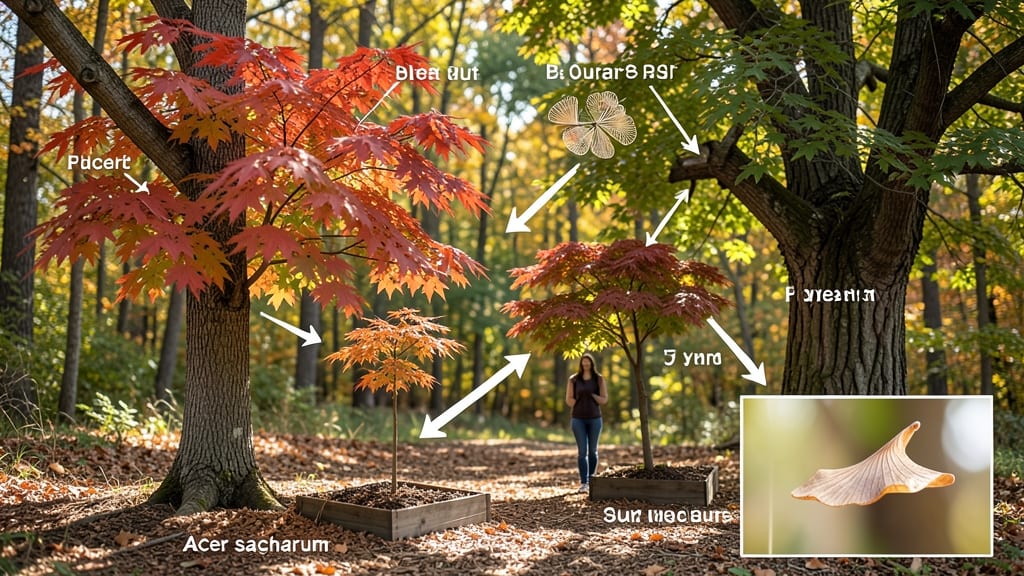
Understanding the maple tree growth stages 🌳 is like following a slow-motion time-lapse of nature’s most dramatic transformations—from a delicate sapling to a towering giant that shapes landscapes for centuries.
If you’ve ever wondered how a 1-foot seedling becomes a 100-foot monarch in just a few decades, you’re not alone. The journey isn’t just about height—it’s a story written in leaf shape, bark texture, and even the way the tree interacts with its environment.
Here’s what you’ll discover: the year-by-year milestones that mark each phase, how sunlight and soil accelerate (or stall) growth, and the telltale signs that reveal whether your tree is thriving—or struggling in silence.
By the end, you’ll know exactly what to expect at every stage, from the first spring sprouts to the mature canopy that provides shade for generations.


Maple tree growth stages by age: height & development timeline
Understanding the maple tree growth stages helps you track progress and anticipate care needs. Whether you're growing a sugar maple, red maple, or silver maple, each stage brings distinct changes in height, leaf shape, and bark texture.
From a delicate seedling to a towering mature tree, these stages span decades—here's what to expect year by year.
In the first 5 years, your maple tree will focus on root and trunk development. The first year is critical, with seedlings reaching just 1-2 feet tall. By year 3, you'll see rapid vertical growth, with saplings hitting 8-12 feet.
These early years determine the tree's long-term health and structure, so proper watering and soil quality are essential.
Key growth milestones accelerate after year 5, with trees gaining 3-5 feet annually during adolescence. By age 20, your maple will likely reach 40-60 feet, developing its signature lobed leaves and distinctive bark ridges. Each species follows a similar pattern but with unique timing—sugar maples mature slightly slower than red maples.
| Age (Years) | Height Range (ft) | Key Development | Species Notes |
|---|---|---|---|
| 0-1 | 1-2 ft | Seedling stage; thin stems; first true leaves | All species similar; red maples may show early red tinges |
| 2-5 | 3-12 ft | Rapid vertical growth; root expansion; first lobed leaves | Silver maples grow fastest; sugar maples develop slower |
| 6-10 | 15-30 ft | Trunk thickens; canopy begins forming; bark ridges appear | Red maples show vibrant fall colors earliest |
| 11-20 | 30-50 ft | Mature leaf shape; height growth slows; first seed production | Sugar maples develop classic 5-lobed leaves |
| 21-50 | 50-120 ft | Full canopy; bark deepens; structural maturity | Silver maples may develop weaker wood; red maples thrive longest |
Between years 11-20, your maple tree enters its reproductive phase, producing helicopter seeds that can travel impressive distances. This period also marks the transition from rapid height growth to canopy expansion.
You'll notice leaves becoming larger and more lobed, with sugar maples developing their iconic 5-pointed shape. Pruning during these years helps shape the tree's structure while it's still flexible.
By age 20, most maple trees have reached 50% of their mature height. Red maples often peak at 40-60 feet, while sugar maples and silver maples can exceed 100 feet with ideal growing conditions.
This is when they begin providing significant shade coverage, making them valuable landscape features. Regular mulching and deep watering support this growth phase.
In their prime (ages 30-50), maple trees exhibit their most dramatic characteristics: deeply furrowed bark, vibrant fall foliage, and massive canopies. Sugar maples develop the most intense orange-red fall colors, while red maples offer earlier seasonal displays.
This stage is when maples become true landscape anchors, with some specimens living for 200+ years under proper care.
One common misconception is that maple trees grow 1 foot per year indefinitely. In reality, growth slows significantly after age 20, with mature trees adding just 6-12 inches annually. The last 30 years of a maple's life focus on canopy maintenance and structural integrity.
During this time, watch for dead branches or cracked bark, which may require professional pruning to prevent hazards.
For gardeners eager to accelerate growth, focus on soil health and sunlight exposure. Maple trees thrive in well-draining, slightly acidic soil (pH 5.0-7.0) with full sun exposure. Avoid compacted soils, which restrict root development.
Young trees benefit from annual fertilization in early spring, while mature specimens need less frequent feeding. Proper watering techniques—deep soaks rather than frequent shallow watering—encourage deeper root systems.
Monitoring your maple's leaf development provides early warnings about health issues. Yellowing leaves in early summer may indicate nutrient deficiencies, while scorched edges suggest
How maple tree leaf color changes signal growth stages
Maple trees are nature’s living art canvas, with their leaves shifting through a stunning palette of colors that tell a story about the tree’s health and maturity. Those vibrant spring reds, lush summer greens, and fiery fall oranges aren’t just beautiful—they’re biological signals.
Each color change reveals what’s happening beneath the surface, from nutrient uptake to stress responses. Understanding these shifts helps you care for your maple tree more effectively, ensuring it thrives through every season.
The science behind these color transformations lies in the tree’s chlorophyll production, anthocyanin buildup, and carotenoid activity. In spring, young leaves often appear red because of high anthocyanin levels, which protect delicate foliage from intense sunlight.
As the tree matures, its ability to manage these pigments changes, offering clues about its overall vitality. For example, a dwarf sugar maple might display more muted tones compared to a towering red maple, reflecting differences in growth rates and genetic traits.
- 1 Spring Reds (Anthocyanins): Bright red or purple leaves in early spring signal high anthocyanin levels, protecting young foliage from sun damage. This phase indicates active growth and nutrient mobilization from roots to leaves.
- 2 Summer Greens (Chlorophyll Peak): Deep green leaves mean the tree is photosynthesizing at its optimal capacity. A mature silver maple will show richer greens than a young sapling, reflecting its larger leaf surface area and efficient nutrient storage.
- 3 Fall Oranges/Reds (Carotenoids & Anthocyanins): As chlorophyll breaks down, carotenoids (yellow/orange) and anthocyanins (red/purple) dominate. A healthy red maple will show vibrant fall colors, while dull tones may indicate nutrient deficiencies or stress.
- 4 Winter Bare Branches (Dormancy): While not a leaf color, the absence of leaves signals dormancy. Healthy branches should appear smooth and unblemished, with buds ready to burst in spring. Discoloration or cracks can indicate disease or environmental damage.
Environmental factors like sunlight exposure and soil pH play critical roles in these color shifts. For instance, a sugar maple grown in partial shade may produce less vibrant fall colors compared to one basking in full sun.
Similarly, acidic soil (pH < 6.0) can limit the tree’s ability to absorb essential nutrients like magnesium, leading to yellowing leaves rather than rich autumn hues. To encourage optimal color development, test your soil annually and amend it with compost or lime if needed.
Monitoring these color changes also helps you spot potential issues early. For example, if a young maple’s leaves turn yellowish-green instead of bright green in summer, it may be iron-deficient. Older trees with brown leaf edges might be struggling with drought stress or fungal infections.
By paying attention to these visual cues, you can adjust your care routine—whether that means increasing watering, applying a balanced fertilizer, or pruning to improve air circulation.
One of my favorite observations is how a mature maple tree’s fall display evolves over time. A 10-year-old specimen might show patches of orange and red, while a 50-year-old giant will often dazzle with a uniform crimson canopy.
This progression isn’t just about age—it’s also tied to the tree’s genetic makeup and the specific maple species you’re growing. For instance, red maples tend to produce more intense reds, while silver maples lean toward golden-yellow tones. Embrace these differences as part of the tree’s unique character!
To maximize your maple tree’s color potential, focus on three key practices: consistent watering, proper pruning, and seasonal soil care. Mulching with organic matter in early spring boosts nutrient availability, while avoiding heavy pruning in late summer preserves the tree’s energy for vibrant fall foliage.
With these steps, your maple tree will reward you with a show-stopping seasonal display year after year. 🌿🍂