
Pruning
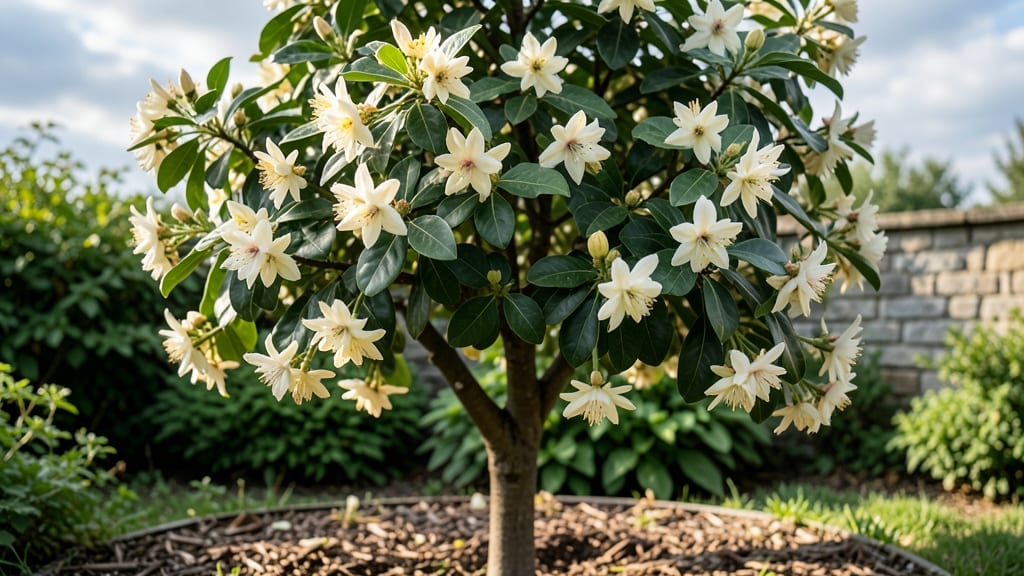
Loquat tree flowers bloom in late winter to early spring, lasting 2-3 weeks with proper care. Their fragrant white blossoms appear before leaves emerge, requiring well-draining soil and full sun for optimal flowering.
The timing of these delicate blossoms depends heavily on your climate, with warmer regions like Florida seeing flowers as early as January, while colder zones in California might not bloom until March. 🌸 The scent alone makes them worth cultivating—imagine waking up to that sweet, citrusy aroma drifting through your garden.
I’ve found that consistent care, especially during dormancy, makes all the difference in how long those blooms last and how vibrant they appear.
What many gardeners overlook is how pruning in late winter can actually encourage more abundant flowering. A light trim right after the blooms fade helps redirect energy to next year’s buds, while avoiding heavy cuts during active growth seasons.
The key is balancing pruning with proper fertilization—too much nitrogen can push leafy growth at the expense of those stunning white flowers.
💡 In This Article
- Factors Influencing Loquat Flower Timing and Longevity
- Essential Care Tips to Prolong Loquat Tree Blooms
Factors influencing loquat flower timing and longevity
Loquat trees rely on a combination of temperature cues and daylight hours to trigger their spectacular blooms. The most critical factor is exposure to chilling hours—typically between 300-500 hours below 45°F—which breaks winter dormancy. Without adequate chilling, buds may fail to open or produce sparse flowers.
This explains why trees in warmer climates like USDA Zone 9 (e.g., Southern California) often bloom earlier than those in Zone 8 (e.g., Northern California), where colder winters provide more chilling hours.
The transition from dormancy to flowering also depends on daylength sensitivity. Loquat trees are short-day plants, meaning they respond to decreasing daylight in late winter. Once temperatures rise above 55°F consistently, hormonal signals activate flower development. The result?
A 2-3 week bloom window where each cluster of 4-6 white, star-shaped flowers releases its signature citrusy fragrance—most potent in the early morning. 🌸 What’s fascinating is how this timing aligns with pollinator activity: bees and butterflies emerge as temperatures stabilize, ensuring cross-pollination for fruit set.
Climate zone variations create dramatic differences in bloom timing. In Florida’s USDA Zone 10, trees may flower as early as January, while those in Zone 8 might not bloom until March. The key difference?
Warmer zones lack sufficient chilling hours, so gardeners often use artificial chilling methods (like placing trees in cold frames) to trigger blooms. Even a single late frost (28°F) can devastate open flowers, cutting the display short by 50% in severe cases.
This is why microclimates matter—trees in sheltered spots bloom 1-2 weeks earlier than exposed ones.
Soil temperature plays a hidden but crucial role. Roots need to warm to 60°F before buds will open. This is why mulching with 3-4 inches of organic matter (like wood chips) helps regulate soil temps and extends the bloom period.
The science here involves rhizosphere heating—warmer roots stimulate nutrient uptake, which fuels flower production. Without this balance, trees may produce buds that fail to open or yield weak, short-lived blooms.
Light intensity also affects flower longevity. Loquat trees thrive in full sun (6+ hours daily), but too much direct afternoon sun in hot climates can cause flowers to wilt by midday. This is why partial afternoon shade (via nearby trees) can prolong blooms by 3-5 days.
The trade-off? Reduced fruit production, since shade limits photosynthesis. It’s a delicate balance that experienced growers manage by pruning to create dappled light conditions.
One often-overlooked factor is wind exposure. Strong winds (15+ mph) can strip petals prematurely, shortening the display by up to 40%. This is why coastal loquat trees often have shorter bloom periods than inland ones.
The solution? Planting near windbreaks (like bamboo screens) or selecting compact varieties bred for resilience. 💫 The result? Flowers last longer and retain their sweet aroma, making them a standout feature in any garden.