
Pruning
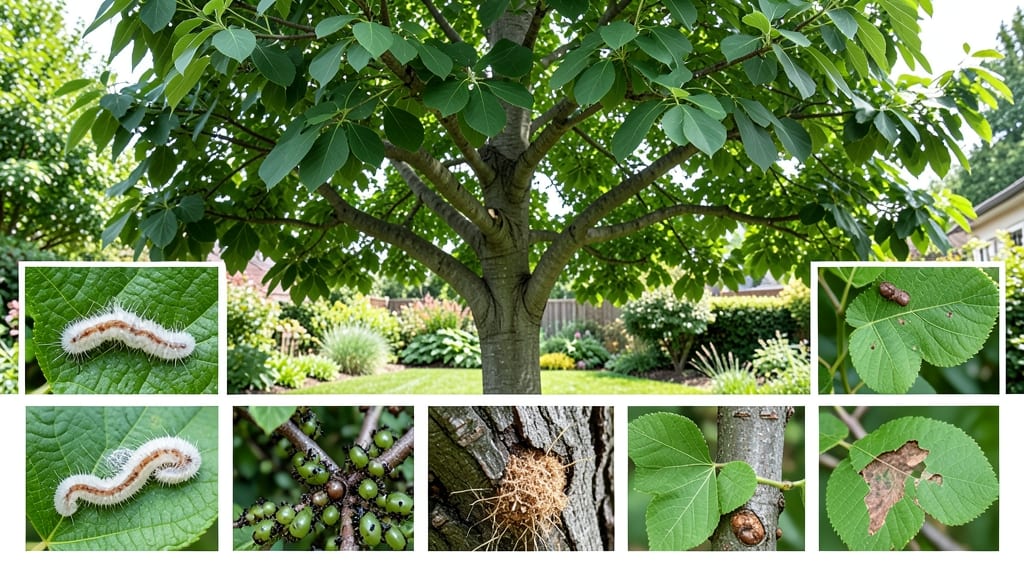
Linden tree pests can turn your shade tree into a skeleton in just a few seasons if you don’t act fast. 🌳 I’ve watched aphid colonies turn leaves sticky, borers hollow out trunks, and spider mites drain color from foliage—each one leaving behind a different kind of damage that’s easy to miss until it’s too late.
The good news? Most infestations respond to early intervention, whether you’re reaching for organic sprays or mechanical controls.
Your first clue is usually what you see—or don’t. Aphids cluster on new growth, leaving behind a shiny residue called honeydew, while borers announce themselves with sawdust-like frass at the base of the trunk. Spider mites, though tiny, create fine webbing between branches and suck leaves pale.
The key is catching these pests before they spread, because once they’ve moved from one tree to another, treatment gets exponentially harder.
You’ll learn to diagnose each pest by its damage pattern, then choose the right response—from blasting aphids off with water to sealing borer holes with pruning sealant. Prevention is simpler than you think: regular inspections, proper pruning to improve airflow, and attracting beneficial insects like ladybugs and lacewings.
These methods work without harsh chemicals, keeping your linden healthy and your neighborhood proud of that towering shade.
Whether you’re dealing with a single branch infestation or a full-blown outbreak, this guide gives you the tools to act fast and protect your tree’s future. No more guessing what’s eating your linden—just clear steps to identify, treat, and prevent the next wave of pests.
Root Causes of Linden Tree Damage
Understanding why pests target linden trees starts with recognizing the tree’s natural appeal—and its vulnerabilities. Linden trees (Tilia spp.) are prized for their fragrant flowers, dense foliage, and adaptability, but these same traits make them prime targets for insects and diseases.
Here’s why these pests strike and how environmental and biological factors create the perfect storm for infestation.
🌱 Stress Signals Invite Attackers Linden trees under stress—whether from drought, poor soil, or improper pruning—emit chemical signals that attract pests. When a tree is struggling, its defenses weaken, making it easier for insects like linden borers or spider mites to take hold.
For example: - Drought stress reduces sap flow, leaving wood vulnerable to linden leaf miner larvae. - Compacted or nutrient-poor soil stunts growth, inviting scale insects that feed on weakened bark. - Over-pruning removes protective foliage, exposing tender branches to Japanese beetles and gypsy moths.
💡 Pro Tip: Regularly check your tree’s soil moisture (stick your finger 2–3 inches deep—if it’s dry, water deeply) and mulch around the base to retain moisture and nutrients.
🌡️ Warm, Humid Climates Speed Up Infestations Many linden tree pests thrive in warm, humid conditions, which accelerate their life cycles.
For instance: - Linden leaf beetles (Phratora laticollis) lay eggs in spring, and larvae hatch within 10–14 days in temperatures above 70°F (21°C). - Powdery mildew (a fungal issue, not an insect but often confused with pest damage) spreads rapidly in shady, damp areas, covering leaves with a white, powdery film. - Aphids reproduce exponentially in protected, sheltered branches, where airflow is limited.
🎯 Actionable Fix: Improve airflow by thinning dense foliage (especially in shaded areas) and avoid overhead watering, which keeps leaves wet longer.
🐛 Pests Often Travel in Packs Linden trees don’t suffer in isolation—pests often arrive in waves, exploiting the damage of earlier invaders. Here’s how it plays out: 1. Gypsy moths defoliate trees, weakening them.
- Linden borers (like Saperda calcarata) detect the stressed wood and burrow in to lay eggs.
- Fungal infections (e.g., anthracnose) move in through fresh wounds, compounding the problem.
🔥 Warning Sign: If you spot sawdust-like frass (borer droppings) near holes in the bark, act fast—borers can kill a tree in 1–2 years if untreated.
⏰ Pests Strike When Linden Trees Are Most Vulnerable Most linden pests have specific seasonal triggers:
- Spring (April–June): Japanese beetles and leaf miners emerge as new leaves unfurl.
- Summer (July–August): Spider mites and aphids thrive in heat, draining sap.
- Fall (September–October): Borers and scale insects lay eggs for next year’s infestation.
🌿 Preventative Strategy: Time your pruning for late winter/early spring (before pests wake up) and apply neem oil or insecticidal soap in early summer to disrupt egg-laying cycles.
👨🍳 How We Unknowingly Help Pests Even well-meaning gardening practices can invite pests:
- Over-fertilizing with nitrogen leads to soft, tender new growth that aphids and beetles love.
- Ignoring fallen leaves/debris creates hiding spots for overwintering pests like linden borers.
- Moving infested firewood or plants can introduce new pest species to your yard.
✨ Smart Move: Clean up leaf litter and pruned branches in fall, and inspect new plants for hitchhiking pests before bringing them home.
🌍 Invasive Species Outcompete Locals Some pests, like the linden leaf beetle (native to Europe) or emerald ash borer (which occasionally affects lindens), have no natural predators in North America.
This gives them free rein to: - Reproduce faster (some lay hundreds of eggs per season). - Adapt to local conditions more quickly than native insects. - Spread uncontrollably without checks like birds or parasitic wasps.
💪 Defense Plan: Introduce beneficial insects (like ladybugs for aphids or parasitic wasps for borers) or use targeted organic sprays to disrupt their life cycles.
Linden tree pests don’t strike randomly—they exploit stress, climate, biology, and human habits. By addressing these root causes, you can break the cycle before infestations spiral out of control. The next step? Identifying the specific pests targeting your tree so you can apply the right defenses.
Quick Fixes for Tree Troubles
When linden tree pests strike, acting fast can save your tree from severe damage—or even death. Below are practical, step-by-step solutions tailored to the most common invaders, from leaf-chewing caterpillars to sap-sucking insects. Each fix includes prevention tips to keep your tree healthy long-term.
🔥 Problem: Skeletonized leaves, silk tents, or sudden defoliation.
👨🍳 Fix It Now:
- Handpick & Destroy 🪰
- Wear gloves and remove tents or clusters of caterpillars by hand. Drop them into
- Pro Tip: Do this early in the morning when caterpillars are sluggish.
- Hose Them Off 💦
- A strong stream of water from a hose can dislodge eggs and young larvae before they hatch.
- Apply Bacillus thuringiensis (Bt) 🌱
- This organic bacteria (sold as Dipel or Xentari) targets caterpillars’ digestive systems. Spray it at dusk when pests are active.
- Prune & Burn 🔥
- Cut out heavily infested branches and burn or bag them (don’t compost!) to prevent reinfestation.
🛡️ Prevent Future Attacks:
- Install pheromone traps in early spring to catch adult moths before they lay eggs.
- Encourage natural predators like birds (install a birdhouse) and parasitic wasps by avoiding broad-spectrum pesticides.
- Monitor regularly—check for egg masses on undersides of leaves in late summer/fall.
🔥 Problem: Sticky residue ("honeydew"), yellowing leaves, or webbing.
👨🍳 Fix It Now:
- Blast Them Away 💨
- Use a
- Neem Oil Spray 🌿
- Mix
- Introduce Beneficial Insects 🐞
- Release
- Scrape Off Scale 🧼
- Use a
🛡️ Prevent Future Infestations:
- Keep trees healthy—water deeply during droughts and mulch to retain moisture.
- Avoid over-fertilizing (excess nitrogen attracts pests).
- Prune for airflow—thin dense branches to reduce hiding spots.
🔥 Problem: Sawdust-like frass, oozing sap, or dying branches.
👨🍳 Fix It Now:
- Inject Systemic Insecticide 💉
- For
- Prune Infested Branches ⏰
- Cut out borer-damaged limbs 2–3 inches below the exit holes. Sterilize pruners with rubbing alcohol between cuts.
- Apply Borer-Specific Sprays 🌡️
- Use permethrin-based sprays (like Sevin) early in the season (spring) before adults emerge.
🛡️ Prevent Future Damage:
- Inspect trees annually for D-shaped exit holes (borer sign).
- Strengthen tree health—water deeply and avoid wounding bark during pruning.
- Remove fallen logs/debris near the tree to eliminate breeding grounds.
🔥 Problem: Spots, mold, or wilting despite pest control.
👨🍳 Fix It Now:
- Fungicide Treatment 🍄
- Spray with
- Improve Airflow 🌬️
- Thin out dense foliage and prune crossing branches to reduce humidity.
- Clean Up Debris 🧹
- Remove fallen leaves and pruned branches to prevent fungal spores from overwintering.
🛡️ Prevent Recurrence:
- Water at the base (avoid wetting leaves) to reduce fungal spread.
- Space trees properly (30+ feet apart) for better airflow.
- Avoid overhead watering in late summer/fall.
✨ Final Pro Tip: For persistent problems, send a leaf sample to your local cooperative extension service for a free pest/disease diagnosis—they’ll give you hyper-local solutions!
By tackling pests early and keeping your linden tree healthy, you’ll enjoy lush foliage and shade for years to come. 🌳💚
Frequently asked questions about linden tree pests
What are the most destructive pests that attack linden trees?
The worst offenders include linden borers (which tunnel through bark), Japanese beetles (devouring leaves), aphids (creating honeydew), and spider mites (causing webbing and pale foliage). Borers are especially dangerous—they can kill a tree in just 1-2 years if untreated.
How do I tell if my linden tree has borers?
Look for D-shaped exit holes in the bark (about 1/8-inch wide) and sawdust-like frass (borer droppings) piled near these holes. If you tap the trunk and hear hollow sounds, borers are likely inside. Check the base of the tree first—this is their favorite entry point.
Can I use homemade sprays to treat linden pests?
Yes! For aphids and spider mites, mix 1 tablespoon neem oil + 1 teaspoon mild soap per quart of water and spray undersides of leaves. For caterpillars, use Bacillus thuringiensis (Bt) (available at garden centers). Always test sprays on a small leaf area first to avoid damage.
When is the best time to treat linden tree pests?
Early spring (before pests emerge) and late summer (when they're most active) are critical windows. For borers, apply sprays in May-June before adults lay eggs. For Japanese beetles, treat in July-August when they're feeding on leaves. Prevention is easier than cleanup!
Will my linden tree recover if I remove all the pests?
Recovery depends on how much damage occurred. If borers have hollowed the trunk or defoliation was severe, the tree may need years to regrow foliage. However, with proper care—deep watering, mulching, and avoiding stress—many lindens bounce back. Young trees recover faster than mature ones.