
Light Requirements
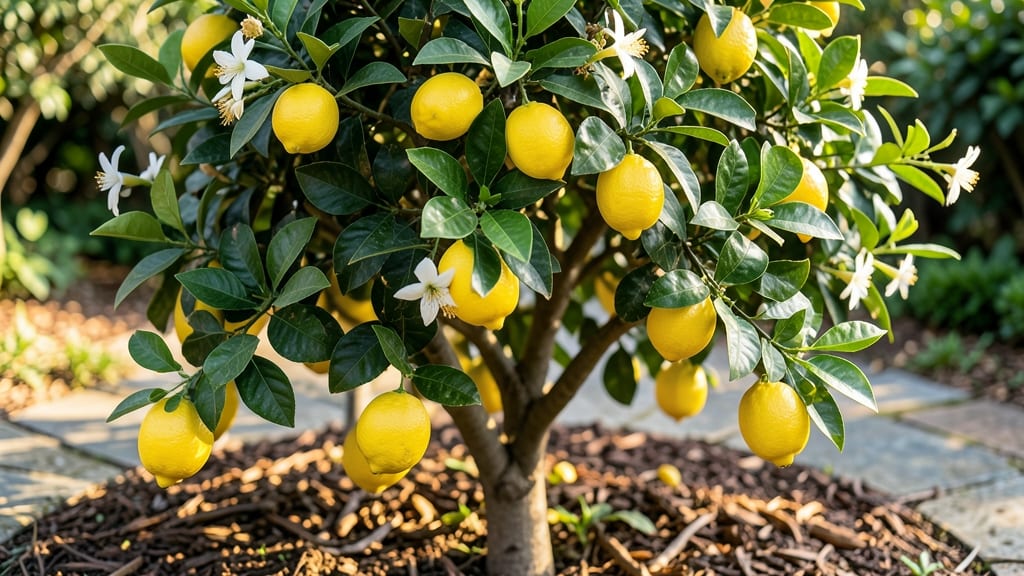
A lemon tree requires specific sunlight requirements to thrive and produce fruit—at least 6 hours of direct sunlight daily—but most gardeners underestimate how much light their trees truly crave.
If your lemon tree isn’t producing fruit—or worse, is struggling to stay alive—it might be starving for sunlight. Unlike many houseplants, lemon trees demand intense light exposure, and getting the balance right is the difference between a thriving citrus orchard and a sad, leafy disappointment.
In this guide, you’ll learn exactly how many hours of sunlight your lemon tree needs, how to spot signs of too much or too little light, and practical solutions for different climates or indoor setups.
Whether you’re dealing with a sunny patio or a shady balcony, these tips will help you give your lemon tree the perfect light conditions for year-round harvests.


How many hours of sunlight does a lemon tree need daily?
Lemon trees are sun-worshippers, and their photosynthesis efficiency peaks under bright, direct sunlight. Unlike shade-loving plants, they need 6 to 8+ hours of full sun daily to thrive, produce fruit, and resist diseases.
Without enough light, your tree will grow leggy, produce sparse blooms, and struggle to develop sweet, flavorful lemons. Think of sunlight as their primary energy source—just like how we need food to function!
But here’s the catch: sunlight needs change as your lemon tree grows. A seedling can handle 4-6 hours of sun to avoid scorching, while a mature tree craves 8+ hours for maximum fruit production.
Even the intensity of sunlight matters—citrus trees prefer direct rays over dappled shade, which can weaken their growth. Understanding these stages is key to avoiding common mistakes like over-pruning or placing young trees in harsh afternoon sun.
| Growth Stage | Daily Sunlight Needs | Best Sunlight Type | Seasonal Adjustments |
|---|---|---|---|
| Seedling (<1 year) | 4–6 hours | Morning sun + afternoon shade | Avoid midday sun; use shade cloth if needed |
| Young Tree (1–3 years) | 6–8 hours | Full sun (direct rays) | Gradually increase sun exposure; prune to thicken canopy |
| Mature Tree (3+ years) | 8+ hours | Full, unfiltered sun | Winter: 5–6 hours; summer: 10+ hours (if possible) |
| Potted Lemon Tree | 6–8 hours (indoor) / 8+ hours (outdoor) | South-facing window or grow lights | Rotate pot weekly for even growth; supplement with grow lights in winter |
Measuring sunlight exposure accurately is easier than you think. Use a sunlight tracker or observe your yard during the peak sun hours (10 AM–4 PM). A simple trick: Place a white board where you plan to grow your tree.
If it’s fully baked by noon, that spot gets direct sun. If it’s only warm, it’s partial shade. Lemon trees hate partial shade—it leads to weak stems, yellow leaves, and poor fruit set.
For example, a tree in a west-facing spot might get 6 hours of sun in summer but only 3 hours in winter due to lower sun angles.
Science backs this up: citrus trees have C3 photosynthesis, meaning they thrive under high-light conditions. When sunlight hits their leaves, chlorophyll converts it into energy, fueling growth and fruit development. Without enough light, their photosynthesis slows, leading to stunted growth and smaller, tart lemons.
Think of it like a solar panel—the more direct sunlight it gets, the more energy it produces. In my own garden, I’ve seen mature lemon trees produce 3x more fruit when moved from partial shade to full sun!
Seasonal adjustments are crucial, especially if you live in a temperate climate. In summer, lemon trees can handle 10+ hours of sun, but in winter, they might only get 4–5 hours due to shorter days.
If your tree is outdoors, prune in late winter to remove crowded branches and improve airflow, which helps leaves capture more sunlight. For indoor trees, supplement with a grow light (12–16 hours daily) during winter months when natural light dwindles.
I use a full-spectrum LED grow light on my balcony tree, and it’s made all the difference in fruit production.
One common mistake is assuming "sunny" equals "full sun". A spot might feel warm but still lack the intense rays citrus trees need. For instance, a tree under a lattice fence might get filtered light, which is partial sun—not the same as full sun.
To test, place your hand near the tree’s leaves at noon. If you feel gentle warmth, it’s partial sun. If it’s hot enough to hold for only a few seconds, it’s full sun.
My neighbor’s lemon tree struggled until we moved it from under a partial shade tree to a south-facing wall, where it now gets 8+ hours of direct sun.
If you’re growing a lemon tree in a container, sunlight needs are even more critical. Pots heat up faster, and roots can’t spread to seek shade. Place your potted tree in the sunniest spot possible, like a south-facing patio or rooftop garden.
Rotate the pot quarter-turns weekly to ensure even growth, as trees lean toward light sources. I’ve seen potted lemon trees burn leaves when left in unfiltered afternoon sun—a sign of too much intensity.
To fix this, move the tree to a spot with morning sun and afternoon shade or use a light shade cloth (30–5
Signs your lemon tree isn’t getting enough sunlight (and how to fix it)
Your lemon tree might be silently begging for more sunlight if you notice its leaves turning pale or yellowing along the veins. This classic sign of chlorosis (iron deficiency) often stems from insufficient light, not just poor soil nutrients.
Even worse, if your tree’s new growth looks weak or leggy—stretching desperately toward any light source—it’s a clear cry for help. Citrus trees like lemons thrive on 6-8+ hours of direct sun daily, and anything less can stunt their growth and fruit production.
Another red flag? Sparse foliage or bare branches where leaves should be. Healthy lemon trees develop dense canopies, but low-light conditions force them to conserve energy by producing fewer leaves. You might also spot small, pale blooms (or no blooms at all), since sunlight triggers flowering.
Without enough light, your tree’s energy goes into survival instead of fruiting. Even if your tree is alive, these signs mean it’s not reaching its full potential—and could be vulnerable to pests or disease.
⚠️ WARNING: Sunlight Deficiency Checklist ⚠️
🌱 Is Your Lemon Tree Starving for Sun?
Check these 5 key symptoms to diagnose sunlight deprivation:
- ✅ Yellowing leaves (especially between veins)
- ✅ Leggy, stretched growth (long stems, small leaves)
- ✅ Sparse or missing foliage (bare branches)
- ✅ No blooms or fruit (or tiny, pale flowers)
- ✅ Weak, slow growth (less than 6 inches per year)
Action Step: If you tick 3+ boxes, your tree needs more direct sunlight—today.
For outdoor lemon trees, the fix is simple: relocate to the sunniest spot in your yard, ideally near a south-facing wall or fence (in the Northern Hemisphere).
If your tree is in a container, move it outdoors during peak sunlight hours or place it on a sunny balcony or patio. Avoid shaded areas under trees or near buildings that cast long shadows.
Pro tip: Rotate your potted tree weekly so all sides get even light exposure—this prevents lopsided growth.
Indoor growers face bigger challenges since most homes lack 6+ hours of direct sun. Start by placing your lemon tree near a south-facing window, where it can bask in the strongest light.
If natural light is still insufficient, supplement with a grow light (LED or fluorescent) placed 6-12 inches above the tree for 12-14 hours daily. Avoid cheap bulbs—opt for full-spectrum LEDs designed for citrus trees.
You’ll know it’s working when new growth turns a vibrant dark green instead of pale or yellow.
If your tree is already showing severe signs of sunlight deprivation, don’t panic—it can recover with the right care. Prune leggy stems to encourage bushier growth, then adjust its light exposure immediately. For outdoor trees, thin nearby plants or structures blocking sunlight.
For indoor trees, consider upgrading to a larger, south-facing window or investing in a sunlight reflector (like a white wall or aluminum foil) to bounce extra light onto the tree. Consistency is key: lemon trees adapt slowly, so monitor progress over 4-6 weeks.
Remember, too much sun can also harm your lemon tree (think sunburned leaves or crispy edges), but the risks of underlighting far outweigh the benefits. Start with morning sun and gradually increase exposure to harden your tree.
With the right light, you’ll soon see lush foliage, abundant blooms, and juicy lemons—worth every effort! 🍋