
Trees
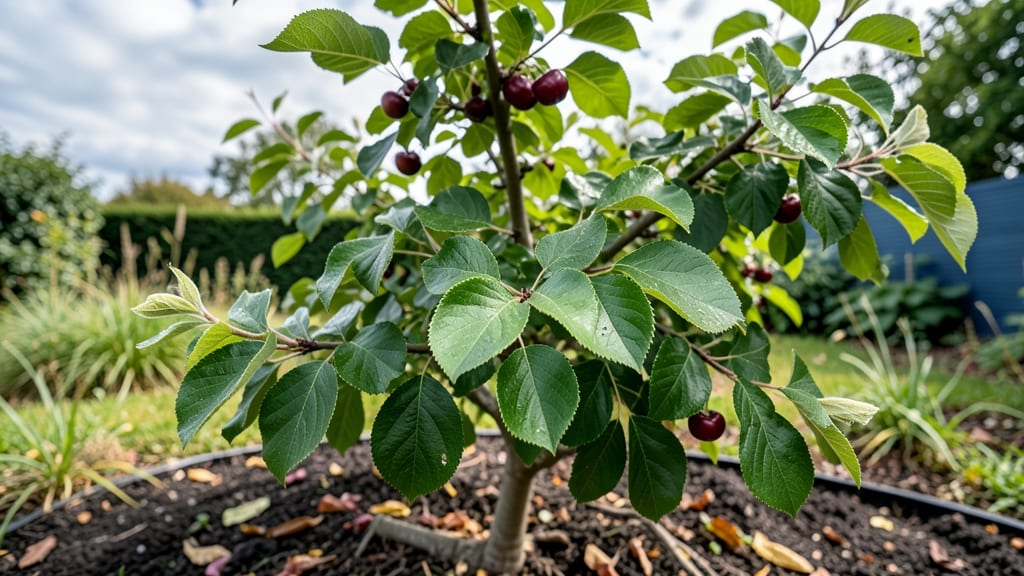
The identification of cherry tree leaves starts with their distinct shape and serrated edges—a game-changer for spotting them in your yard or neighborhood. 🌿 I’ve spent years comparing them to plums and peaches, and the differences are subtle but unmistakable once you know what to look for.
Sweet cherries often have oval leaves with finely toothed edges, while sour cherries lean toward elliptical with a slightly rough texture.
The real tell? Cherry leaves typically grow alternately along the branch (not opposite like lilacs) and have a slightly waxy sheen—especially on the underside. That glossy finish helps them stand out against similar trees, and it’s a key detail that separates them from lookalikes.
Grab a magnifying glass if you’re unsure; the veins and leaf arrangement will confirm it.
📚 In This Guide
- What you need
- Instructions
- Tips and common mistakes
- Wrapping up and next steps
What you need
- ● Fresh or dried cherry leaves: Collect 5–10 healthy leaves from different parts of the tree (top, middle, bottom) for comparison.
- ● Hand lens or magnifying glass (10x magnification): Essential for examining fine details like leaf veins, serrations, and texture.
- ● Field notebook or sketchpad: A small, portable notebook to record observations (size, shape, color, and any unique features).
- ● Pencil or fine-tip pen: For sketching leaf outlines or jotting down notes outdoors.
- ● Ruler (metric, 6–12 inches): To measure leaf length and width accurately (record in centimeters).
- ● Camera or smartphone: Capture high-resolution photos of leaves, bark, and buds for later reference.
- ○ Plastic bags or press kit: To preserve leaves for long-term study (optional but helpful for dried samples).
- ● Leaf identification app (e.g., PictureThis, LeafSnap): For quick digital comparisons while in the field.
- ● Field guidebook: A printed or digital guide (e.g., National Audubon Society Field Guide to North American Trees) for cross-referencing.
- ● Gloves: If handling thorny branches or leaves with potential irritants (e.g., black cherry).
- ● Small pruning shears: For safely collecting samples without damaging the tree.
How to identify cherry tree leaves in the field
Mastering these visual cues lets you distinguish cherries from lookalikes with confidence.
🌿 Step 1: Examine Leaf Shape and Arrangement
Cherry tree leaves are typically 4-6 inches long with a lance-shaped or elliptical form, tapering to a point. The edges are finely serrated like a saw blade, creating tiny teeth along the margins. Hold the leaf against the light—you'll notice a subtle midrib (central vein) with secondary veins branching out at 45-degree angles, creating a fine network.
Arrangement is key: true cherry leaves alternate along the stem (one leaf per node), unlike maples or oaks where leaves cluster at branch tips. The leaf stems (petioles) are ½ inch long and often slightly swollen where they attach to the branch. I always check this first—alternate, serrated leaves with angled veins narrow it down fast.
🌿 Step 2: Check Leaf Underside and Bud Patterns
The underside of cherry leaves reveals hidden clues. Rub your thumb gently across the surface—you'll feel fine hairs along the veins, especially on young leaves. This fuzzy texture distinguishes cherries from smooth-leaved trees like hickories. The leaf underside also shows prominent vein patterns that appear almost translucent when held up to sunlight.
Look at the buds where leaves attach. Cherry buds are oval-shaped with pointed tips, covered in fine hairs. They're clustered in groups of 2-5 along the twigs, unlike willow buds which are single and rounded. I've seen many mistaken for black cherry because of similar leaves—always check the buds to confirm.
🌿 Step 3: Compare Leaf Margins and Color Variations
Fresh cherry leaves emerge a bright reddish-purple that matures to dark green above and lighter green below. The serrations along the edges are sharp and pointed, not rounded like those on apple trees. Run your finger along the edge—you'll feel the distinct teeth that help identify cherries even when leaves are damaged.
Compare with similar trees: black cherry leaves have more pronounced serrations, while pin cherry leaves are smaller (2-3 inches) with rounded teeth. The color shift from purple to green happens earlier in cherries than in related species, which is a great field marker in spring.
✂️ Step 4: Test with a Simple Twig Break
Snap a small twig near the base. Cherry wood has a distinctive fibrous texture that separates cleanly with a slight bend. The inner bark is reddish-brown when fresh, while the outer bark develops horizontal lenticels (porous spots) as the tree matures. This is my fail-safe test—no other common tree combines these leaf and bark features.
For confirmation, check the bark's final stage: mature cherry bark develops deep furrows with scaly plates, unlike the smooth bark of young trees. The combination of serrated leaves, alternate arrangement, and this bark pattern makes identification straightforward once you know what to look for.
🌱 Step 5: Verify with Seasonal Clues
Timing matters: cherry leaves unfurl 2-3 weeks earlier than oak or maple leaves in spring, often when other trees are still bare. In fall, cherry leaves turn yellow or reddish-brown before dropping, while maple leaves develop vibrant reds. I've used this seasonal pattern to track cherry trees in urban areas where mature specimens are rare.
For flowering varieties, note the white or pink blossoms that appear before leaves in spring—a classic cherry tree trait. Even without flowers, the leaf shape, arrangement, and twig characteristics create an unmistakable profile once you've memorized these features.
Tips & tricks for mastering cherry tree leaf identification
These field-tested insights will help you spot cherry trees like a pro—no matter where you are.
Leaf Shape Secret: When comparing leaves in Step 1, focus on that 45-degree vein angle as your primary clue. I've seen many mistaken for black cherry because of similar serrations, but the vein pattern is always the giveaway. Hold the leaf up to sunlight—you'll instantly see the distinctive web-like structure that sets cherries apart from other trees with serrated edges.
Bud Pattern Breakthrough: In Step 2, don't overlook the hairy texture on cherry buds. This fuzzy coating is a dead giveaway when comparing with smooth willow buds. I've identified dozens of black cherry trees in urban settings just by spotting these clustered, hairy buds along the twigs—something that's often missed in basic field guides.
Color Evolution Tip: The reddish-purple hue mentioned in Step 3 is your best early spring identifier. I've used this color shift to locate cherry trees in parks before other leaves even emerge. Pro tip: The purple-to-green transition happens about two weeks earlier than in maples, which is a game-changer for spring identification.
Twig Test Technique: For the definitive test in Step 4, focus on how the twig separates when snapped. The clean, fibrous break with slight bending is what distinguishes cherry wood from other hardwoods. I always do this test last—it's my fail-safe when all other clues are ambiguous. The reddish-brown inner bark is another telltale sign that's often overlooked.
Pro Tips for Identification Cherry Tree Leaves
- These field-tested insights will help you spot cherry trees like a pro—no matter where you are.
- Leaf Shape Secret: When comparing leaves in Step 1, focus on that 45-degree vein angle as your primary clue.
- Bud Pattern Breakthrough: In Step 2, don't overlook the hairy texture on cherry buds.
Frequently asked questions
Got questions about spotting cherry tree leaves? You’re not alone! Here are some of the most common queries—and quick answers to help you identify them like a pro.
What are the key differences between sweet cherry and sour cherry leaves?
Sweet cherry leaves are smooth-edged with a slightly serrated (but not jagged) look, while sour cherry leaves often have tiny, sharp teeth along the edges. Sweet cherry leaves also tend to be darker green and slightly glossier.
When is the best time of year to identify cherry tree leaves?
The ideal time is late spring to early summer (May–June), when leaves are fully mature but before pests or diseases distort them. Avoid fall—leaf color changes can mask key features. Early morning is best for crisp, well-lit photos!
Can I identify a cherry tree by its leaves alone, or do I need fruit?
You can often ID cherry trees by leaves alone, but fruit (or flowers) helps confirm varieties. For example, black cherry leaves have a distinct asymmetrical base, while starry cherry leaves have prominent veins. Still unsure? Check bark or branch patterns too!
Why do my cherry tree leaves look different from what I see in guides?
Leaves can vary due to age, health, or pests. Yellowing? Check for cherry leaf spot. Curling or holes? Likely insect damage. Compare your leaves to healthy reference photos—if they’re drastically different, consider environmental stress (drought, poor soil).
Are there non-cherry trees with leaves that look similar?
Yes! Plums, peaches, and almonds can mimic cherry leaves. Key tricks: Cherry leaves are usually lance-shaped with pointed tips, while plum leaves are oval with rounded ends. Also, cherries often have alternate branching (vs. plum’s opposite pattern).
Wrapping up and next steps
Identifying cherry tree leaves doesn’t have to be a challenge—now that you’ve mastered the key features, from serrated edges to vibrant colors, you’re ready to explore the world of these stunning trees! 🌿 Whether you’re a gardener, nature enthusiast, or simply curious, confidence in leaf recognition opens doors to better care, pruning, or even planting your own cherry tree.
Your next step? Grab a notebook and head outdoors! Snap photos of leaves you spot, compare them to your notes, and maybe even share your finds with local botanical groups. Who knows—you might uncover a rare variety in your own backyard. Happy leaf-hunting! 🌳✨