
How To
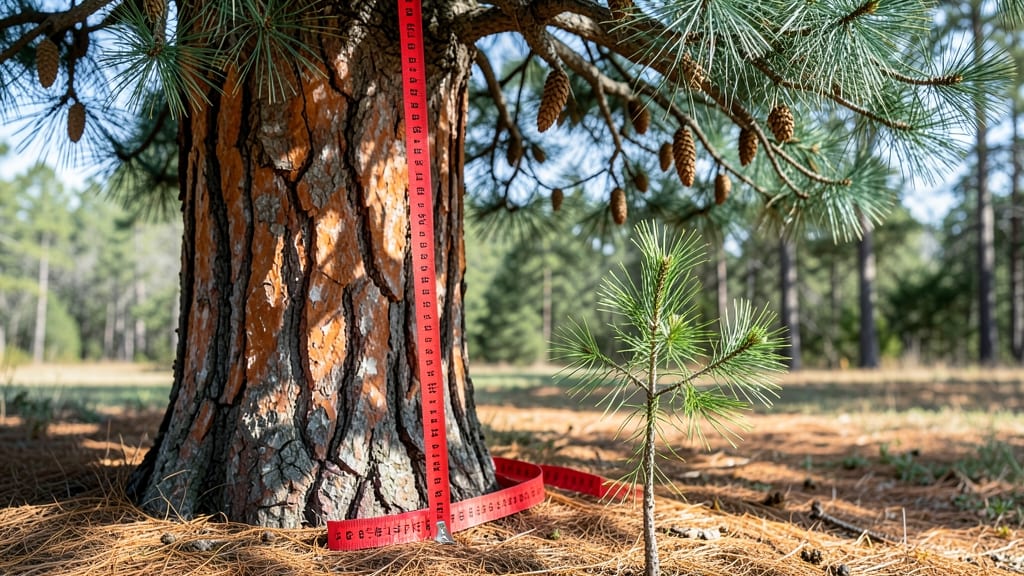
A pine tree’s annual growth—how tall does a pine tree grow per year—depends on its species, climate, and care—but knowing how much it adds each year helps you plan for a backyard giant or a manageable shade tree.
Picture this: Your 3-foot sapling today could be a towering 100-foot sentinel in just a few decades. Some pines shoot up 2 feet per year, while others creep along at 6 inches—and the difference comes down to science, not magic.
Fast growers like Ponderosa pines add 3 feet annually in ideal conditions, while slow growers like Bristlecone pines barely budge. Soil, water, and sunlight play starring roles, and a few simple tweaks can turn a sluggish tree into a growth machine.
Below, I break down the numbers by species, the climate factors that speed things up (or slow them down), and the 5 pro tips to maximize growth without overdoing it.


Average pine tree growth rates by species: fastest and slowest growers
If you're planning to add a pine tree to your landscape, understanding its growth rate is crucial for long-term planning. Some species like the Loblolly Pine can grow 3-4 feet per year in ideal conditions, while others like the Bristlecone Pine creep along at just 1-2 inches annually.
These differences shape everything from your yard's future skyline to maintenance efforts.
Growth rates aren't just about species—they're influenced by soil quality, water availability, and climate. For example, a Ponderosa Pine might grow 2 feet per year in the Pacific Northwest's moist climate but only 1 foot per year in the dry Southwest.
Let's break down the most common pine species and their growth patterns to help you make informed decisions.
🌲
| Pine Species | Annual Growth Rate (ft/yr) | Mature Height (ft) | Growth Spurts | Notes |
|---|---|---|---|---|
| Loblolly Pine | 3-4 ft | 60-80 ft | Fastest in first 20 years | Southeastern U.S. native; drought-tolerant |
| Ponderosa Pine | 2-3 ft | 100-200 ft | Steady growth after 10 years | Western U.S. native; cold-hardy |
| Eastern White Pine | 1-2 ft | 50-80 ft | Slower in shade | Adaptable to various soils; flexible branches |
| Scots Pine | 1-2 ft | 40-60 ft | Faster in cooler climates | Cold-resistant; common in Northern U.S. |
| Bristlecone Pine | 0.1-0.2 ft | 30-60 ft | Extremely slow at all stages | Oldest living trees; high-altitude specialist |
| Shortleaf Pine | 1.5-2.5 ft | 40-70 ft | Peaks at 15 years | Drought-resistant; Southern Appalachians |
Looking at the Loblolly Pine, you can see why it's one of the fastest-growing pines. In optimal conditions—like the Southeastern U.S.—it can add 3-4 feet annually during its first two decades.
This makes it ideal for landowners needing quick shade or windbreaks. However, its rapid growth means it'll reach maturity faster than slower varieties, requiring more frequent pruning to manage its size.
On the opposite end, the Bristlecone Pine grows at a glacial pace, adding just 1-2 inches per year. This isn't a mistake—it's an adaptation for surviving harsh, high-altitude environments.
If you're planting one as a novelty or for its ancient charm, be prepared for a century-long commitment. Even its mature height of 30-60 feet takes decades to achieve.
The Ponderosa Pine strikes a balance with 2-3 feet of growth annually, making it a favorite for Western landscapes. Its towering 100-200 foot mature height means it needs plenty of space, but its steady growth rate makes it easier to plan for than the Loblolly's early bursts.
For urban or suburban settings, consider dwarf varieties like the Mugo Pine, which maxes out at 10-25 feet but still offers the classic pine silhouette.
One common misconception is that all pine trees grow at the same rate. In reality, their growth spurts vary dramatically by age. Young pines often grow faster than mature ones, which shift resources to needle production and seed cones
How climate Zones and soil conditions affect pine tree growth rates
Your pine tree’s annual growth rate isn’t just about genetics—it’s heavily influenced by your USDA hardiness zone and soil conditions.
For example, a Ponderosa pine in Zone 5 might grow just 12 inches per year during cold winters, while the same species in Zone 8 could surge to 3 feet annually. These differences come down to temperature, moisture, and soil health.
Soil pH levels play a critical role too. Most pines thrive in acidic soil (pH 4.5-6.0), but Scots pines tolerate slightly alkaline soils (pH 6.0-7.5). If your soil is too alkaline, growth can stall by up to 50%.
Meanwhile, moisture retention in clay-heavy soils can suffocate roots, slowing growth in humid climates like the Southeastern U.S.
| Climate Zone | Avg. Annual Growth (ft) | Soil pH Ideal | Moisture Needs | Regional Example |
|---|---|---|---|---|
| Zones 3-5 (Cold) | 0.5–1.5 ft | 4.5–5.5 | Moderate (drought-tolerant) | Northern Michigan (White Pine) |
| Zones 6-8 (Temperate) | 1.5–3 ft | 5.0–6.0 | Consistent (well-draining) | Pacific Northwest (Douglas Fir) |
| Zones 9-11 (Warm) | 2–4 ft | 5.5–6.5 | High (humid climates) | Florida (Slash Pine) |
| Mountainous (High Altitude) | 0.3–1 ft | 4.0–5.0 | Low (rocky, dry) | Rocky Mountains (Bristlecone Pine) |
In the Pacific Northwest, where mild winters and high humidity prevail, Douglas firs can grow 3–4 feet per year thanks to rich, acidic soils and consistent rainfall.
Meanwhile, in the Southeastern U.S., Loblolly pines thrive in Zone 8–10 with 3–5 feet of growth annually, fueled by warm temperatures and well-draining sandy soils.
Extreme temperature swings can also stunt growth. For instance, Bristlecone pines in high-altitude zones (like the Sierra Nevada) grow just 0.3–1 foot per year due to short growing seasons and cold nights. To counteract this, mulch heavily with pine needles to insulate roots and retain acidity.
If your soil is too alkaline (common in calcareous regions like parts of Texas or the Midwest), amend it with sulfur or peat moss to lower the pH.
Overwatering in clay-heavy soils can also drown roots, so always plant pines on slopes or raised beds in humid zones to improve drainage.
For fastest growth, pair the right species with its ideal climate. A Ponderosa pine in Zone 7 with well-draining, acidic soil can hit 3 feet per year, while a Scots pine in Zone 5 might only manage 1 foot.
Test your soil’s pH and texture before planting to set your pine up for success.