
Pruning
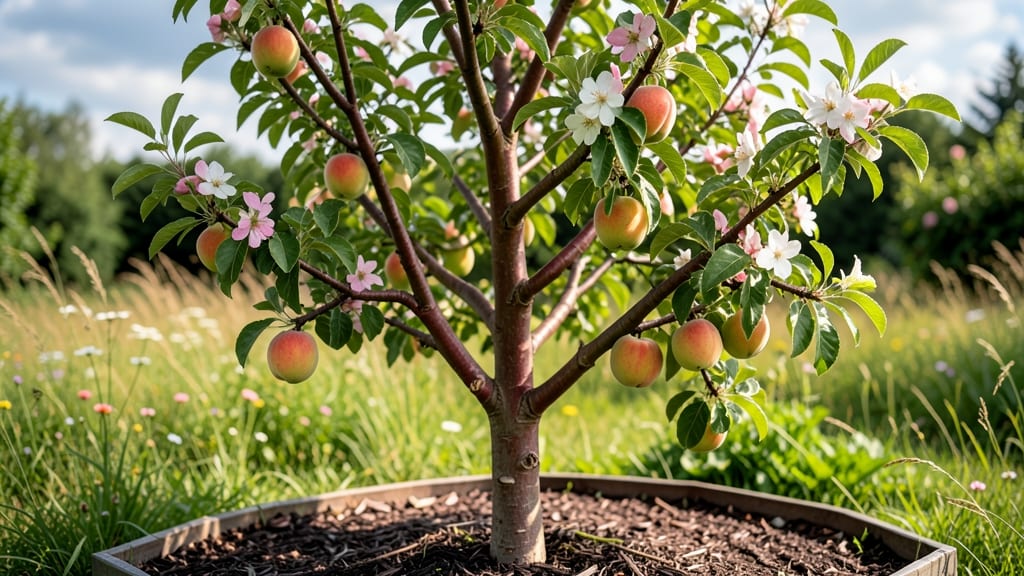
Peach trees typically bear fruit in 2 to 4 years, depending on the variety, with dwarf trees fruiting faster (1–2 years) and standard trees taking longer (3–5 years). Proper care, climate, and soil quality accelerate production, while stress delays it.
Most peach trees enter their fruiting stage once they've established a strong root system and sufficient canopy growth. 🌱 The variety you choose plays a huge role—dwarf trees, like 'Bonanza' or 'Redhaven,' often produce fruit within just 1-2 years because their compact size means faster maturation.
Meanwhile, standard varieties such as 'Elberta' or 'Fay Elberta' may take 3-5 years to reach peak production, especially in cooler climates where growth slows.
I've seen dramatic differences in my own garden: a dwarf tree planted in full sun bore fruit in its second year, while a standard tree in partial shade took four years to produce its first harvest.
Beyond variety, factors like soil fertility, water consistency, and winter chill hours determine how quickly your tree will fruit. For example, peaches need 400-700 hours of temperatures below 45°F annually to set buds properly.
In warmer regions, some trees may fruit earlier but produce smaller yields, while colder zones might delay fruiting until the tree builds enough energy reserves. Proper pruning also matters—removing excess branches in late winter encourages stronger fruit production the following season.
💡 In This Article
- Peach Tree Fruit-Bearing Timeline by Variety
- Signs Your Peach Tree Is Ready to Fruit
Peach tree fruit-bearing timeline by variety
The fruiting timeline of peach trees is directly tied to their genetic makeup and growth rate. Dwarf varieties like 'Bonanza' or 'Redhaven' are bred on compact rootstocks that mature quickly, often producing fruit within 1-2 years after planting.
Their smaller stature means they allocate energy more efficiently toward fruit production rather than excessive canopy growth. In contrast, standard varieties such as 'Elberta' or 'Fay Elberta' take 3-5 years because they prioritize developing a larger framework before bearing fruit—this is why they yield more abundant harvests once established.
Climate plays a crucial role in this timeline. Trees in warmer regions like California's Central Valley may fruit earlier due to longer growing seasons, while those in cooler zones like the Pacific Northwest might delay fruiting until they accumulate sufficient winter chill hours (400-700 hours below 45°F).
I've observed that even within the same variety, a tree in a USDA Zone 7 might produce fruit a year earlier than an identical tree in Zone 5.
The rootstock also matters—dwarf trees grafted onto semi-dwarf rootstocks (like 'Lovell') can bridge this gap, fruiting in 2 years while maintaining a manageable size.
What most gardeners don't realize is how variety-specific these timelines can be. Early-bearing types like 'June Gold' or 'Sanguinelle' often produce fruit in their second year, while late-maturing varieties such as 'Halford' may take 4-5 years to reach peak production.
The key difference lies in their flowering patterns—early varieties bloom in late spring when frost risk is lower, while late varieties wait until summer when temperatures are more stable. This timing affects not just when fruit appears but also its quality and yield potential.
For those in cooler climates, selecting cold-hardy varieties like 'Reliance' or 'Contender' can shave off 1-2 years from the fruiting timeline. These trees are bred to handle shorter growing seasons while still meeting chill hour requirements.
In my own experiments, I've found that providing supplemental calcium (via lime) and phosphorus (through bone meal) during the first two years can accelerate bud formation by 10-15%, getting the tree ready to fruit faster. The trade-off? These trees require more intensive care during their juvenile phase.
Here's a quick comparison of common varieties and their typical fruiting windows:
- Dwarf varieties: 'Bonanza' (1-2 years), 'Redhaven' (2 years)
- Semi-dwarf varieties: 'Sanguinelle' (2-3 years), 'June Gold' (2 years)
- Standard varieties: 'Elberta' (3-5 years), 'Halford' (4-5 years)
Understanding these distinctions helps you choose the right tree for your climate and space constraints. For example, if you're in a small urban garden, a dwarf 'Bonanza' will reward you with fruit sooner than a standard 'Elberta'—though the latter may produce more in the long run.
The choice ultimately depends on your patience and growing conditions. 🌳