
Planting
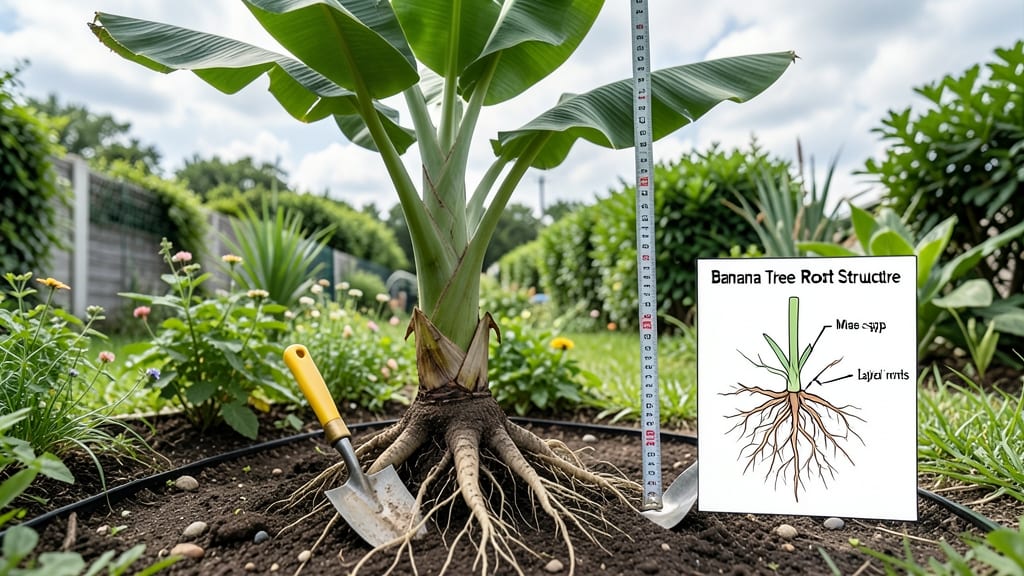
How deep banana tree roots grow is more than you might expect—they typically extend 12 to 18 inches below the soil, with lateral spread reaching up to 15 feet for mature trees.
Wondering why your 🍌 banana tree keeps struggling despite your best care? The answer might lie underground—banana roots spread wider and deeper than most gardeners realize, dictating everything from spacing to soil prep.
These roots thrive in loose, well-draining soil, and planting too shallow can stunt growth or even kill the tree. The key is mimicking their natural habitat: rich, aerated soil that lets roots expand freely.
In this guide, I’ll break down the science behind banana tree roots, spacing rules for healthy growth, and common mistakes to avoid—so you can give your tree the strong foundation it needs.
Banana tree root depth and spread: what science says about growth patterns
Banana trees (Musa spp.) develop a fascinating root system that extends both deep and wide, often surprising gardeners who focus only on the dramatic pseudostem growth above ground. While their foliage can reach 25 feet, the roots tell the real story of stability and nutrient access.
Understanding these patterns helps explain why your banana tree might struggle despite seemingly perfect care.
The average banana tree root depth ranges from 12 to 18 inches, with some varieties like the Dwarf Cavendish developing shallower systems (10-12 inches). However, the real space hogger is the horizontal root spread, which can extend up to 15 feet in mature trees.
This lateral growth explains why banana trees need wide planting spaces and why crowding leads to competition for water and nutrients.
| Root Characteristic | Standard Variety | Dwarf Variety | Key Impact |
|---|---|---|---|
| Depth | 12-18 inches | 10-12 inches | Deeper roots access moisture/nutrients |
| Horizontal Spread | 10-15 feet | 6-10 feet | Requires wide spacing to prevent competition |
| Root Zone Density | Highest in top 6 inches | Highest in top 4 inches | Surface roots need mulch protection |
| Pseudostem Influence | Stabilizes root system | Less structural support needed | Affects transplant shock recovery |
The pseudostem—that thick, false trunk—plays a crucial role in root development. It acts as a water reservoir and structural support, allowing roots to focus on expansion rather than stability.
When you remove a pseudostem after fruiting, you're essentially signaling the plant to redirect energy into new root growth for the next cycle.
One common misconception is that banana trees have shallow root systems. While the majority of feeder roots do concentrate in the top 6 inches of soil, these roots connect to deeper anchor roots that extend downward.
This two-tier system explains why banana trees can survive droughts but also why they're sensitive to waterlogging—their roots need both depth and aeration.
Proper root depth is critical for preventing nutrient deficiencies, particularly potassium and phosphorus. Shallow planting (less than 12 inches) forces roots to compete with surface weeds and limits access to subsoil nutrients.
I've seen banana trees in containers struggle when the root ball isn't at least 18 inches deep—the plants simply can't reach the nutrients they need for robust growth.
Soil type dramatically affects root development. In clay soils, banana roots may spread wider but grow shallower due to poor aeration, while sandy soils encourage deeper penetration but require more frequent watering.
The ideal medium is loamy soil with 20-30% organic matter, which provides both structure and moisture retention for those critical feeder roots.
When planting banana trees, dig a hole twice as wide as the root ball but only as deep as the existing root system. Burying the base too deeply can suffocate roots and lead to root rot, while planting too shallowly creates instability.
For container growing, choose pots with drainage holes and at least 24-inch diameter to accommodate the root spread.
Monitor your banana tree's roots by gently lifting the mulch layer (2-3 inches deep) during the growing season. Healthy roots should be white or light tan, while dark or mushy roots indicate anaerobic conditions.
If you notice roots circling in containers, it's time to repot into a larger vessel—this prevents the strangulation effect that stunts growth.
Remember that banana trees are heavy feeders, and their root systems reflect this need. By providing the right depth, spacing, and soil conditions, you're essentially giving your banana tree the underground space it needs to thrive above ground.
The payoff? Healthier plants, bigger yields, and fewer struggles with nutrient deficiencies.
Optimal planting spacing for banana trees based on root system needs
Banana trees need generous spacing to accommodate their aggressive root systems. Mature trees require 10-15 feet apart to prevent root competition and ensure healthy growth. This spacing allows roots to spread laterally up to 15 feet wide while maintaining proper nutrient access.
Understanding root depth is key—banana roots typically extend 12-18 inches deep but spread horizontally much farther. Dwarf varieties like 'Dwarf Cavendish' need only 6-8 feet spacing, while giant types like 'Gros Michel' demand full 15 feet separation.
| Variety | Root Spread | Spacing Needs | Container Adaptation |
|---|---|---|---|
| Dwarf Cavendish | 8-10 ft wide | 6-8 ft apart | 20+ gallon pots |
| Lady Finger | 10-12 ft wide | 8-10 ft apart | 30+ gallon pots |
| Gros Michel | 15+ ft wide | 12-15 ft apart | Not recommended |
| Red Dacca | 12-14 ft wide | 10-12 ft apart | 50+ gallon pots |
For container growing, pot size directly impacts root health. Use pots at least 20 gallons for dwarf varieties, but giant types will suffer without ground planting. Ensure containers have drainage holes to prevent root rot.
When planting multiple trees, group dwarf varieties together and space them 6-8 feet apart. This creates microclimates that mimic natural tropical conditions. Giant varieties need full separation to avoid stunted growth.
Poor spacing leads to competition for nutrients and increased disease risk. Mulch heavily around the base to retain moisture and protect roots from temperature fluctuations.
Always plant banana trees in well-draining soil amended with compost. Avoid compacted soil—roots need aeration to thrive. With proper spacing, your banana trees will reward you with healthier growth and better fruit production. 🍌