
Pruning
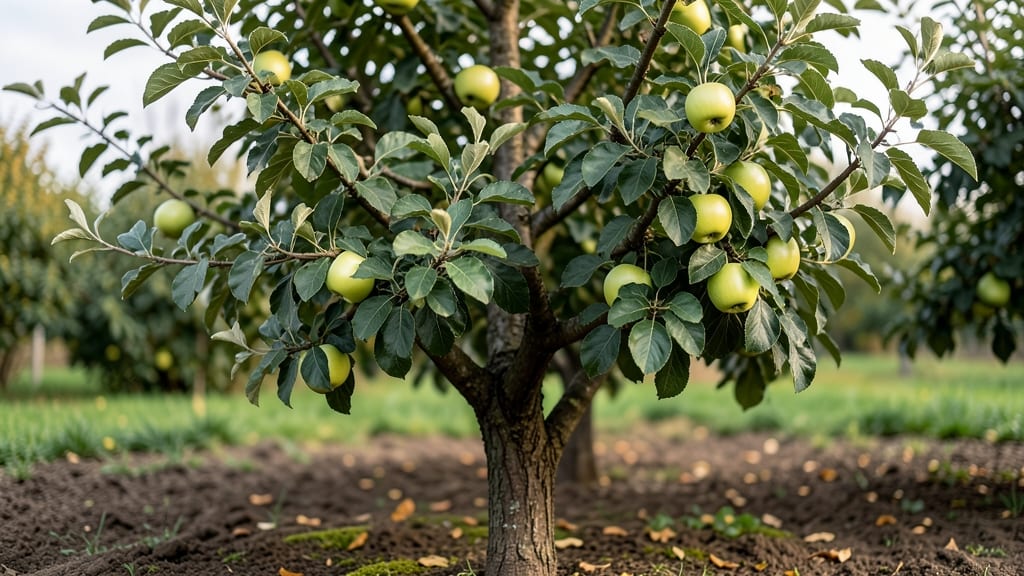
Granny Smith apple trees grow from 3 feet tall in dwarf varieties to 30 feet as full-size standards—so your garden layout depends entirely on which type you choose. 🌳 I once planted a standard tree in my backyard, only to realize too late how much space it would need (and how much pruning it would demand).
The right variety can fit neatly into small yards, urban lots, or even large containers.
Dwarf Granny Smiths stay compact—6-10 feet tall—making them perfect for tight spaces, while semi-dwarf varieties reach 12-16 feet and standard trees dominate with 20-30 feet of height and spread.
Proper spacing is key: dwarf trees need 6-8 feet between plants, while standard trees require 25-30 feet to thrive without crowding. This affects everything from sunlight access to fruit quality.
Pruning isn’t just about size control—it’s about maximizing fruit production. A well-pruned dwarf tree can yield just as much as a standard one, but with far less effort. I’ve seen backyard growers turn their 8-foot trees into fruit-loaded powerhouses by focusing on open-center pruning in late winter.
The result? More sunlight on branches, better air circulation, and fewer disease issues.
Even if you love the idea of a Granny Smith tree, your space and pruning commitment will dictate which variety works best. Container growing is possible with dwarf varieties, but standard trees belong in spacious orchards. Let’s match your goals to the right tree—and keep it manageable year after year.
📚 In This Guide
- What you need
- Instructions
- Tips and common mistakes
- Wrapping up and next steps
What you need
- ● Granny Smith apple tree: Choose between dwarf (6–12 ft), semi-dwarf (12–16 ft), or standard (16–25+ ft) varieties.
- ● 1–2 bare-root or potted trees (check rootstock compatibility for your climate).
- ● Planting site: Full sun (6–8+ hours/day).
- ● Well-draining soil (pH 6.0–7.0).
- ● Space: Dwarf (8–10 ft apart), Semi-dwarf (12–15 ft apart), Standard (20+ ft apart).
- ● Digging tools: Shovel or spade (for digging the planting hole).
- ● Garden trowel (for root adjustments).
- ○ Amendments (optional but helpful): Compost (5–10 lbs) for nutrient-rich soil.
- ● Slow-release fertilizer (10-10-10 or organic options).
- ● Support structures (for semi-dwarf/standard): Stakes (2–4 ft tall) + tree ties (or soft fabric strips).
- ● Cage or trellis (for heavy branches).
- ● Pruning tools: Pruning shears (for small branches).
- ● Loppers (for thicker branches).
- ● Saw (for large limbs, if needed).
- ● Watering supplies: Hose with nozzle or watering can (5+ gallons for initial watering).
- ● Mulch (2–3 inches of wood chips or straw).
- ● 🌡️ Check local frost dates: Plant after the last frost (Granny Smiths need chilling hours!).
- ● ✨ Dwarf trees = low-maintenance: Perfect for containers or small yards!
- ● 🎯 Label your tree: Use a stake with the variety name to avoid mix-ups.
How to choose and manage Granny Smith apple tree size by variety
Understanding your space and climate determines which Granny Smith variety thrives best.
🌱 Step 1: Identify Your Space Constraints and Climate Zone
Granny Smith apple trees range from 3-4 feet for dwarf varieties to 20-30 feet for standard trees. Measure your planting area—dwarf trees fit 6-8 feet in diameter, while standard trees need 15-20 feet of clearance for branches. Check your USDA hardiness zone (Granny Smith thrives in zones 5-9), as colder climates favor dwarf or semi-dwarf varieties for easier winter protection.
I always verify local frost dates—early spring blooms on standard trees risk frost damage. If you're in zone 6 or colder, opt for a dwarf or semi-dwarf to simplify winter wrapping and reduce wind exposure. In warmer zones, standard trees handle heat better but require more pruning to manage vigor.
☀️ Step 2: Select the Right Variety for Your Goals
Dwarf varieties (3-4 feet) like Malling 9 (M.9) rootstock produce fruit in 3-4 years and are ideal for containers or small yards. Semi-dwarf (6-8 feet) varieties like MM.106 strike a balance between size and productivity, bearing fruit in 4-5 years. Standard trees (15-20 feet) take 5-7 years to fruit but yield 200-300 pounds annually.
Here's the trade-off: Dwarf trees need more frequent pruning (every 2-3 years) to maintain shape, while standard trees require heavier pruning (every 3-4 years) to control height. I recommend visiting a local nursery to compare branch density—denser canopies produce more shade, which can reduce fruit quality.
✂️ Step 3: Plan for Pruning and Support Based on Tree Size
Dwarf and semi-dwarf Granny Smith trees need staking for the first 2-3 years to prevent wind rock. Use 4-6 foot bamboo stakes driven 6 inches deep, tied with soft tree ties (never wire—it cuts into bark). Standard trees benefit from central leader training, where you prune competing branches to encourage a single strong trunk.
Prune in late winter (February-March) before buds swell. Remove dead, crossing, or inward-growing branches first. For dwarf trees, aim for an open-center shape to improve airflow; standard trees should have a modified central leader with scaffold branches spaced 12-18 inches apart. Watch for water sprouts (fast-growing vertical shoots)—these steal energy from fruit production.
🪴 Step 4: Adjust Planting Depth and Soil Preparation by Variety
Dwarf trees require shallow planting—the graft union (visible bump near the base) should sit 1-2 inches above soil level. Standard trees can be planted 2-3 inches deeper to encourage root development. Amend the planting hole with 3 inches of compost mixed into the native soil for the top 12 inches—Granny Smith trees thrive in slightly acidic soil (pH 6.0-6.5).
For container-growing dwarf trees, use a 15-20 gallon pot with drainage holes and a mix of 50% potting soil, 30% compost, and 20% perlite. Standard trees planted in-ground need 100 square feet of root zone area. Mulch with 3-4 inches of wood chips, keeping it 6 inches away from the trunk to prevent rot.
⏰ Step 5: Schedule Long-Term Care by Tree Maturity
Young dwarf trees (< 5 years old) need weekly deep watering (1-2 gallons per tree) during dry spells, while mature standard trees require 2-3 gallons every 10-14 days. Fertilize dwarf trees with ½ cup of 10-10-10 fertilizer in early spring and ½ cup in late summer; standard trees double those amounts. Thinning fruit in June (leave 6-8 inches between apples) improves size and quality.
Watch for apples scab (black spots) and codling moth (tunnels in fruit)—organic sprays like neem oil or kaolin clay work best when applied every 2 weeks during bloom. In zone 5 or colder, wrap the trunk with burlap in winter to protect from sunscald and rodent damage. Dwarf trees in containers may need winterizing with bubble wrap around the pot and mulch over the soil.
Tips & tricks for perfect Granny Smith apple tree management
Here’s what I’ve learned from years of working with these varieties—details that make all the difference between a struggling tree and a thriving orchard.
Rootstock Matters: The rootstock you choose determines everything. For example, Malling 9 (M.9) rootstock produces dwarf trees that bear fruit in just 3-4 years, but they’re more vulnerable to cold stress in zones 5-6. If you’re in a colder climate, consider MM.111 instead—it’s semi-dwarf, more cold-hardy, and still fits well in smaller spaces. I’ve seen M.9 trees fail in zone 5 winters when planted too deeply, so always verify rootstock compatibility with your zone.
Pruning Precision: In Step 3, when pruning dwarf trees for an open-center shape, focus on removing water sprouts immediately—they’re the fast-growing vertical shoots that drain energy from fruit production. For standard trees, use the modified central leader method to create scaffold branches spaced 12-18 inches apart. This spacing is critical: too close, and branches compete for sunlight; too far, and you lose canopy density. I mark branch locations with stakes before cutting to ensure even spacing.
Container Culture: If you’re growing a dwarf Granny Smith in a 15-20 gallon pot, don’t skimp on drainage. I’ve seen roots rot when growers use pots without holes or compacted soil mixes. Use 50% potting soil, 30% compost, and 20% perlite—this ratio prevents compaction while holding moisture. Also, rotate the pot quarter-turn weekly to ensure even light exposure, which prevents lopsided growth. In winter, wrap the pot in bubble wrap and add extra mulch to insulate roots from temperature swings.
Fruit Thinning Strategy: The June thinning step in Step 5 is non-negotiable for quality. Leave 6-8 inches between apples to prevent overcrowding, which leads to small, misshapen fruit. I use sterilized pruning shears and remove fruit clusters systematically, starting from the outside of the canopy. This also improves airflow, reducing the risk of apples scab—a common issue I’ve seen in dense canopies. For organic control, apply neem oil every 2 weeks during bloom to deter codling moth, but avoid spraying when bees are active.
Pro Tips for Granny Smith Apple Tree Size
- Here’s what I’ve learned from years of working with these varieties—details that make all the difference between a struggling tree and a thriving orchard.
- Rootstock Matters: The rootstock you choose determines everything.
- Pruning Precision: In Step 3, when pruning dwarf trees for an open-center shape, focus on removing water sprouts immediately—they’re the fast-growing vertical shoots that drain energy from fruit production.
Frequently asked questions
Got questions about Granny Smith apple tree sizes? You’re not alone!
Here are answers to the most common concerns—from dwarf varieties to giant growth habits—so you can plan your orchard with confidence.
How tall does a mature Granny Smith apple tree grow?
A standard Granny Smith tree can reach 20–30 feet tall, while dwarf varieties stay between 6–12 feet. Semi-dwarf trees (half-size) typically hit 12–16 feet. Always check the specific cultivar’s label—some "dwarf" types may need staking or pruning to stay compact!
How long does it take for a Granny Smith tree to bear fruit?
Dwarf trees often produce fruit in 2–3 years**, while standard varieties may take 4–6 years. Patience pays off! For faster results, choose a pre-pollinated grafted tree or plant two varieties nearby to ensure cross-pollination (Granny Smith is self-unfruitful).
Can I keep a Granny Smith tree small with pruning?
Regular pruning
(especially in late winter) keeps trees manageable, even for standard varieties. Focus on removing suckers, dead wood, and overcrowded branches to encourage airflow and fruit production. Pro tip: Use sharp bypass pruners and seal larger cuts with pruning sealant to prevent disease.
What’s the best climate for a Granny Smith apple tree?
Granny Smiths thrive in USDA Zones 5–9, needing 200–500 chill hours (below 45°F) for optimal fruit set. They prefer full sun (6+ hours/day) and well-draining soil. In warmer zones, choose low-chill varieties or use shade cloth to protect young trees from heat stress.
Are there disease-resistant Granny Smith varieties?
Most Granny Smiths are susceptible to fire blight and apple scab, but some modern cultivars (like ‘Granny Smith Improved’) offer better resistance. Prevention tips: Space trees for airflow, avoid overhead watering, and apply copper fungicide in spring. Dwarf trees may also resist pests better due to their compact size!
Wrapping up and next steps
Choosing the right Granny Smith apple tree size for your space—and your long-term gardening goals—can make all the difference! Whether you’re dreaming of a compact dwarf for a balcony or a sprawling standard for a backyard orchard, understanding your options ensures success.
Now that you’re armed with the perfect variety, it’s time to roll up your sleeves and plant with confidence! 🌱
Ready to take the next step? Grab your pruners, mark your calendar for planting season, and start sketching out your orchard layout—your future harvest of tangy, crisp Granny Smiths awaits!