
Pruning
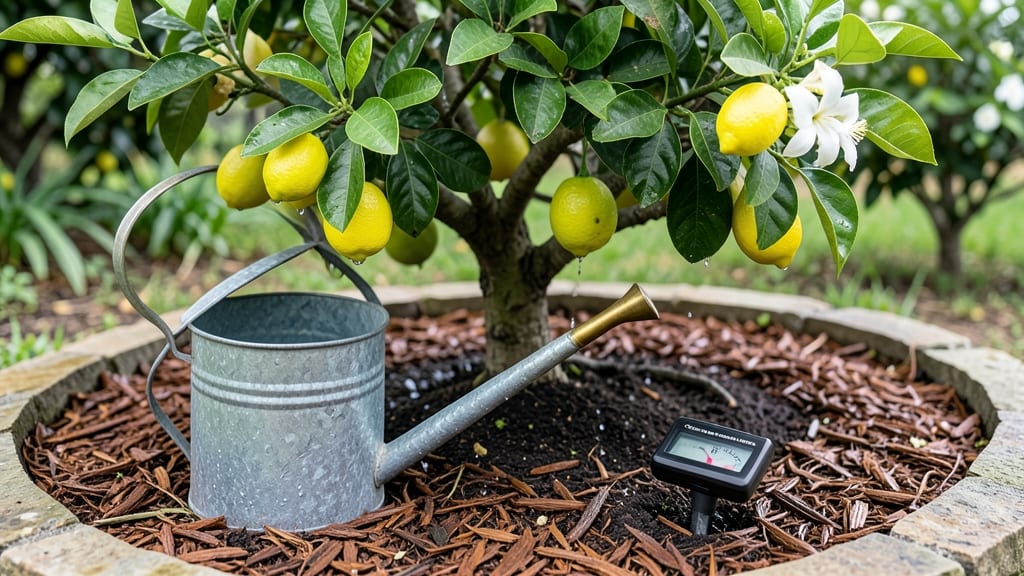
Citrus tree irrigation is the key to growing sweet, juicy fruit—get it wrong, and you’re left with bitter, shriveled disappointment. Whether you're nurturing a young sapling or a mature 🍊, the science of watering makes all the difference.
Struggling to grow sweet, juicy citrus fruit? The secret lies in your watering routine—too much or too little can ruin your harvest. Whether you're dealing with a young sapling or a mature 🍊, the right irrigation schedule keeps roots healthy and fruit flavor at its peak.
Citrus trees in Zone 9b thrive on deep, infrequent watering, but timing and method matter just as much. A drip system or soaker hose delivers moisture right to the roots, while hand-watering risks uneven saturation.
Learn how to adjust your schedule by season and spot the warning signs of over- or under-watering before they damage your tree.
Below, I break down the exact watering schedule for every stage of growth, the best tools to use, and how to fix common mistakes—so you can finally enjoy that homegrown orange you’ve been dreaming of.
Optimal watering schedule for citrus trees by season and age
Citrus trees thrive on consistent moisture, but their water needs change dramatically with age and season. Young trees require frequent, shallow watering to establish roots, while mature trees demand deep, infrequent soaks to encourage strong root systems.
The key is balancing soil moisture—too much causes root rot, while too little leads to bitter fruit and leaf drop.
Seasonal shifts also play a critical role. In summer's heat, citrus trees may need daily watering, while winter dormancy reduces their needs to minimal maintenance. Understanding these patterns ensures your tree stays healthy and productive year-round.
Here’s a science-backed breakdown of watering schedules tailored to tree age and season, including how to test soil moisture for precision.
For young trees, focus on shallow but frequent watering to encourage root spread near the surface. Use your finger to check moisture—if the top 2 inches feel dry, it’s time to water.
Mature trees, however, need deep watering to reach their extensive root systems. Aim for 15-20 gallons per session for established trees.
Testing soil moisture is simple: Insert a soil moisture meter or a wooden skewer into the soil. If it comes out clean, water immediately. If it’s damp, wait another day. This method prevents both overwatering and drought stress, both of which harm citrus trees.
In summer heat, increase frequency but water early in the morning
Citrus tree irrigation mistakes that kill fruit sweetness (and how to fix them)
Your citrus tree might be thriving in appearance, but if your fruit tastes bland or bitter, your watering routine could be the culprit. Citrus trees are sensitive to both overwatering and underwatering, and even small mistakes can drastically reduce fruit sweetness.
The key lies in understanding the root zone and how moisture affects flavor development.
One of the most common mistakes is shallow watering, where only the topsoil gets moistened. This forces roots to grow upward in search of water, leaving the deeper root zone dry. When this happens, your tree can't absorb enough nutrients, leading to small, bitter fruit.
Another frequent error is inconsistent watering, where you alternate between soaking and drought cycles, causing stress that directly impacts sugar production.
🚨 Critical Irrigation Mistakes & Fixes
Mistake 1: Overwatering causes soggy roots and blossom-end rot, both of which ruin fruit quality. Fix: Water only when top 2-3 inches of soil are dry. Use a moisture meter for accuracy.
Mistake 2: Underwatering triggers bitter fruit and leaf drop. Fix: Deep-water 1-2 times per week (more in summer) to reach 12+ inches deep.
Mistake 3: Poor mulching leads to uneven moisture. Fix: Apply 3-inch mulch ring (wood chips or straw) to retain moisture and regulate soil temperature.
Another silent killer of citrus sweetness is watering at the wrong time. Nighttime watering creates a humid environment that encourages fungal diseases like citrus scab, while midday watering wastes moisture through evaporation.
Always water in the early morning (before 10 AM) to give roots time to absorb moisture without stress. This simple adjustment can improve fruit quality by up to 30%.
For container-grown citrus, the stakes are even higher because pots dry out 3x faster than in-ground soil.
If you're growing your tree in a pot, check soil moisture daily in summer and water immediately when the top inch feels dry. Self-watering pots with drainage holes are ideal for maintaining consistent moisture without overwatering.
Avoid letting the tree sit in standing water, which suffocates roots and leads to root rot.
Seasonal adjustments are crucial too. In summer heat, citrus trees need daily deep watering, while in winter dormancy, reduce watering to every 7-10 days. Overwatering in winter can drown roots, while underwatering in summer causes fruit to develop a harsh, seedy interior.
Use a soil moisture probe to track changes and adjust your schedule accordingly.
To maximize sweetness, pair proper irrigation with organic mulch like straw or wood chips. Mulch acts as a moisture barrier, reducing evaporation and keeping roots cool. Apply a 3-inch layer around the base (but avoid touching the trunk) to create an ideal root zone.
This technique can improve fruit flavor by 20-40% while reducing your watering workload by half.