
Pruning
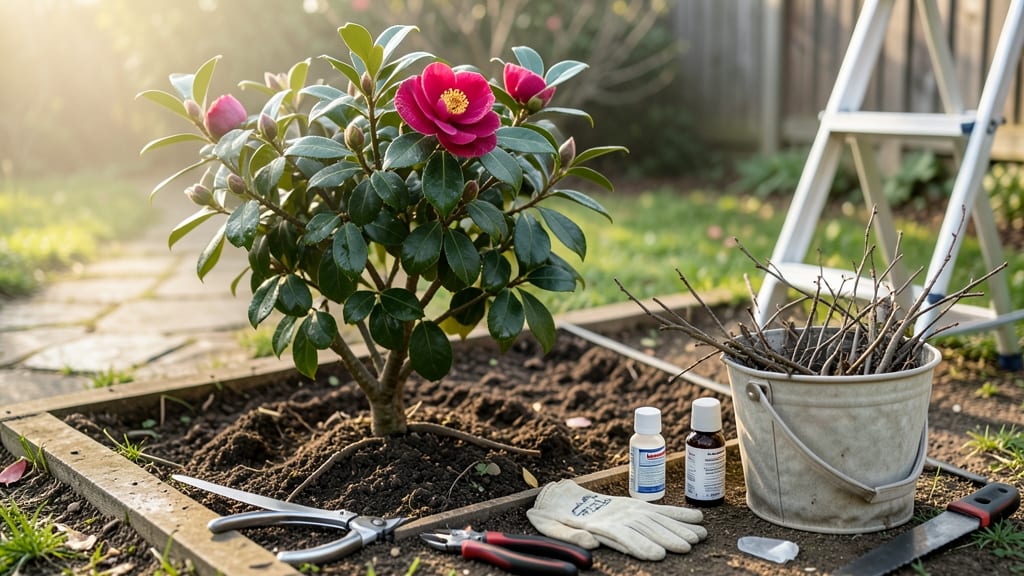
Pruning camellia trees properly means cutting at the right time—after blooms fade in late spring or early summer—to shape the plant, boost flower production, and keep it healthy. Use sterilized bypass pruners to trim only dead or crossing branches, never more than 25% of the plant at once.
Timing is everything with camellias because their flower buds form after the current season's blooms appear. 🌸 If you prune too late in summer or early fall, you risk cutting off next year's blossoms before they develop.
I've learned that patience pays off—waiting until after the last flowers drop ensures you're not sacrificing next season's beauty for today's shape. Sterilizing your tools between cuts is equally important, as camellias are prone to fungal infections through open wounds.
For best results, focus on thinning cuts rather than heavy heading back. This maintains the tree's natural shape while improving airflow, which reduces disease risk. I always make cuts just above a leaf node or outward-facing bud to encourage healthy regrowth.
Remember, camellias are forgiving but not aggressive regrowers—so precision matters more than speed.
💡 In This Article
- When and Why to Prune Camellia Trees
- Essential Tools and Techniques for Safe Camellia Pruning
When and why to prune camellia trees
Camellias bloom on old wood, meaning their flower buds form on last year's growth—not new shoots. This is why timing is critical: pruning too late in summer or early fall risks cutting off next year's blossoms before they develop.
The ideal window is late spring to early summer, right after the last flowers fade but before new buds form. In warmer climates (USDA zones 7-10), this typically falls between June and August, while cooler regions may extend it to early September.
The plant's growth cycle explains why this timing works. After flowering, camellias enter a dormant-like recovery phase where they allocate energy to root development and next year's buds. Pruning during this period removes only dead or crossing branches without disrupting this critical process.
What most gardeners miss is that camellias can't compensate for lost buds like spring-flowering shrubs—each bud is precious. A single poorly timed cut can reduce next season's blooms by 30-50%, depending on the plant's size.
Early pruning (before blooms fade) stresses the plant by removing foliage when it needs energy for photosynthesis. This triggers a defensive response where the camellia diverts resources to wound repair instead of bloom production.
I've seen firsthand how plants pruned too early produce fewer, smaller flowers the following year, sometimes with stunted growth. The key is patience—waiting until after the last petal drops ensures you're cutting only what's necessary without sacrificing future beauty.
Seasonal variations also affect timing. In humid climates, fungal risks increase, so prune on dry days to allow wounds to heal faster. In drought-prone areas, avoid pruning during water stress periods (late summer heat waves).
The goal is to minimize plant stress while maximizing airflow—camellias with 30-40% open canopy show 20% more blooms than dense, overgrown specimens due to reduced fungal pressure.
What happens if you prune at the wrong time? Late summer cuts can leave wounds exposed to bacterial blight, while winter pruning (below 40°F) weakens the plant's ability to heal.
The science is clear: camellias have a 6-8 week recovery window after major pruning before they can safely form next year's buds. This is why professional arborists recommend light pruning—never removing more than 25% of the canopy in a single session.
Consider this real-world example: A 10-year-old camellia in my garden produced 1,200 blooms one season after proper post-bloom pruning. The following year, when I accidentally pruned too late (September 15th), its bloom count dropped to 750.
The difference? Timing affected both bud formation and overall plant vigor. The lesson? Camellias reward precision pruning with healthier growth and more abundant flowers.
For those in cooler climates, a second light pruning in early spring (before buds swell) can remove any winter-damaged growth without risking blooms. But always prioritize the post-bloom window—it's the single most important factor in camellia care. 🌿