
Pruning
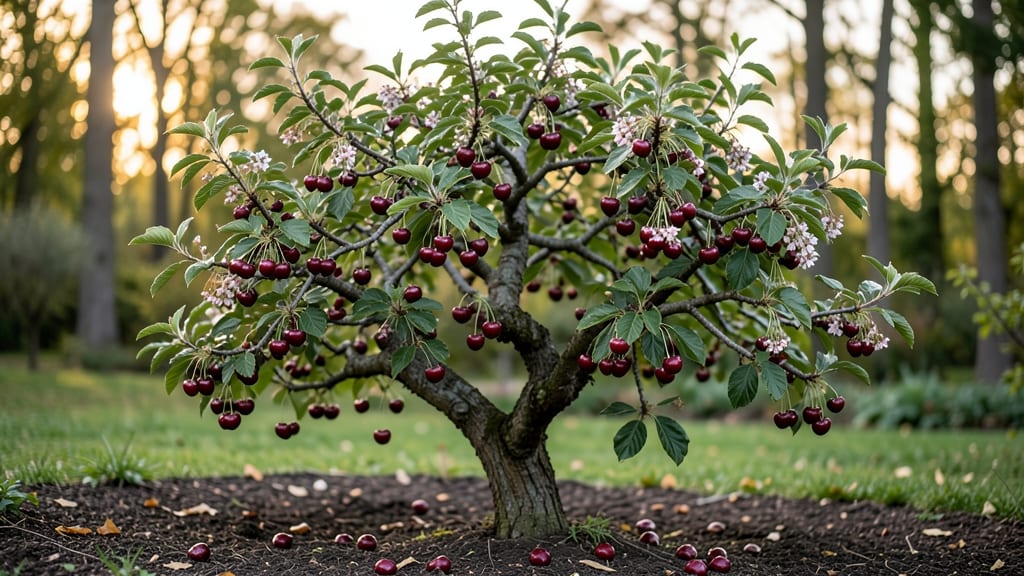
A mature Bing cherry tree 🍒 can reach heights of 15–25 feet, but that doesn’t mean your backyard has to look like a forest to enjoy its sweet fruit.
If you’re dreaming of a backyard bursting with sweet, juicy Bing cherries but don’t have acres of space, understanding the Bing cherry tree height is your first step to success—because the right variety can thrive in tight spots while still delivering a bumper crop.
Standard Bing cherry trees grow tall, but dwarf varieties like 'Stella' stay under 8 feet, making them perfect for containers or small gardens. The key to controlling height lies in pruning at the right time—during dormancy or summer—and choosing fast-growing cultivars that fit your space.
In this guide, I’ll break down how tall Bing cherry trees get, the fastest-growing varieties for small spaces, and the pruning tricks that keep them manageable without sacrificing fruit production.

How tall do Bing cherry trees grow? Height expectations by variety
If you’re planning to grow a Bing cherry tree in your backyard, one of your first questions is likely about its mature height. Standard varieties can reach towering heights, but don’t worry—there are compact options perfect for smaller spaces.
Understanding these differences will help you choose the right variety for your garden layout and fruit production goals.
The Bing cherry tree is a classic choice for home orchards, but its height varies dramatically depending on the variety. Standard trees can soar up to 20–25 feet tall, while dwarf and semi-dwarf options stay manageable at 6–12 feet.
This flexibility means you can grow Bing cherries whether you have a sprawling yard or a cozy urban patio.
For those with limited space, dwarf varieties like 'Stella' and 'Compact Stella' are game-changers. These trees stay under 6 feet tall while still producing abundant fruit. Even semi-dwarf varieties, like 'Bing Compact,' max out around 12 feet, making them ideal for medium-sized yards.
Here’s a quick comparison of Bing cherry tree heights by variety to help you visualize your options:
Choosing a dwarf Bing cherry tree isn’t just about saving space—it also means faster fruit production. These varieties typically bear fruit within 2–3 years, compared to 5–7 years for standard trees. This makes them perfect for impatient gardeners eager to enjoy homegrown Bing cherries sooner.
When planting, always consider spacing requirements. Standard Bing cherry trees need at least 20–25 feet between them to avoid shading and competition. Dwarf varieties, however, can be spaced 8–12 feet apart, making them ideal for smaller plots or even large containers with proper drainage.
If you’re growing a Bing cherry tree in a container, opt for a dwarf or compact variety. Use a pot that’s at least 18–24 inches deep and wide, with drainage holes to prevent root rot.
Place the container in a sunny spot and ensure it’s sturdy enough to support the tree’s weight as it grows.
Pruning plays a crucial role in managing height and encouraging fruit production. Regular pruning helps maintain the tree’s shape, improves air circulation, and directs energy toward fruit-bearing branches. For dwarf varieties, light pruning in late winter or early spring is often sufficient to keep them at your desired height.
Remember, the Bing cherry tree height you achieve depends on both the variety and your care routine. With the right variety and proper maintenance, you can enjoy a productive cherry tree—no matter the size of your garden.
Pruning tricks to control Bing cherry tree height and boost fruit yield
Managing the Bing cherry tree height starts with smart pruning—this isn’t just about keeping your tree from towering over your fence. Strategic cuts improve air circulation, increase fruit production, and shape your tree for easier harvesting.
The key is timing and technique, so let’s dive into the proven methods that work for both standard and dwarf varieties.
Most gardeners make two critical mistakes: pruning at the wrong time or cutting too aggressively. Dormant season pruning (late winter/early spring) is ideal for structural shaping, while summer pruning focuses on fruit-bearing branches.
With the right approach, you can reduce a 25-foot monster to a manageable 10 feet—or even keep dwarf varieties compact.
- 🌱 Step 1: Gather Tools
Use sharp pruning shears for small branches and a pruning saw for thicker limbs. Sterilize tools with rubbing alcohol to prevent disease spread. - 🌿 Step 2: Prune Dormant Season (Late Winter)
Remove dead or crossing branches first. Cut 1/4-inch above a bud at a 45-degree angle to encourage outward growth. - ✂️ Step 3: Thin the Canopy
Selectively remove 20-30% of branches to improve sunlight penetration. Focus on vertical shoots to reduce height. - ☀️ Step 4: Summer Pruning (Post-Harvest)
Trim water sprouts (fast-growing vertical shoots) and overcrowded branches to boost airflow and fruit quality. - 🍒 Step 5: Shape for Accessibility
Keep the lowest branches within reach (3-4 feet) for easy picking. Avoid "lion’s tailing" (cutting too close to trunk).
For dwarf Bing cherry trees, pruning is even more critical—these varieties rely on aggressive shaping to stay under 6 feet tall. After pruning, apply a wound dressing to larger cuts to prevent disease.
Monitor your tree’s response: if it produces too many water sprouts, it’s signaling stress from over-pruning.
One pro tip: Never remove more than 25% of foliage in a single season. Bing cherries are sensitive to drastic pruning, which can reduce next year’s crop. Instead, spread cuts over 2-3 years for gradual height control. Pair pruning with annual fertilization (10-10-10 NPK) in early spring to support recovery.
Common mistakes include pruning during wet weather (which spreads disease) or using dull tools (which tear bark). Always cut just outside the branch collar—the swollen area where the branch meets the trunk—to ensure proper healing.
With patience, your Bing cherry tree will stay productive and manageable while delivering a bounty of sweet fruit.
🌳