
Trees
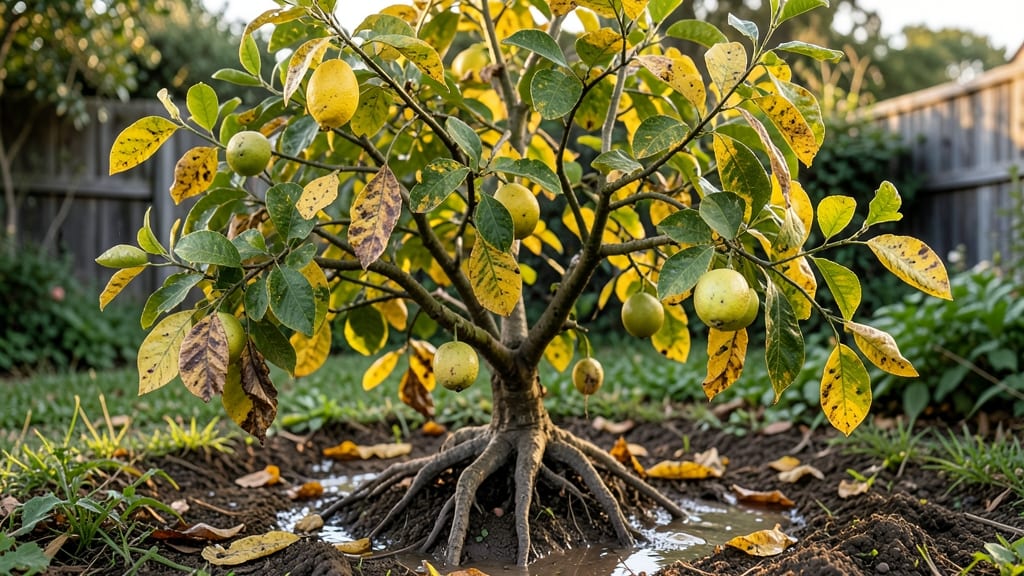
What does an overwatered lemon tree look like? That sad, drooping foliage and yellowing leaves might mean you’re drowning it in water—literally. 🌿 Overwatering turns roots mushy, smothers roots in soggy soil, and creates the perfect moldy conditions that strangle your tree’s health. The first sign? Leaves that look wilted even when the soil’s wet, paired with a musty smell when you lift the pot.
Dig into the soil—if it’s clinging to your trowel like wet clay or smells like a swamp, that’s your answer. Roots should be firm and white, not brown and squishy. Yellow leaves often start at the bottom, while underwatered trees show crispy brown edges first.
The real giveaway? Mold or fungus creeping up the trunk or soil surface, signaling rot’s taken hold.
Recovery starts with cutting back on water—let the top 2-3 inches of soil dry out completely before watering again. Repot in fresh, well-draining mix if roots are rotting, and prune any blackened or mushy roots with sterilized shears.
Within weeks, you’ll see new green growth pushing through as your tree breathes again.
Prevent future drama by watering only when the top inch of soil feels dry, and always use pots with drainage holes. A moisture meter’s your new best friend—no more guessing games. Your lemon tree’s comeback is totally doable, and soon you’ll be back to harvesting those bright, zesty fruits.
Common Causes Of Overwatering
An overwatered lemon tree isn’t just a result of too much love—it’s often a mix of well-intentioned gardening habits and environmental factors that disrupt the tree’s natural balance.
Understanding these causes helps you adjust your care routine before the damage becomes irreversible. Here’s why your lemon tree might be drowning in its own pot.
One of the most common mistakes is sticking to a rigid watering schedule without considering the tree’s actual needs. Lemon trees thrive in well-draining soil, but their roots need time to dry out between waterings.
If you water every few days—regardless of weather, season, or soil moisture—you’re essentially suffocating the roots.
Why it happens:
- Ignoring soil moisture: Sticking to a calendar-based routine (e.g., "water every Tuesday and Thursday") doesn’t account for humidity, rainfall, or temperature changes. A lemon tree in a humid climate or during rainy season may not need watering at all, while one in dry, hot conditions could still be thirsty.
- Mistaking thirst for wilting: Overwatered trees often appear droopy, mimicking underwatering. But while underwatered trees have crisp, dry leaves, overwatered ones have soft, mushy leaves that may even pull away from the stem.
- New growers’ anxiety: Beginners often panic when they see any sign of stress and overcompensate by watering more. But lemon trees are drought-tolerant once established—they’d rather have slightly dry soil than soggy roots.
💡 Pro Tip: Stick your finger 2-3 inches into the soil. If it’s damp, wait. If it’s dry at that depth, it’s time to water—deeply—until water runs out the drainage holes.
Lemon trees in pots are especially vulnerable because containers trap excess water, leading to root rot—a silent killer that weakens the tree before visible symptoms appear. Without proper drainage, water pools at the bottom, cutting off oxygen to the roots and inviting fungal infections.
Why it happens:
- No drainage holes: Many decorative pots lack holes, forcing water to sit stagnant. Even if you water lightly, the soil stays soggy for days.
- Compacted or heavy soil: Clay or loam soils (common in potting mixes) retain moisture longer than sandy or perlite-amended soils. If your mix doesn’t include organic matter like compost or inorganic amendments like pumice, water lingers.
- Overpotting without upgrades: Moving a lemon tree to a larger pot without repotting into fresh, well-draining soil means the old, compacted soil continues to hold excess water.
🔧 Fix It: Upgrade to a pot with drainage holes and use a mix designed for citrus: 60% inorganic (perlite, pumice), 30% organic (compost, coconut coir), and 10% soil. Elevate pots on saucers or stands to prevent water from pooling underneath.
Sometimes, overwatering isn’t your fault—it’s the weather, your location, or even the season playing tricks. Humidity, rainfall, and temperature shifts can turn a "normal" watering routine into a disaster.
Why it happens:
| Factor | How It Causes Overwatering | Solution |
|---|---|---|
| High humidity | Air saturated with moisture slows evaporation, keeping soil damp longer. A lemon tree in Florida may need watering half as often as one in Arizona. | Reduce watering frequency by 30-50% in humid climates. |
| Rainfall | Heavy rains can waterlog soil for days. If you water on top of recent rain, you’re doubling down on saturation. | Check soil moisture after rain before watering again. |
| Cooler temperatures | Lemon trees grow slower in winter, reducing water needs. Overwatering in fall/winter mimics spring conditions, stressing the tree. | Cut watering by 50% in winter; resume gradually in spring. |
| Shade or poor airflow | Lemon trees in shaded spots or crowded gardens transpire less, so they don’t "drink" as much. Excess water sits in the soil. | Move trees to 6+ hours of sunlight and prune nearby plants for better airflow. |
🌡️ Seasonal Adjustments: Lemon trees in USDA Zones 9-11 (their native range) handle year-round growth, but those in cooler zones (like Zone 8) may need a dormant watering schedule in winter.
Even the best-intentioned tools can backfire if misused. From sprinklers to mulch, some common practices unintentionally drown lemon trees.
Why it happens:
- Automatic sprinklers: Timers don’t account for rain or soil type. A 10-minute sprinkler session can deliver 1-2 inches of water, far more than a lemon tree needs.
- Too much mulch: Mulch conserves moisture, which is great—but a 3+ inch layer can suffocate roots by trapping heat and preventing evaporation.
- Fertilizer overuse: High-nitrogen fertilizers encourage leafy growth, which increases water needs. If you fertilize without adjusting watering, the tree can’t keep up.
- Hand-watering habits: Pouring water slowly from above mimics rain, but lemon trees need deep, infrequent watering to encourage root growth. Shallow watering keeps roots near the surface, where they rot faster.
🚰 Smart Watering Hacks:
- Use drip irrigation or soaker hoses to deliver water directly to the root zone.
- Water early in the morning to reduce evaporation and fungal risks.
- Avoid wetting foliage to prevent leaf diseases like citrus canker.
Revive Your Lemon Tree Now
An overwatered lemon tree may look like a lost cause, but with the right steps, you can nurse it back to health—even if it’s already showing signs of distress. The key is acting fast, diagnosing the root cause (literally and figuratively), and adjusting your care routine.
Below, we’ll break down practical fixes for each common symptom of overwatering, plus prevention tips to keep your tree thriving.
---
Cause: Excess moisture suffocates roots, leading to rot and nutrient starvation. Fix: - Pause watering for 3–5 days to let the soil dry out. This gives roots a chance to recover. - If the soil feels soggy even after a few days, wait longer—roots need time to heal. - Pro Tip: 💡 Use your finger to check moisture 2–3 inches deep. If it’s damp, hold off on watering.
---
Cause: Poor drainage traps water, worsening root rot. Fix: - Repot if needed: If your tree is in a container, choose a pot with drainage holes (or drill them yourself). Use a well-draining potting mix (like a blend of cactus soil, perlite, and compost). - For in-ground trees: Amend the soil with sand, gravel, or coconut coir to improve aeration. Avoid compacted or clay-heavy soil. - Quick Fix: 🌱 Place a layer of small rocks (like pebbles) at the bottom of the pot before adding soil to prevent waterlogging.
---
Cause: Yellowing, mushy, or blackened leaves are signs of stress or disease. Fix: - Trim affected leaves and branches using sterilized pruners (wipe with rubbing alcohol between cuts). - Focus on: - Yellow leaves (nutrient deficiency from poor oxygen). - Black or mushy spots (fungal infection from excess moisture). - Drooping or wilted branches (root damage). - Pro Tip: ✨ Prune in the morning when the tree is hydrated, and avoid cutting more than 25% of the foliage at once to prevent shock.
---
Cause: Overzealous watering (or lack of knowledge) leads to soggy soil. Fix: - Water deeply but infrequently: Lemon trees prefer dry spells between waterings. Aim for: - Containers: Water when the top 2–3 inches of soil are dry (usually every 7–10 days in summer, less in winter). - In-ground trees: Water once a week (or less in rainy seasons) and ensure the entire root zone gets moisture. - Test the soil: Stick a wooden chopstick into the soil—if it comes out clean, water; if muddy, wait. - Prevention Tip: 🎯 Use a moisture meter or self-watering pot to track soil conditions accurately.
---
Cause: Mushy, brown roots or a foul smell mean root rot has set in. Fix: - For container trees: 1. Remove the tree from the pot and gently rinse the roots with water to wash away excess soil. 2. Trim black/mushy roots with sterilized scissors (only cut back to healthy white or light brown roots). 3. Repot in fresh, dry potting mix and hold off on watering for 5–7 days. - For in-ground trees: - Dig around the base to expose and trim rotten roots, then amend the soil with compost and sand. - Apply a fungicide (like copper-based or hydrogen peroxide spray) to prevent fungal spread. - Prevention Tip: 🌡️ Never let your tree sit in standing water—elevate containers slightly or use saucers with drainage holes.
---
Cause: Weakened trees need extra support to bounce back. Fix: - Fertilize lightly: Wait 4–6 weeks after repotting before using a balanced citrus fertilizer (like 6-6-6 or 10-10-10). Over-fertilizing can burn roots. - Provide sunlight: Lemon trees need 6–8 hours of direct sun daily. Move potted trees to a sunny spot (or use grow lights if indoors). - Humidity help: If leaves are crispy, place the pot on a pebble tray with water (not touching the pot) to increase humidity. - Prevention Tip: 💪 Monitor leaf color—healthy lemon leaves are dark green and glossy. Adjust care if you see new yellowing.
---
To keep your lemon tree happy and avoid future overwatering: ✅ Use the right pot: Always choose containers with drainage holes. ✅ Check soil type: Mix in perlite or vermiculite for better aeration. ✅ Water wisely: Less is more—lemon trees tolerate drought better than soggy soil. ✅ Mulch properly: Add 2–3 inches of organic mulch (like straw or wood chips) to retain moisture without suffocating roots. ✅ Seasonal adjustments: Water less in winter (growth slows) and more in summer (but still let soil dry between waterings).
--- By following these steps, your lemon tree should start showing signs of recovery within 2–4 weeks—think new green leaves, firmer stems, and even a few blossoms if it’s healthy enough! 🌿🍋 If the tree remains weak after a month, consider consulting a local arborist for deeper issues.
Frequently asked questions
Why do overwatered lemon tree leaves turn yellow first at the bottom?
Yellowing at the bottom happens because those older leaves are the first to show nutrient deficiencies caused by poor oxygen in waterlogged soil. The roots can't absorb nutrients properly when drowning, so the tree sheds its oldest leaves first as a survival tactic. This is different from underwatering, where yellowing starts at the tips.
Can I save a lemon tree if the roots are already mushy and smelly?
Yes, but you'll need to act fast! First, remove the tree from its pot and trim all black/mushy roots with sterilized shears. Repot in fresh, well-draining mix and withhold water for 5-7 days. The key is preventing further rot while giving healthy roots a chance to regrow. Expect new growth in 3-6 weeks if you catch it early.
What's the difference between overwatered and underwatered lemon tree leaves?
Overwatered leaves are soft, mushy, and may pull away from stems—they feel limp even when soil is wet. Underwatered leaves are crispy, dry, and brown at the edges. Another clue: overwatered trees often develop mold or fungus on the soil surface, while underwatered trees show dusty, curled leaves.
How often should I water a lemon tree after fixing overwatering damage?
Wait until the top 2-3 inches of soil are completely dry—usually every 7-10 days in summer. In winter, reduce to every 3-4 weeks. Always water deeply until it runs out the drainage holes, then let excess drain away completely. Use your finger to check moisture instead of sticking to a schedule.
Will my lemon tree ever produce fruit again after overwatering?
It depends on how severe the damage was! If you caught it early and the roots are healthy, your tree can recover and produce fruit within 1-2 years. However, if root rot was extensive, flowering may be delayed. Focus on proper drainage and watering first—healthy growth comes before fruit production.