
Pruning
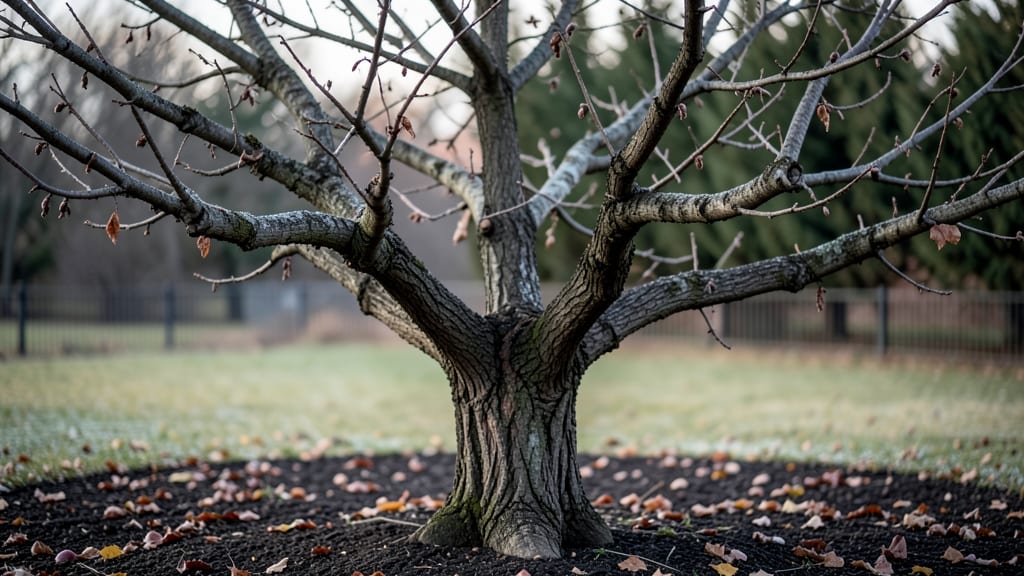
When a plum tree becomes dormant in late fall or winter, it signals the perfect window to prune—after leaves fall and before bud break—to reshape growth and remove deadwood. This seasonal rest period occurs when temperatures consistently stay below 40°F (4°C).
A plum tree's dormant phase isn't just about cold weather—it's a survival strategy triggered by shrinking daylight and dropping temperatures. 🌱 During this time, the tree conserves energy by halting growth, which makes pruning safer for the tree and more effective for you.
I always check for bud swelling in early spring as my cue that dormancy is ending, because cutting too late risks removing next year's fruit buds.
This is also when you can spot problems like dead branches or disease signs more easily, since the tree isn't actively growing to hide them.
The key is working within that narrow window—prune too early in winter and you risk cold damage to fresh cuts, while waiting too long means you'll be pruning active growth. I recommend scheduling your pruning for late winter when temperatures are stable but still chilly.
💡 In This Article
- Understanding Plum Tree Dormancy Stages
- Pruning a Dormant Plum Tree: Step-by-Step Guide
Understanding plum tree dormancy stages
Plum tree dormancy is a biological survival mechanism triggered by three key factors: dropping temperatures, reduced daylight hours, and hormonal shifts within the tree. When daytime temperatures consistently fall below 40°F (4°C)—typically in late fall or winter—the tree's growth hormones like auxin and gibberellins decrease dramatically.
This hormonal shift causes the tree to enter a state of suspended animation, where metabolic processes slow to conserve energy. 🌡️ The tree's leaves turn yellow or brown and drop as chlorophyll breaks down, a visual cue that dormancy has begun.
This process isn't just about cold weather—daylight plays an equally crucial role. Plum trees, like most fruit trees, are sensitive to photoperiod (day length). As daylight shrinks to less than 12 hours per day, the tree's internal clock signals it's time to rest.
The combination of cold and short days triggers the production of abscisic acid, a hormone that promotes dormancy. You'll notice this in how the tree's growth slows, and new shoots stop forming entirely. The bark may also develop a slightly rougher texture as it prepares to withstand winter conditions.
Moisture levels during dormancy are equally important. While the tree isn't actively growing, it still needs adequate water to prevent desiccation. However, too much moisture can lead to root rot or fungal issues.
The ideal soil moisture during dormancy is about 40-50% field capacity, meaning the soil should be damp but not waterlogged.
This balance helps the tree maintain its energy reserves while protecting it from winter stress. 💧 I always check soil moisture by squeezing a handful—if it crumbles when dry but holds shape when wet, it's just right.
Identifying dormancy signs is crucial for timing pruning correctly. Look for these three key indicators: leaf drop (all or nearly all leaves have fallen), bud swelling (small buds appear along branches in early spring), and stable cold temperatures (consistently below 40°F (4°C) for at least 2-3 weeks).
The transition from dormancy to active growth begins when daytime temperatures rise above 50°F (10°C) for several days, causing buds to swell and prepare for spring growth. This is your cue that the pruning window is closing.
What most gardeners don't realize is that dormancy isn't a uniform state—it varies by plum tree variety and climate zone. For example, European plums (Prunus domestica) often enter dormancy earlier than Japanese plums (Prunus salicina), which can handle slightly warmer winters.
In USDA Zone 5, dormancy might begin as early as November, while in Zone 8, it could extend into December or January.
This variation explains why some trees bloom earlier than others in spring. 🌸 Understanding your specific variety's dormancy pattern helps you predict when to expect bud break and adjust your pruning schedule accordingly.
During dormancy, the tree's vascular system—its plumbing—also undergoes changes. The flow of water and nutrients slows dramatically, which is why pruning cuts heal more slowly in winter.
The tree's natural defenses, like wound closure, are at their weakest during dormancy, which is why it's safer to prune than in summer when the tree is actively growing.
However, if you prune too late in winter—just before bud break—the tree may produce less fruit the following season, as it will have already allocated energy to new growth. This is why timing is everything.
The end of dormancy is marked by a fascinating biological process called chilling requirement fulfillment. Most plum varieties need between 200-1,000 hours of temperatures below 45°F (7°C) to break dormancy successfully. Without enough chilling hours, the tree may fail to bloom properly, leading to poor fruit set.
This is why plum trees in mild climates (like California) often require cross-pollination with other varieties or specific rootstocks that have lower chilling requirements. 🌿 Knowing your tree's chilling requirement helps you understand why it might bloom late or not at all in some years.