
Pruning
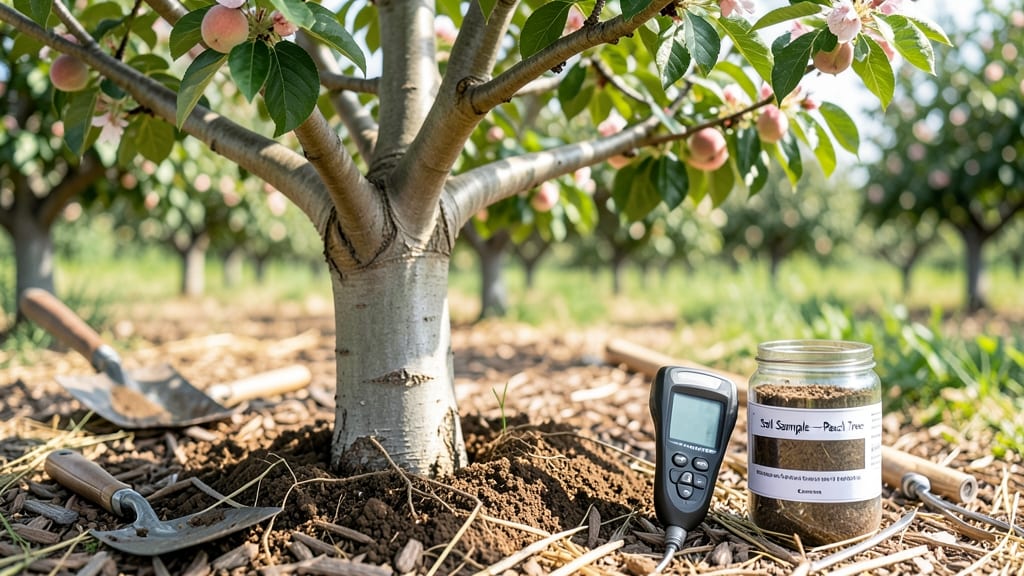
Your peach tree’s soil requirements are the foundation for sweet fruit and strong growth—and getting them wrong can mean stunted trees, poor blossoms, or even disease.
Picture this: You’ve planted your 🍑 with care, but by summer, the leaves are yellowing, the branches are weak, and the fruit is tiny. The culprit? Soil that’s too acidic, too compacted, or lacking the right nutrients.
Peach trees thrive in well-draining, slightly acidic soil with a pH of 6.0–6.5, but many gardeners overlook the details that make the difference between a struggling bush and a bountiful harvest.
In this guide, I’ll break down the exact soil conditions your peach tree needs—from drainage and organic matter to regional tweaks for clay or sandy soil—plus how to fix common mistakes before they derail your tree’s health.
You’ll learn how to test your soil, amend it for peak performance, and keep your tree resistant to pests and diseases, so you can enjoy juicy peaches instead of fighting for survival.
Peach tree soil pH requirements: the ideal range for fruit production
Peach trees thrive when their soil pH stays within a precise range of 6.0 to 6.5. This slightly acidic environment ensures your tree absorbs essential nutrients like nitrogen, phosphorus, and potassium—critical for strong growth and fruit production.
When pH strays too high (alkaline) or low (acidic), nutrient deficiencies and disease susceptibility increase, leading to poor fruit set and stunted trees.
Think of pH as the foundation of your peach tree’s health. A pH below 5.5 can lock out vital nutrients like calcium and magnesium, while a pH above 7.0 reduces iron and zinc availability, causing yellowing leaves and weak branches.
Testing your soil is the first step to unlocking a bountiful harvest.
Why pH matters: Peach trees rely on a balanced pH to activate beneficial soil microbes that break down organic matter into nutrients. Without the right pH, your tree struggles to grow, flower, and produce fruit—even with perfect sunlight and watering.
The ideal 6.0–6.5 pH range maximizes nutrient uptake, especially for micronutrients like zinc and boron, which peach trees need for healthy fruit development. If your soil is outside this range, simple adjustments can restore balance and set your tree up for success.
🌱 Visual Guide to Peach Tree Soil pH Requirements
Testing your soil’s pH is simple and only takes a few minutes. Grab a soil pH test kit from your local garden center or send a sample to a lab for precise results.
Dig a 6-inch hole near your peach tree, collect soil from the sides, and follow the kit instructions. Most kits include color-coded strips or liquid indicators for quick readings.
If your soil tests below 6.0, raise the pH by adding pelletized lime (calcium carbonate) or wood ash. Work the amendment into the top 6–12 inches of soil in early spring or fall.
For alkaline soil (pH > 7.0), lower the pH with elemental sulfur or peat moss, which slowly acidify the soil over time.
Organic gardeners can use composted manure, pine needles, or coffee grounds to gently adjust pH. These amendments release nutrients slowly and improve soil structure while balancing acidity. For faster results, synthetic lime or sulfur provides immediate pH correction but may require more frequent monitoring.
Watch for yellow leaves with green veins, a classic sign of iron deficiency in alkaline soil. Poor flowering or small, misshapen fruit often signals a pH imbalance. Addressing these issues early ensures your peach tree stays healthy and productive throughout the growing season.
Once you’ve adjusted your soil’s pH, maintain it by adding compost annually and avoiding over-fertilizing with nitrogen-heavy amendments. Mulch with pine bark or straw to stabilize pH and retain moisture, creating the perfect environment for your peach tree to thrive.
With the right pH, your peach tree will reward you with vibrant blooms, lush foliage, and sweet, juicy fruit. Start testing your soil today—your future harvest depends on it! 🍑
Drainage and nutrient needs: how to prepare soil for peach tree growth
Peach trees thrive in loamy soil with excellent drainage and a rich supply of organic matter. The right soil mix ensures strong root development, better nutrient uptake, and higher fruit yields.
If your soil is too heavy or sandy, your tree will struggle—even with perfect sunlight and watering. Let’s break down the ideal conditions and how to achieve them.
Your peach tree’s soil should be a balance of sand, silt, and clay (loam) with a crumbly texture that holds moisture without becoming waterlogged. Sandy soils drain too quickly, while clay soils compact and suffocate roots.
The goal? A well-aerated, nutrient-dense growing medium that supports both root expansion and fruit production.
Peach Tree Soil Requirements: Pros & Cons
Loamy texture
Well-draining
Rich in organic matter
pH 6.0–6.5
Strong root growth
Better nutrient uptake
Reduced disease risk
Higher fruit yield
Poor drainage
Root suffocation
Increased fungal diseases
Nutrients wash away
Weak root system
Lower fruit production
Peach trees require three primary nutrients: nitrogen (N) for leafy growth, phosphorus (P) for root and fruit development, and potassium (K) for disease resistance. A balanced 10-10-10 fertilizer applied in early spring and again in late spring keeps your tree healthy.
Don’t forget micronutrients like zinc and boron, which prevent blossom drop and poor fruit set.
To improve clay soil, mix in compost, sand, or perlite to break up compaction. For sandy soil, add peat moss or aged compost to retain moisture and nutrients.
Always test your soil before amending—this ensures you’re addressing the right issues. A simple soil test kit (available at garden centers) reveals pH and nutrient levels in minutes.
Fertilize your peach tree in early spring when new growth appears, and again in late spring before flowering. Avoid heavy fertilization in summer—it can stimulate late-season growth that won’t harden off before winter.
Mulch around the base with wood chips or straw to retain moisture, regulate soil temperature, and suppress weeds.
Remember, healthy soil equals healthy trees. With the right drainage and nutrients, your peach tree will reward you with juicy, sweet fruit for years to come. Start with a soil test, amend as needed, and watch your tree thrive! 🍑