
Pruning
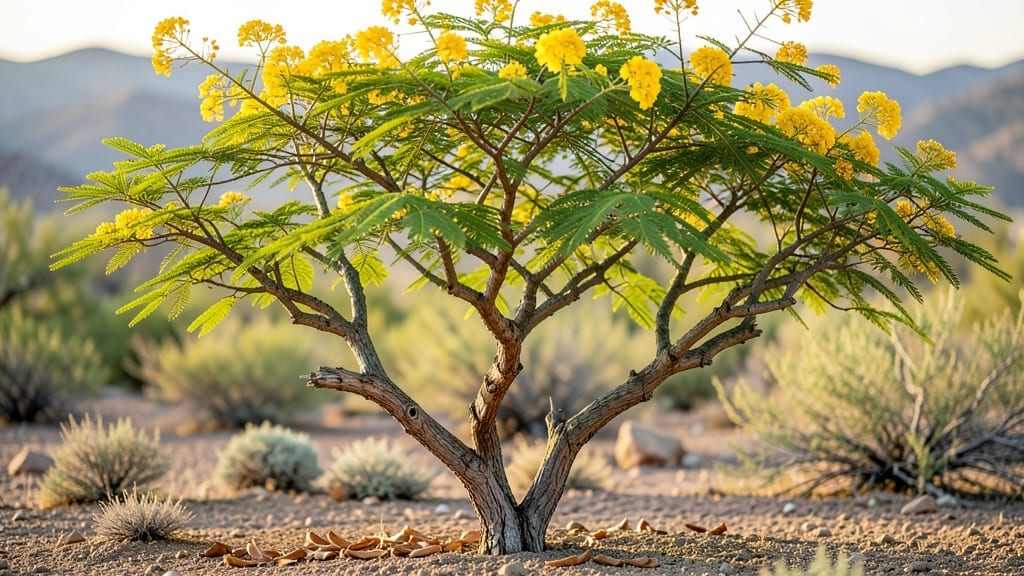
A palo verde tree in your front yard turns desert sun into a lush, low-maintenance statement. 🌵 Its golden-green foliage and drought-smart roots make it a standout for arid climates, while its compact size (20–30 feet) keeps it perfect for tight spaces.
The best part? It stays green year-round, offering privacy without sacrificing curb appeal. Plant it where it gets full sun (6+ hours daily) and space it 15–20 feet from structures to avoid root competition.
Pair it with succulents, agave, or desert roses for a cohesive look—these plants thrive in the same dry conditions. The tree’s small, yellow flowers in spring add a pop of color that brightens any front yard.
You’ll love how it reduces water use by up to 70% compared to traditional shade trees, cutting your water bill while boosting your home’s value. The bark’s distinctive mottled pattern adds texture, making it a conversation starter for neighbors.
Just prune lightly in late winter to shape it and keep it healthy. Works in USDA Zones 8–11, making it ideal for Arizona, California, and Nevada landscapes. For extra shade, add a dwarf citrus tree nearby—it complements the palo verde’s desert charm while keeping the space functional.
Let’s design your dream front yard!
Root Causes Of Palo Verde Stress
When your palo verde tree in the front yard starts showing signs of distress—drooping branches, sparse foliage, or sudden leaf loss—it’s often a cry for help from deep within. Understanding these underlying issues is the first step to reviving your desert beauty.
Below, we break down the scientific and environmental triggers that weaken palo verde trees, along with actionable insights to address them.
---
Palo verde trees (Parkinsonia) thrive in arid climates but are surprisingly sensitive to temperature extremes beyond their comfort zone (typically 100°F+ in summer and above freezing in winter).
- Why it happens: - Heat stress: When temperatures exceed 110°F, the tree’s photosynthetic processes slow down, causing leaf scorch (brown, crispy edges).
The xylem vessels (water-conducting tubes) can also cavitate, blocking water flow and leading to wilting. - Cold damage: Below 25°F, the tree’s cell membranes rupture, killing branches.
Young trees are especially vulnerable, as their cambium layer (growth tissue) freezes solid. - Sudden shifts: Rapid temperature swings (e.g., 100°F to 30°F in 24 hours) create thermal shock, stressing the tree’s vascular system.
- Actionable fixes: - Mulch heavily (3–4 inches of organic mulch like wood chips) to insulate roots and retain moisture. - Avoid overhead watering in extreme heat—deep, infrequent irrigation (every 10–14 days) encourages deep root growth. - Use shade cloth (30–50% coverage) for newly planted trees during the first two years to acclimate them gradually. - Wrap young trunks with burlap or tree guards in winter to protect against freeze damage.
---
Palo verde trees are drought-tolerant, but poor watering habits are the #1 cause of decline in urban landscapes.
- Why it happens: - Underwatering: Shallow roots (common in compacted soil) struggle to reach moisture, leading to leaf drop and branch dieback.
Chronic drought forces the tree into dormancy, stunting growth. - Overwatering: Poor drainage (a common issue in clay-heavy soils) causes root rot (Phytophthora fungi thrive in waterlogged conditions).
The tree’s aeration suffers, suffocating roots and cutting off nutrient uptake. - Inconsistent schedules: Frequent light watering (e.g., daily sprinklers) encourages shallow root systems, making the tree more susceptible to heat stress.
- Actionable fixes: - Test soil moisture before watering—stick your finger 6 inches deep; if dry, it’s time to water. - Use drip irrigation or soaker hoses to deliver water slowly and deeply (1–2 inches per week in growing season, none in winter). - Amend heavy clay soil with sand or compost to improve drainage.
A 12-inch deep trench filled with gravel around the drip line can help. - Mulch volcanoes are a no-go—keep mulch 2–3 inches deep and 6 inches away from the trunk to prevent moisture retention against the bark.
---
Palo verde trees prefer lean, well-draining soils but often suffer in amended or nutrient-rich landscapes common in suburban yards.
- Why it happens: - Over-fertilization: High nitrogen levels (from lawn fertilizers) promote soft, weak growth that’s prone to sunscald and pest attacks.
Phosphorus and potassium imbalances also disrupt flowering and fruiting. - Compacted soil: Foot traffic, construction, or heavy machinery crushes soil particles, reducing oxygen and water penetration.
Roots strangle and rot in anaerobic conditions. - pH extremes: Palo verdes prefer slightly alkaline soil (7.0–8.0). Acidic soil (below 6.5) locks out essential micronutrients like iron and zinc, causing yellowing leaves (chlorosis).
- Actionable fixes: - Avoid fertilizers—palo verdes are low-maintenance; a light application of compost (once a year in early spring) is sufficient. - Aerate compacted soil with a manual aerator or chisel plow to break up hardpan. - Test soil pH—if below 6.5, add crushed limestone (follow package rates) to raise alkalinity. - Top-dress with coarse sand (like concrete sand) to improve drainage in heavy soils.
--- While palo verdes are naturally pest-resistant, stressed trees become magnets for invaders.
- Why it happens: - Scale insects & mealybugs: These sap-sucking pests thrive on weakened trees, coating leaves with sticky honeydew and fostering sooty mold (black fungal growth). - Borers (e.g., palmetto borers): Wood-boring larvae tunnel into water-stressed branches, creating exit holes and sawdust-like frass. - Fungal infections (e.g., powdery mildew): High humidity + poor airflow (from dense foliage) creates ideal conditions for fungal spores to colonize leaves.
- Actionable fixes: - Inspect trees quarterly—look for sticky residue, holes, or wilting branches. - Blast pests off with a strong hose spray (early morning) to dislodge scale and mealybugs. - Apply horticultural oil (in dormant season) to smother eggs and larvae. - Prune for airflow—remove crossing branches and thin out dense growth to reduce humidity. - Seal borer holes with pruning sealant (for small wounds) or replace severely infested branches.
--- Front yard palo verdes often fall victim to human error—whether from DIY pruning mistakes or accidental trauma.
- Why it happens: - Topping or shearing: Severing main branches (topping) creates ugly stubs and weakens the tree’s structure.
Shearing removes growth points, leading to dense, brittle regrowth. - Over-pruning: Removing more than 25% of foliage in one session shocks the tree, reducing its ability to photosynthesize and recover. - Mechanical injury: Lawnmowers, string trimmers, or car scrapes girdle the trunk (damage to the cambium layer), choking off nutrients above the wound.
- Actionable fixes: - Prune only in late winter/early spring (avoid summer heat stress). - Use proper cuts: Thin out (remove entire branches at the collar) rather than heading back (cutting mid-branch). - Avoid "florida" pruning—never remove large sections of the canopy for a "bushy" look. - Protect the trunk with a metal guard if parked cars are a risk. - Seal fresh cuts (over 1-inch diameter) with pruning paint to prevent disease entry.
--- Even mature palo verdes can struggle if planted in the wrong spot or transplanted improperly.
- Why it happens: - Root disturbance: Digging too close to the trunk during transplanting severs fine roots, reducing the tree’s water and nutrient uptake. - Shallow planting: Buried trunks (from backfilling too high) suffocate the root flare, leading to rot and girdling roots. - Competition: Nearby shrubs, turf, or weeds steal moisture and nutrients, leaving the palo verde
Revitalize Your Palo Verde Tree
A Palo Verde tree in your front yard thrives under the right care, but sometimes it needs a little help to stay healthy and vibrant. Whether it’s overgrowth, pest issues, or environmental stress, these practical solutions will get your tree back on track—while keeping it lush and full of life.
---
Cause: Rapid growth, poor pruning habits, or lack of maintenance.
How to Fix It: - 🔪 Trim Strategically: Focus on removing dead, crossing, or inward-growing branches first. Use clean, sharp pruning shears or a pruning saw for thicker limbs. - 🌳 Shape Thoughtfully: Palo Verde trees benefit from open-centered pruning—remove branches from the center to improve airflow and sunlight penetration. - ⏰ Best Time to Prune: Late winter or early spring (just before new growth) is ideal.
Prevention Tips: ✔ Schedule regular pruning (every 1–2 years) to control size. ✔ Avoid heavy pruning in summer—it stresses the tree. ✔ Fertilize lightly in early spring to encourage balanced growth.
---
Cause: Spider mites, scale insects, or fungal infections (like powdery mildew) due to poor drainage or stress.
How to Fix It: - 🚿 Spray with Neem Oil: A natural, organic solution that kills pests and deters future infestations. Mix 1 tbsp neem oil + 1 tsp mild soap per gallon of water and spray thoroughly. - 🌡️ Check for Fungus: If you see white powdery spots, apply a copper fungicide or baking soda spray (1 tbsp baking soda + 1 quart water + a drop of dish soap). - 💧 Improve Drainage: Amend soil with compost or sand if water pools around the base.
Prevention Tips: ✔ Inspect leaves monthly for early signs of pests. ✔ Water deeply but infrequently to prevent fungal growth. ✔ Mulch around the base (2–3 inches) to retain moisture and deter pests.
---
Cause: Intense desert sun exposure, especially after sudden temperature shifts.
How to Fix It: - 🌳 Provide Temporary Shade: Use lightweight shade cloth (30–50% coverage) during extreme heatwaves. - 💧 Increase Watering (Temporarily): Deep watering 2–3 times per week during heatwaves helps the tree recover. - 🍃 Trim Damaged Leaves: Remove severely scorched foliage to redirect energy to healthier growth.
Prevention Tips: ✔ Avoid pruning in peak summer—wait for cooler months. ✔ Use drip irrigation to keep roots consistently moist. ✔ Choose the right location—Palo Verde loves full sun but benefits from afternoon shade in extreme climates.
---
Cause: Nutrient deficiency, compacted soil, or root stress.
How to Fix It: - 🌱 Fertilize Properly: Use a slow-release, desert-friendly fertilizer (low nitrogen, high potassium) in early spring. - 🔄 Loosen Soil: Gently aerate the root zone with a garden fork to improve oxygen flow. - 💧 Check Watering Depth: Ensure water reaches 12–18 inches deep—shallow watering stresses roots.
Prevention Tips: ✔ Test soil annually for pH and nutrient levels. ✔ Mulch with organic matter (like wood chips) to retain moisture and nutrients. ✔ Avoid overwatering—Palo Verde trees are drought-tolerant!
--- Final Thought: With the right care, your Palo Verde tree will stay healthy, provide year-round privacy, and remain a stunning desert centerpiece. 🌵✨
Frequently asked questions
How close can I plant a palo verde tree to my house?
Plant your palo verde tree at least 15–20 feet from your house or structures to prevent root competition and avoid damaging foundations. Its roots spread widely but aren’t aggressive like some other trees. Just ensure it gets full sun (6+ hours daily) and space it 8–10 feet from sidewalks or driveways to avoid root conflicts with hardscapes.
Will a palo verde tree provide shade for my front yard?
Yes, but expect moderate shade! Mature palo verdes grow 20–30 feet tall with a 15–25-foot spread, offering dappled shade rather than dense coverage. Plant it near seating areas or walkways to create a cozy, sun-dappled space. Pair it with a dwarf citrus tree for layered shade and year-round interest.
Can I grow a palo verde tree in a container?
While possible, it’s not ideal for long-term growth. Palo verdes thrive in deep, well-draining soil and need space for their extensive root systems. If you must container-grow it, use a 24-inch diameter pot with cactus/succulent mix and repot every 2–3 years. However, a 5-gallon container will only stunt its growth—best to plant it in the ground for full potential.
How do I prepare the soil for a palo verde tree?
Palo verdes love lean, well-draining soil. Amend heavy clay soil with sand or coarse gravel to improve drainage, and avoid over-fertilizing—these trees prefer low-nutrient conditions. Dig a hole twice as wide as the root ball and no deeper to prevent root suffocation. Mulch with 2–3 inches of wood chips to retain moisture without smothering the tree.
Are palo verde trees messy? Do they drop leaves or fruit?
Not at all! Palo verdes are low-maintenance and tidy. They shed small, papery leaves seasonally (more in winter), but it’s minimal compared to other trees. The yellow flowers in spring are pretty but not messy—just enjoy the pop of color! They don’t produce fruit that falls, making them perfect for clean, desert-style front yards.