
Trees
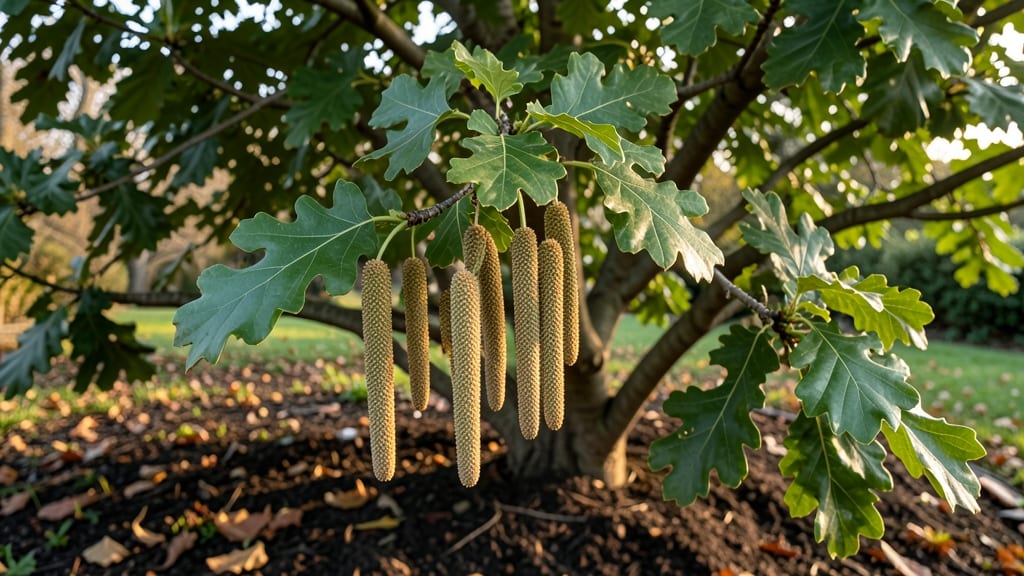
Oak tree pollen tassels appear in early spring as long, dangling catkins that release pollen to fertilize female flowers, signaling the tree's reproductive cycle and potential allergy season for nearby areas.
These distinctive oak tree pollen tassels—often called catkins—play a crucial role in oak reproduction by carrying pollen from male flowers to female ones. 🌿 The timing varies by species, but most oaks release pollen between late winter and early spring when temperatures rise above freezing.
What's interesting is that these tassels can linger on branches for weeks, creating a dramatic visual contrast against bare winter limbs. For allergy sufferers, this means pollen counts often peak during this period, especially in areas with dense oak populations.
Understanding this process helps gardeners and homeowners plan better. For instance, pruning oak trees during dormancy (late fall or winter) won't affect pollen production, but removing tassels after they've released pollen can reduce yard debris.
Some oak varieties, like swamp white oak, produce less allergenic pollen than red oaks, making them better choices for landscapes near homes with allergy-prone residents.
💡 In This Article
- The Science Behind Oak Tree Pollen Production
- Managing Oak Pollen Tassels in Landscapes
The science behind oak tree pollen production
Oak trees produce pollen tassels through a fascinating biological process called anemophily, where wind carries pollen from male flowers to female flowers.
These tassels, or catkins, emerge from buds on the tree's branches in late winter or early spring—typically between February and April—when daytime temperatures consistently stay above 40°F (4°C).
The process begins with the male flowers (staminate catkins) swelling as they prepare to release pollen, which can travel up to 100 feet on wind currents, depending on weather conditions.
The timing of pollen release is influenced by both genetics and environmental factors. For example, red oaks (Quercus rubra) often release pollen 2 weeks earlier than white oaks (Quercus alba), creating staggered allergy seasons. Warmer winters can also accelerate this process, causing tassels to appear sooner.
Interestingly, female oak flowers (pistillate catkins) remain small and less noticeable until after fertilization, when they develop into acorns. This gendered difference explains why male oak trees produce the most visible and allergenic pollen clouds.
What makes oak pollen so effective at fertilization is its lightweight, powdery texture—each grain measures just 0.0004 inches (10 microns) in diameter—allowing it to stay airborne for days.
This adaptation ensures maximum coverage, but it also means pollen can easily drift into homes, cars, and lungs, triggering allergies in sensitive individuals.
The pollen's high protein content (including Bet v 1, a common allergen) causes immune reactions in some people, leading to sneezing, itchy eyes, and nasal congestion during peak pollen seasons.
Climate plays a critical role in pollen production too. Drier springs tend to produce more pollen because trees prioritize reproduction over leaf growth. In contrast, wetter conditions can wash pollen away before it fully disperses.
This variation is why allergy forecasts often rely on pollen counts from oak-dominated regions, where tassels can release up to 1 billion pollen grains per tree during their peak season. Understanding these factors helps explain why some years are worse for allergies than others.
Here’s what’s happening under the microscope: Each male catkin contains hundreds of tiny flowers, each with 4-8 stamens that release pollen through small pores. When the wind blows, these pores open like valves, releasing clouds of pollen that drift toward female flowers.
The female flowers, often hidden among leaves, catch the pollen on feathery stigmas, where fertilization occurs—leading to acorn development later in the summer. This entire cycle takes about 6-8 weeks from tassel emergence to acorn formation.
For allergy sufferers, this means pollen counts typically peak in the morning hours (between 5 AM and 10 AM) when humidity is low and winds are calm, allowing pollen to settle on surfaces.
Rain can temporarily reduce airborne pollen, but it often returns stronger afterward as trees compensate for lost pollen. Knowing these patterns helps in planning outdoor activities or taking preventive measures like keeping windows closed during high-pollen days.
What most people don’t realize is that oak trees produce pollen before their leaves, which is why the tassels stand out so dramatically against bare branches. This early timing gives pollen a head start in reaching female flowers before leaf canopy develops.
Once leaves emerge, they can trap some pollen, but the majority has already done its job—fertilizing flowers and ensuring the next generation of oaks. 🌳