
Trees
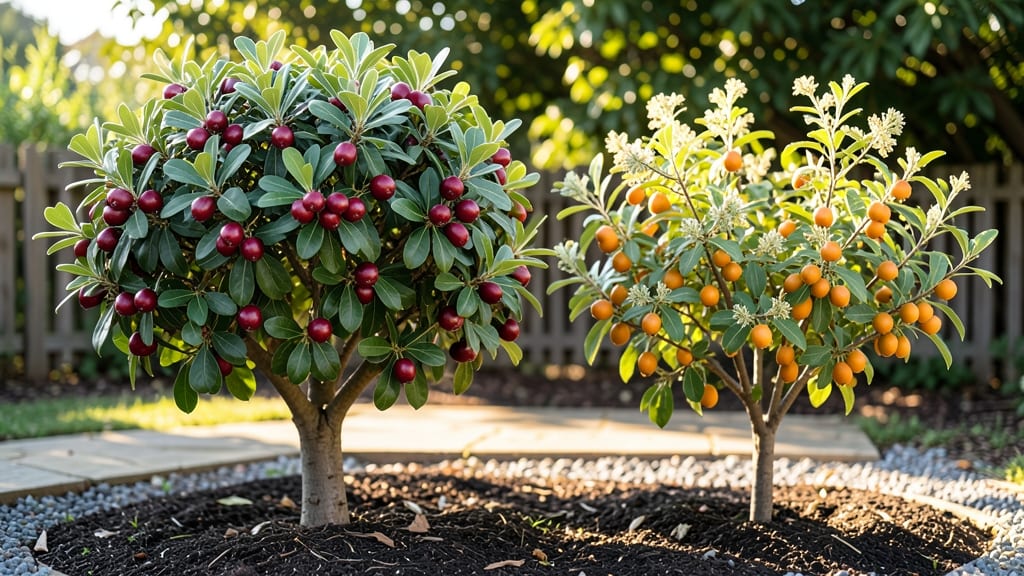
Choosing the right jujube tree type means finding the perfect match for your space and climate. 🌳 'Li' jujubes stay compact at 12-15 feet, making them ideal for small yards, while 'Lang' varieties can grow 20+ feet—perfect for large landscapes.
The difference in size isn’t just about space; it affects fruit yield, cold hardiness, and even how much pruning you’ll need. What truly sets these varieties apart is their fruit: 'Yanli' produces large, sweet red jujubes perfect for fresh eating, while 'Lang' offers smaller, drought-resistant berries that store well.
Leaf shape varies too—some have deeply lobed edges, others stay smooth—so you’ll easily spot the right type once planted. For colder climates, 'Chu Li' handles 15°F temperatures, while 'Yan Li' thrives in mild zones.
You’ll love how low-maintenance these trees are—once established, they need minimal watering and tolerate poor soil. The trade-off? Patience: full fruit production takes 3-5 years, but the payoff is worth it. Picture hundreds of juicy berries ripening in late summer, ready to be picked straight from the tree.
Whether you’re planting in a backyard orchard or a container, pick based on your space and climate. Dwarf types work for urban gardens, while standard varieties suit rural landscapes. Here’s how to choose the best fit for your yard!
📚 In This Guide
- What you need
- Instructions
- Tips and common mistakes
- Wrapping up and next steps
What you need
- ● Jujube tree saplings: 1–3 plants (depending on space and variety—dwarf: 1, standard/giant: 2–3 for pollination)
- ● Specs: Bare-root or potted, 1–3 years old (check for healthy roots and branches)
- ● Planting site: Full sun (6+ hours/day) or partial shade (for hot climates)
- ● Well-draining soil (pH 6.5–7.5; amend with compost if needed)
- ● Space: Dwarf varieties: 8–12 ft diameter
- ● Standard/giant varieties: 15–25 ft diameter (or wider)
- ○ Soil amendments (optional but helpful): 5–10 lbs of compost or aged manure
- ● 1 cup of balanced fertilizer (10-10-10) at planting
- ● Digging tools: 1 shovel or trowel (for dwarf trees)
- ● 1 spade or post-hole digger (for larger varieties)
- ● Mulching supplies: 2–3 inches of wood chips or straw mulch (keep 6 inches away from trunk)
- ● Watering: 1 hose with nozzle or watering can
- ○ Drip irrigation kit (optional for long-term care)
- ○ Safety gear (optional): Gloves (for handling soil/roots)
- ● Knee pads (if digging for extended periods)
How to select and cultivate jujube tree varieties for your space
Here’s how to match the perfect jujube variety to your yard’s size and climate—from compact dwarfs to sprawling giants.
🌱 Step 1: Identify Your Space and Climate Needs
Jujube trees range from 8-foot dwarf varieties like ‘Lang’ to 30-foot giants like ‘Li’, so start by measuring your space. Dwarf types thrive in small urban yards or containers, while standard varieties need 20+ feet of horizontal clearance. Check your USDA hardiness zone—most jujubes handle zones 6-9, but cold-hardy ‘Chu Li’ extends to zone 5 with winter protection.
Sunlight is non-negotiable: all jujubes demand full sun (6+ hours daily). If your yard gets afternoon shade, opt for ‘Lang’ or ‘Yan Li’, which tolerate partial shade better than larger varieties. I always verify local microclimates—your neighbor’s perfect spot might be a death sentence for your tree if it’s just 50 feet away.
☀️ Step 2: Match Varieties to Fruit and Growth Habits
Dwarf varieties like ‘Lang’ (8-10 ft) produce small, tart-sweet fruits perfect for snacking or drying, while ‘Li’ (20-30 ft) yields large, honey-sweet jujubes ideal for fresh eating. If space is tight, ‘Yan Li’ (12-15 ft) offers a middle ground with medium-sized fruit and moderate growth. For cold climates, ‘Chu Li’ is your best bet—its thick bark and deep roots survive 20°F winters without damage.
Growth habit matters too: ‘Lang’ stays bushy and compact, while ‘Li’ develops a vase-like shape that needs pruning to prevent branch sprawl. I recommend sketching your yard’s layout first—jujubes don’t transplant well after maturity, so placement is forever. A 10-foot dwarf near a patio? Perfect. A 25-foot giant under power lines? Disaster waiting to happen.
🪴 Step 3: Prepare Planting Sites for Long-Term Success
Dig a hole twice as wide as the root ball but no deeper—jujubes hate soggy roots. Amend native soil with 2-3 inches of compost mixed into the bottom 12 inches of the hole. For containers, use a well-draining potting mix (50% native soil, 30% compost, 20% perlite) to prevent root rot. Dwarf varieties like ‘Lang’ can thrive in 15-gallon pots, while larger types need minimum 30-gallon containers with drainage holes.
Plant in early spring (after last frost) or fall (6 weeks before first frost). Water deeply immediately after planting to eliminate air pockets, then mulch with 2-3 inches of wood chips to retain moisture. Avoid overwatering—jujubes are drought-tolerant once established, but young trees need 1-2 inches of water weekly during their first year. I always check soil moisture by hand: 1-2 inches deep should feel dry before watering again.
✂️ Step 4: Prune for Shape and Fruit Production
Prune dwarf varieties like ‘Lang’ in late winter to remove dead wood and crossing branches, while larger types benefit from summer pruning to shape their structure. Open the canopy by thinning 10-15% of branches annually—this improves airflow and fruit quality. For ‘Li’ and ‘Chu Li’, focus on removing suckers at the base and thinning vertical shoots to encourage horizontal growth.
Watch for water sprouts (fast-growing, weak stems) and sucker growth—these drain energy from fruit production. I always prune just above a outward-facing bud to encourage new growth in the right direction. After pruning, apply a balanced fertilizer (10-10-10) in early spring to support new growth. Over-fertilizing leads to leafy growth at the expense of fruit—keep it light and consistent.
🍊 Step 5: Harvest and Maintain for Future Seasons
Jujubes ripen late summer to early fall, turning from green to golden yellow or red depending on the variety. ‘Lang’ fruits are ready when they detach easily with a slight twist, while ‘Li’ jujubes soften slightly but stay firm. Harvest in dry weather to prevent fruit rot—leave stems attached to avoid bruising. Store in a cool, dark place for 2-3 weeks to improve sweetness, or dry them for long-term storage.
After harvest, remove all fallen fruit and leaves to prevent pests and diseases. In zones 6-7, wrap the trunk with burlap or tree guard in late fall to protect from voles and rabbits. For container-grown dwarfs, move pots to a sheltered location if temperatures drop below 20°F. I’ve seen ‘Lang’ survive winters in zone 6 with no issues, but ‘Li’ needs winter mulching to protect its extensive root system.
Tips & tricks for perfect jujube tree selection and cultivation
Between us, selecting the right jujube variety can make or break your orchard dreams—here’s how to avoid common pitfalls and maximize success.
Variety Selection Strategy: When choosing between ‘Lang’ (8-10 ft) and ‘Li’ (20-30 ft), consider both fruit size and flavor profiles. ‘Lang’ produces tart-sweet fruits perfect for drying, while ‘Li’ delivers honey-sweet jujubes ideal for fresh eating. I recommend planting both if space allows—their complementary flavors create a delicious harvest range. For urban spaces, ‘Yan Li’ (12-15 ft) strikes the perfect balance between manageable size and productive fruit output.
Microclimate Mastery: The 6+ hours of daily sunlight requirement is non-negotiable, but don’t assume your yard meets it uniformly. I’ve seen cases where morning sun was perfect but afternoon shade from neighboring trees created cold spots. Use a sun tracker app for a week to map your yard’s light exposure—this helps determine whether ‘Lang’ or ‘Yan Li’ will thrive in partial shade scenarios. Remember, even 1-2 hours of afternoon shade can stress larger varieties like ‘Li’.
Pruning Precision: The 10-15% annual branch thinning in Step 4 isn’t arbitrary—it’s about creating that perfect balance between airflow and fruit production. I’ve learned this the hard way: over-pruning ‘Li’ varieties can reduce fruit yield by 30% in the following season. Always prune just above an outward-facing bud to encourage horizontal growth, which is particularly important for vase-shaped varieties like ‘Li’. This technique prevents branch sprawl while maximizing sunlight exposure to the fruit.
Winter Protection Hacks: For cold-hardy ‘Chu Li’ extending to zone 5, that 20°F threshold is critical. I’ve found wrapping the trunk with burlap creates an insulating barrier that can raise microclimate temperatures by 5-7 degrees. For container-grown dwarfs, move pots to sheltered locations before temperatures drop below 20°F—even a covered porch or garage can make the difference between survival and winter damage. This simple step has saved multiple ‘Lang’ trees in my zone 6 garden during harsh winters.
Pro Tips for Jujube Tree Types
- Between us, selecting the right jujube variety can make or break your orchard dreams—here’s how to avoid common pitfa...
- Variety Selection Strategy: When choosing between ‘Lang’ (8-10 ft) and ‘Li’ (20-30 ft), consider both fruit size and ...
- Microclimate Mastery: The 6+ hours of daily sunlight requirement is non-negotiable, but don’t assume your yard meets ...
Frequently asked questions
Got questions about jujube trees? You’re not alone! Whether you’re a first-time grower or a seasoned gardener, these FAQs will help you navigate the world of jujube varieties—from dwarf options for small spaces to hardy giants for sprawling landscapes.
What’s the best jujube tree type for a small yard or container?
Look for dwarf varieties like ‘Lang’ or ‘Chu Li’, which stay compact (6–10 ft tall). These thrive in containers or tight spaces, producing sweet fruit without overwhelming your garden. Just ensure they get 6+ hours of sun daily!
How long does it take for a jujube tree to bear fruit?
Patience is key! Most jujube trees take 3–5 years to bear fruit, though some faster varieties (like ‘Yan Li’) may produce in 2–3 years with proper care. Cold winters (20–30°F) can help trigger flowering—so don’t rush it!
Can jujube trees grow in hot climates? What about cold?
Jujubes are drought-tolerant and love heat (zones 6–9), but they need chilling hours (300–600) for fruit production. In hot areas, mulch and shade cloth can prevent stress. In colder zones, ‘Li’ varieties handle frost better than tropical types.
What pests or diseases should I watch for with jujube trees?
Common issues include aphids, scale insects, and powdery mildew. Prune for airflow, spray neem oil for pests, and avoid overhead watering. Root rot can occur in soggy soil—ensure well-draining soil to keep your tree healthy!
Are there any low-maintenance jujube varieties?
‘Hong Xiang’
and ‘Dong Xiang’ are top picks—they’re self-pollinating, disease-resistant, and produce year after year with minimal fuss. Plus, their drought-resistant roots mean less watering for you!
Wrapping up and next steps
From dwarf varieties perfect for small yards to towering giants that anchor large landscapes, jujube trees offer something for every gardener’s dream—whether you crave low-maintenance fruit or stunning ornamental beauty. 🌱 Whether you’re a space-challenged urban grower or a landscape designer with acres to fill, there’s a jujube type that’ll thrive in your vision.
Ready to plant your future harvest? Start by researching the best varieties for your climate, then visit a local nursery or order seeds online to begin your jujube journey today!