
Pruning
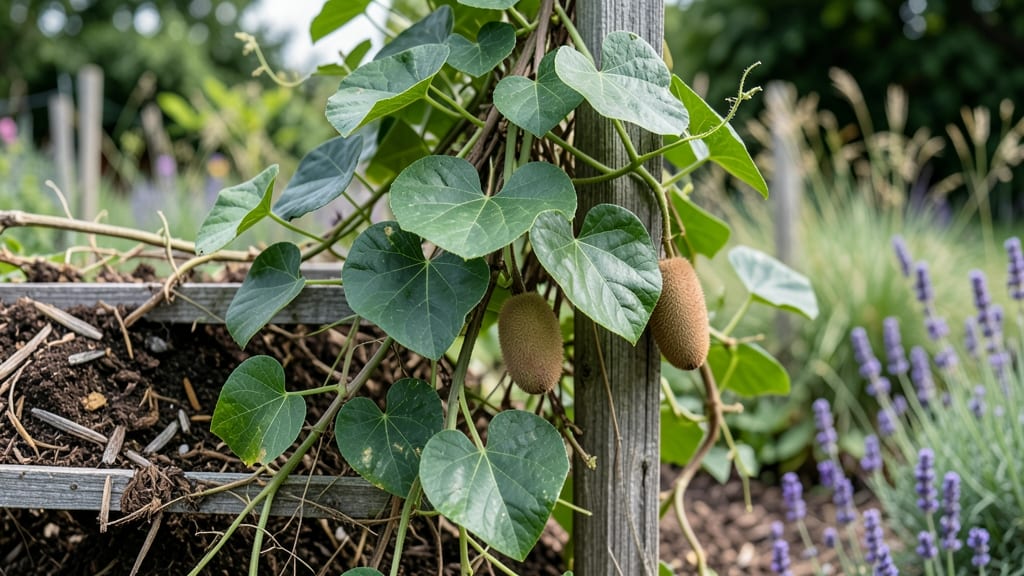
Kiwi plants are vines, not trees, because they grow horizontally along supports with long, woody canes and produce tendrils for climbing, though their dense foliage can create a shrub-like appearance when unpruned.
This distinction matters because kiwi vines belong to the Actinidia genus, which includes plants that spread outward rather than grow upright like trees. 🌿 Their growth habit relies on trellises or fences to channel their energy upward, where they produce fruit on new wood formed each season.
Unlike trees, kiwi vines are also deciduous, dropping leaves in winter—a key adaptation for temperate climates where they thrive. The confusion often comes from their thick, woody stems, which can fool gardeners into thinking they're shrubs, but botanically, they're classified as perennial vines.
Understanding this growth pattern is crucial for gardeners, as it directly affects how you should train and prune the plant. For instance, kiwi vines need strong support structures to handle their weight, and proper pruning techniques—like removing old canes—are essential for maximizing fruit production.
Without the right support, these vines can sprawl uncontrollably, while with the right care, they can produce abundant harvests year after year.
💡 In This Article
- Botanical Classification of Kiwi Vines: Why They’re Not Trees
- Growing Kiwi Vines: Trellis Systems and Pruning for Maximum Fruit
Botanical classification of kiwi vines: why they’re not trees
Kiwi plants belong to the Actinidia genus, a group of woody vines native to China and other temperate regions. Unlike trees that grow vertically with a single trunk, kiwi vines spread horizontally along supports using specialized structures called tendrils.
These tendrils wrap around trellises or fences, allowing the vine to climb—much like grapes or passionfruit. The confusion arises because kiwi vines develop thick, woody canes that can reach 30 feet or more in length, giving them a shrub-like appearance when unpruned.
The key botanical difference lies in their growth habit and stem composition. True trees have a central trunk with branches, while kiwi vines produce multiple woody stems from the base, all growing outward. Their stems contain vascular bundles arranged in a ring, a characteristic of vines rather than trees.
Additionally, kiwi vines are deciduous, meaning they shed their leaves annually in winter—a trait shared with many temperate-zone vines but not typical of tropical trees.
Another clue is their fruit production. Kiwi fruits develop on new wood (current season's growth), not old wood like some trees. This means pruning plays a critical role in directing the vine's energy toward fruiting canes rather than excessive foliage.
Without proper support, these vines can sprawl across the ground, while with a trellis, they channel their growth upward, producing a more manageable and productive structure.
Consider the kiwi's native habitat in China's mountainous regions, where vines naturally climb trees or rocky outcrops. This climbing adaptation allows them to access sunlight while keeping their fruits elevated away from ground predators.
The woody canes serve as storage organs for nutrients, similar to how some shrubs function, but their horizontal growth pattern and reliance on external support clearly classify them as vines.
For gardeners, recognizing this vine structure is essential. Unlike trees that can be trained with minimal intervention, kiwi vines require active management—including pruning, trellising, and winter protection—to thrive.
Their ability to produce both male and female flowers (on separate plants) further highlights their vine nature, as many vines exhibit dioecious reproduction patterns, unlike most trees.
What most people don't realize is that even commercial kiwi orchards use multi-wire trellis systems to support these heavy vines. The canes are typically spaced 6-8 feet apart along the trellis, with each vine requiring 10-15 feet of horizontal space to develop properly.
This spatial requirement alone demonstrates why kiwi plants can't function as trees—they simply lack the vertical growth structure needed for tree-like cultivation.